
Inside This Issue:
- IP 28 Is Dead. Long Live IP 28
- Who's Afraid of a Ghost Dog?
- How a Louisiana Shelter Is Making a Difference with Microchipping
IP 28 Is Dead. Long Live IP 28.
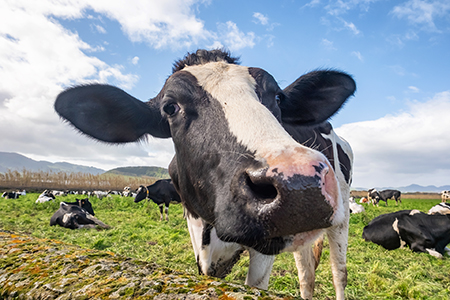
IP 28 wanted to ban pretty much any kind of animal industry, such as animal agriculture.
Oregon Initiative Petition 28 (IP 28), which failed to make this year’s ballot due to a lack of valid signatures, was a nasty piece of work. It was an animal rights proposal that would have essentially put an end to hunting, fishing, animal agriculture, dog breeding, research, and numerous other commonplace activities in the state. That said, while IP 28 was an awful set of proposals, if it had made its way onto the ballot, there was no realistic chance of it actually passing; old Portlandia sketches notwithstanding, the state’s voters have more common sense than to support something like this, and it faced strong bipartisan opposition. Oregon’s governor even made a public statement against IP 28 when it appeared the initiative had a chance of making it onto the ballot.
All that being said, this was the third attempt at getting the initiative onto the ballot, and with funding from national animal rights groups, a small army of paid signature gatherers, and a good amount of free press, it actually came pretty close to making it!
So, is it time for a sigh of relief? What would have happened had IP 28 made it onto the ballot? According to its supporters, who were also fully aware it wouldn’t pass: not much in the here and now. What this would do, however, is lay the groundwork for getting initiatives like this on the ballot every year in Oregon and other states, until culture changes enough for it to win. The women’s suffrage movement – which took 72 years from its first convention in 1848 to the 19th Amendment in 1920 – was cited as a model*. In other words, they’re playing a long game, convinced that their belief system is so inherently true and good, that it will inevitably become the culturally dominant viewpoint. And once that happens, once 50.1% of the population agrees, initiatives like IP 28 will be on ballot measures across the country, waiting to be voted on.
While the idea of social inevitability is comforting to true believers, fads and trendlines are not guarantees, and history is littered with the burnt-out husks of failed “sure things.” However, while we don’t believe in inevitability, the fact that IP 28’s supporters are so open about this being a long-term social or cultural campaign, rather than an immediate political issue is the part that is really worth noting. Cultural campaigns, especially when played against a population's lack of information and awareness, can work brilliantly. So while we – the people who live with and work with animals – do a fantastic job of stepping up to the plate when we see kooky proposed ballot initiatives like IP 28, it’s vital we remember that reacting to legislation is only a small part of the game. When it comes to animal issues, the big battle – and ultimately, the one that truly matters – is ensuring public awareness and appreciation.
* if you follow animal rights campaigns, this will no doubt sound familiar: these campaigns often compare and/or tie themselves to popular human rights causes – often in a rather tone-deaf manner – but that's for another article.
Source: Oregon Initiative Petition 28 Fails to Qualify for Ballot
Who's Afraid of a Ghost Dog?
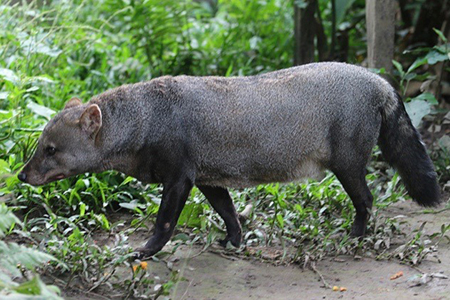
An elusive ghost dog. NoIgor de le Vingne, CC BY-SA 4.0, via Wikimedia Commons.
Move over Bigfoot and Nessie – turns out there’s a real “ghost” haunting the Amazon, and this one needs saving. For more than a century, the short-eared dog (Atelocynus microtis) has been more rumor than reality: a shadow in the jungle, a paw print where no dog should be. Ask a biologist, even one with major field experience, and they’d tell you they’d never seen one. Some doubted they ever would. But two decades of camera traps and patient science have changed things. Researchers, led by Robert Wallace, spent nearly a quarter of a century combing the forests of Bolivia and Peru, setting up dozens of camera traps in places so remote even the ocelots and jaguars are rare. The surprise? The “ghost dog” that nobody could find kept photobombing the cameras – almost 600 times, in fact!
The short-eared “ghost” dog is unmistakable: fox-like face, rounded Mickey Mouse ears (the better to hear you with), and a bushy tail. Its fur runs from blackish-grey to reddish-brown (perfect for lurking in the shadows), and it’s got webbed toes, a strange quirk among South American canines. But what really sets them apart isn’t their appearance – it’s their habitat and how they stay hidden. Unlike most elusive creatures, these dogs aren’t shy or nocturnal. They’re diurnal hunters, active in the morning and early afternoon, slinking through the upland forests far from rivers or roads. The reason hardly anyone sees them? Their home is pure, continuous rainforest: a territory so far removed it makes it darn near impossible for people to reach them. Despite its remoteness, this forest is under threat from deforestation and mining.
Interestingly, all those years with almost zero sightings led scientists to think the ghost dog was dangerously rare. The new research turns that upside down. They’re not as scarce as anyone thought – at least not yet. In protected areas and indigenous territories, camera traps reveal healthy numbers, even outnumbering jaguars in some places. You won’t find short-eared dogs in any zoos or captive breeding programs. They’re so specialized and tied to their wild, undisturbed forest that captive breeding hasn’t been established or needed. Considering how long it's taken to determine their numbers, one can imagine how difficult it would be to start a sustainable population in human care!
So it turns out this short-eared dog is less “mythical beast” and more “barometer.” Where they thrive, the forest is healthy. Lose the forest, lose the ghost. Some estimates suggest their population could drop by 1/3 in just a few years if deforestation continues. So, forget looking for monsters in Scottish lochs or blurry footprints in the snow. The real ghost is alive, wild, and running through the Amazon. And if we want to keep it that way, the answer isn’t midnight grainy videos or cryptozoology, it’s conservation.
Source: 4,635 Camera Trap Photos Crack the ‘Ghost Dog’ Mystery
Wrapping up Lost Pet Prevention Month: How a Louisiana Shelter Is Making a Difference with Microchipping
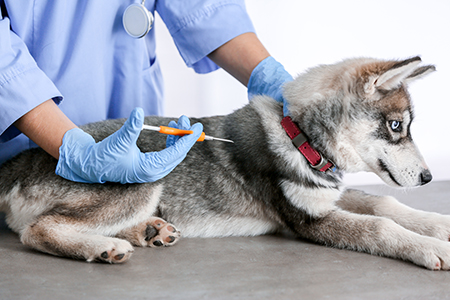
Stock photo of puppy being microchipped featuring a fantastically stoic little dog.
Every year, thousands of pets go missing, leaving families heartbroken and animals at risk. At Cara’s House Animal Shelter in Ascension Parish, the team tackled the problem head-on during National Lost Pet Prevention Month by making microchipping more accessible for local pet owners.
Recognizing how vital it is for lost pets to find their way back home, Cara’s House launched drive-through microchip clinics. These are designed with convenience in mind: pet owners simply roll up, fill out a quick form, and have their cats or dogs scanned and, if needed, microchipped on the spot. The process has been streamlined to be fast and affordable, costing just $10 at a clinic or $20 during regular adoption hours – extremely affordable, especially for people on fixed incomes. Since starting these clinics, the shelter has consistently helped around 20 animals per session. This gives pets a much better shot at being reunited with family when lost. For the shelter team, protecting even one pet is a win, but they’re aiming higher: they hope to help even more animals as the clinics become more popular.
Microchipping is one of the most effective steps a pet owner can take to safeguard their animal. Collars and tags can break or fall off, leaving pets unidentifiable if they end up at a shelter. Microchips, on the other hand, are permanent and can be scanned by any veterinarian or animal control officer. With statistics suggesting that one in three pets will get lost at some point, microchipping increases the odds of your pet making it back home. Cara’s House has already witnessed microchips reuniting several lost pets with their families, sometimes within hours of being brought in. The shelter is planning to expand its reach to areas where access to vet care is limited.
This is a simple model that could be implemented in many communities across the country with a little extra support from local shelters, clinics, and pet supply stores.
Also in the News...
★ ACCT Philly faces overcrowding with more than 600 animals, launches adoption incentives (Rescue & Shelter Crowding; Adoption & Foster Opportunities)
★ 2nd raccoon sought after rabies-positive animal attacks South Jersey man (Public Health & Safety; Rabies: My Old Friend)
★ Tampa woman faces animal cruelty charges after deputies rescue malnourished dogs (Animal Neglect, Seizures, and Arrests)
★ Dominican Republic's zoo offers home for confiscated animals as seizures of exotic species soar (Wildlife Trafficking; Zoos)
★ Court Docs: Portland man allegedly mistook dog for wolf, shot it with arrow (Public Health & Safety; Responsible Pet Ownership; What the Heck?)
★ A dog saved Houssein Hamze from a bomb. When war returned, he stayed to care for Lebanon’s animals (Shelter & Rescue; )
★ The 10 longest living animals on the planet (Well-Aged Goofy Lists; That's a LONG Pregnancy)
Click here to see what is happening legislatively