Inside This Issue:
- Halfway There! A Farm Bill Update
- A Zoo Receives "Donation" of 13 Malnourished Sloths
- Florida Restricts Importation of Warm-Blooded Animals from Texas in Effort to Halt Reemergence of Screwworm
- Woman's Bee Attack Fails, Remembering a Favorite Veterinarian, Brainy High-Altitude Animals, and More!
Halfway There! A Farm Bill Update
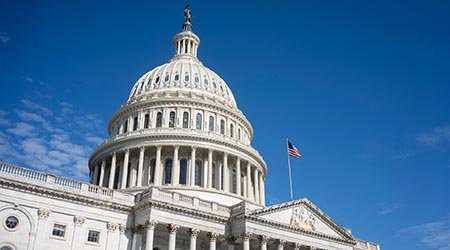
Halfway there! We are so happy to report that the House version of the 2026 Farm Bill, called the Farm, Food, and National Security Act of 2026 (H.R. 7567) passed the US House of Representatives yesterday. The Farm bill is always of vital importance to farming, conservation, and food security but this year the Farm Bill has special importance to dog enthusiasts as well.
This year’s Farm Bill includes provisions that call for oversight of more than a million-plus dogs that enter the US annually, often carrying diseases and parasites that can be transmitted to our pets, livestock – and to us. Ironically, although dog enthusiasts may be more concerned with zoonotic diseases like rabies, canine brucellosis, leptospirosis and leishmaniasis, overseeing dogs entering the country will also prove valuable in preventing the New World screwworm (see below) from advancing into the US. We will provide a more detailed report in future articles, but meantime, be assured that the amendments most unacceptable to our members were removed from the bill before it was passed.
A Zoo Receives "Donation" of 13 Malnourished Sloths
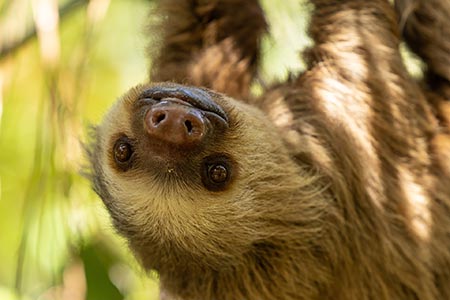
A highly charismatic two-toed sloth.
Last week, we were hit with brutal news about a facility in Orlando, Florida that had been importing sloths that were dying at an alarming rate. The business, Sloth Encounter, had not yet opened, was not prepared for the arrival of these animals, and was housing them in a warehouse without numerous elements that were necessary for the animals’ survival.
A firestorm broke out on social media when it was revealed that 31 sloths had died at the facility in less than a year. Luckily for the remaining sloths, the Florida Fish and Wildlife Conservation Commission (FWC) and Congressman Maxwell Frost arranged for the business to “donate” 13 surviving sloths to the Central Florida Zoo and Botanical Gardens in Sanford, FL. The facilities provided the animals with immediate veterinary assistance and expert care. All of the animals were dehydrated and underweight, but 12 of them showed immediate improvement. Sadly, one of the sloths passed away on Wednesday after lingering for several days. Meanwhile, to the shock of absolutely no one, Sloth Encounters has announced they no longer plan on opening.
This debacle raises serious questions about how we balance the desire to see these amazing and strangely charismatic animals up close with the real-world ramifications of importing and caring for them. Education goes a long way toward helping people understand what wild sloths need to survive and the challenges they face due to deforestation. Here in the US, we have facilities with successful breeding programs, including dedicated private owners who maintain USDA-regulated collections with strong specialist networks and hands-on expertise. These responsible private keepers can achieve excellent results through personalized care. Accredited programs add structured Species Survival Plans/Animal Management Plans and mandatory standards, as well. Both approaches demonstrate the deep commitment required for sloth husbandry and reduce reliance on wild imports through better captive management and in-situ conservation.
Florida Restricts Importation of Warm-Blooded Animals from Texas in Effort to Halt Reemergence of Screwworm
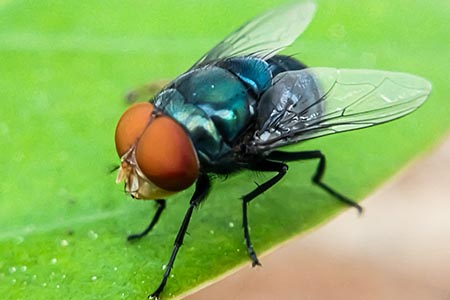
Cochliomyia hominivoraxt, better known as the New World screwworm fly. Unlike many species of fly, the NWS
fly's maggots attack healthy, living flesh, leading to horrific illness and infection, especially for livestock.
Florida has implemented new biosecurity measures on livestock imported from select Texas counties as New World screwworm (NWS) cases rise across northern Mexico, moving closer and closer to the U.S. border. According to USDA APHIS, Mexico has reported over 21,000 cases, with more than 1,400 currently active, including recent outbreaks in Nuevo Leon and Tamaulipas, both within the sterile fly release zone.
An active case in Nuevo Leon was confirmed within 62 miles of the U.S. border, prompting heightened concern from authorities. In response, Florida’s Department of Agriculture has issued an emergency rule temporarily restricting the movement of all warm-blooded animals from high-risk Texas counties. Transported animals must now undergo enhanced veterinary inspection and documentation, including proof of freedom from screwworm and other infectious agents. Any animals with wounds must be treated and fully documented. These steps reflect the seriousness of the threat: NWS is not currently endemic to the U.S., but it used to be – and it took a lot of effort and cooperation to eradicate it. Vigilance remains crucial, as an outbreak would have devastating economic and animal welfare consequences.
Source: Florida restricts Texas animals as New World Screwworm cases creep toward U.S. border
Woman's Bee Attack Fails, Remembering a Favorite Veterinarian, Brainy High-Altitude Animals, and More!
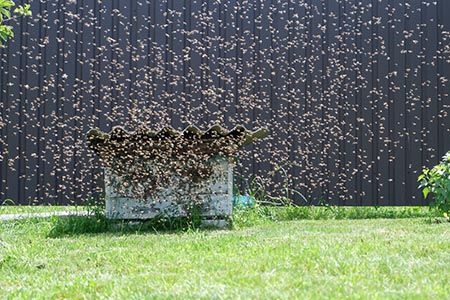
In footage of the bee attack, a deputy can be heard exclaiming "She's opening the bees!"
A Massachusetts woman is serving six months in jail for attempting to save a friend from eviction… by siccing her honey bees on the deputies who were enforcing the eviction. This is a really wild story. The man who was being evicted is in his 80s, and undergoing cancer treatment; his loyal beekeeper friend has experienced eviction during her life, as well, and it’s not hard to see how her righteous sense of protection erupted in a frenzy of vengeful bees. Luckily, this targeted bee attack didn’t lead to anybody dying from anaphylactic shock. But sadly, there was no heroic, Hollywood end to this tale – thousands of bees ended up dying (as they do after stinging), the beekeeper is in jail, and the eviction, while slightly delayed, went on as planned.
Dan Janssen, a beloved wildlife veterinarian who was associated with the San Diego Zoo and Safari Park passed away last week. His ability to help and heal animals was his bread and butter, but he was also known as a thoughtful mentor and author. Speaking of thoughtful – the advice he passed on during the course of his career was simple, yet quite brilliant. He understood that truly caring for animals required you to care for people, too. To paraphrase a greatest hit: “The harder it is for you to listen to and get along with other human beings, the harder it will be for you to help animals.” Boy, ain't that the truth – and something all of us who work with animals should remember!
Sticking with vets: the veterinarian shortage is hard for everybody, but shelters have been hit particularly hard. Imagine taking in a dog or cat that was hit by a vehicle. It’s in pain and scared, probably has a few broken bones, and the only way you can treat it is by frantically seeking providers, then driving down 50 miles of bumpy rural road, hoping that the emergency clinic will be able to treat it. Ugh… definitely not ideal! In an attempt to mitigate these supply and coordination issues, a new Virginia law is allowing vets to opt into a shared animal control/shelter database when renewing their licenses, which will hopefully make it much easier for these animal services to find and coordinate veterinarian care.
Buddhist and Hindu beliefs have long extolled the effect of high altitudes on the mind and spirit. More recently, an examination of animals demonstrates that there might be something scientific to that belief – at least the mind part. High-altitude animals with a specific mutation do a notably better job of maintaining and repairing their myelin in low-oxygen environments. Wowsa! This is a surprising finding that may have valuable implications for people suffering from Multiple Sclerosis or cerebral palsy!
Finally, here’s a goofy listicle we missed last month that you will still probably appreciate: animal laws that might have gone just a little too far. Whether we’re talking about well-intentioned-yet-flawed rules banning the photography of rabbits from January through April, difficult-to-enforce anti-meowing (or “weird cat noise”) laws, or archaic “you better not whistle for your bird before 7 am!” legislation, it’s impossible to deny that there are lots of laws out there that need to be re-examined, then struck from the books.
Also in the News...
★ Animals can feel joy. Here’s how scientists might study it (Ethology; Does a Tickled Rat Laugh?)
★ (Video) San Antonio ACS to host free Puppies N’ Pilates sessions for National Pilates Day (Shelter & Rescue Mashups)
★ Treating Creepy Animals With Respect Is a Win-Win For All (Delightful or Disgusting – Who Decides? Beauty of the Beasts)
★ Anchorage bans feeding of wild animals, with $250 fine for first offense (Please Don't Feed the Bears; Don't Feed the Starlings, Either)
★ Texas parks department warns not to touch baby animals as 'fawning season' approaches (Also, Don't Touch the Fawns)
★ This animal is next species Dallas' Colossal plans to bring back from extinction (Gene Sequencing, De-extinction)
★ What Happened to Michael Jackson’s Exotic Animals? Inside Their Lives After Leaving Neverland Ranch (Exotic Follow-up!)
★ 10 deadliest ambush predators on the planet (Shockingly Goofy Lists; Hawks, Snakes, and Worms!)
Click here to see what is happening legislatively