

 |
The Farm Bill is a massive bill that authorizes policy and funding for agriculture for the next 5 years. Because it impacts the critical needs of farmers, rural communities, forestry, conservation, etc., it is considered a "must pass" bill by Congress.
For bills that have not been able to gain traction as stand-alone legislation, the Farm Bill’s “must pass” status provides activists with an attractive, alternative vehicle for passage that bypasses regular channels. Bills that push the animal rights agenda, for example, often latch onto the Farm Bill as a vehicle, despite being at odds with the Bill’s fundamental goals.
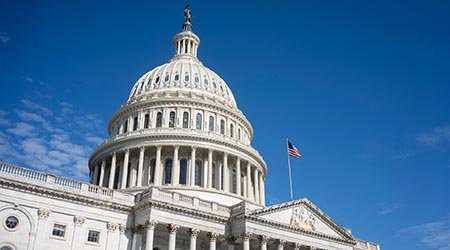
Wednesday was the last day that amendments to the House version of the Farm Bill could be filed before the bill moves to the floor of the U.S. House of Representatives for a vote later this month. More than 300 amendments were filed – many that are divisive and could undermine the important purpose and goals of the Farm Bill.
Anyone who supports the health and wellbeing of animals and the human animal bond and believes that public policy should not be based on ideology, should seek a clean Farm Bill that is not burdened by having a bunch of damaging amendments attached to it.
So here’s our simple recommendation. In your own words, write to your Congress member (get their contact information here) and urge them to pass a clean Farm Bill, one that does not include divisive amendments that will weaken its passage such as:
- Amendment 11 filed by Reps. Fitzpatrick (PA) and Panetta (CA) – “Puppy Protection Act”
- Amendment 18 filed by Reps. Krishnamoorthi (IL), Lawyer (NY), Titus (NV), Mace (SC), and Thanedar (MI) – “Animal Welfare Enforcement Improvement Act”
- Amendment 30 filed by Reps. Mace (SC) and Titus (NV) – “Violet’s Law”
- Amendment 135 filed by Reps. Quigley (IL), Malliotakis (NY), and Buchanan (FL) – “Goldie’s Act”
Many of the harmful amendments that affect our membership duplicate what USDA is already doing - and doing well - and are drafted using inflexible, “gotcha” provisions rather than ones that have proved to be effective in actually improving animal welfare outcomes.
In proper terms, these amendments often promote rigid engineering standards versus performance-based standards. Engineering standards offer one-size-fits all type solutions to problems that require flexibility. Not only individual animals, but individual circumstances need to be considered when drafting policy for animals.
 |
Like this article? Don’t forget to share, like or follow us |
 |
NAIA WEEKLY ROUNDUP

 A Second Opinion and Pet Economics
 USDA Animal Welfare Strike Force, Petting Zoos, Low-Cost Spay/Neuter, and More!
 Chihuahuas, Goats, New Cat, and More!
 Farm Bill Advances to Senate; The Importance of Knowing (Animal Research)
FEATURED & LATEST ARTICLES
GET THE NAIA WEEKLY ROUNDUP VIA EMAIL FOR FREE
Stay Connected with The NAIA: Sign Up for The Weekly Roundup
Join our FREE newsletter and community of animal advocates and receive The NAIA Weekly Roundup straight to your inbox. Stay in the loop with the latest news, events, and ways you can make a difference in the lives of animals. Sign up now to stay informed to create positive change!
Sign Up

PO Box 66579
Portland, Oregon 97290
Phone (503) 227-8450
Email: naia@naiaonline.org
Learn more