Inside This Issue:
- A Small Dairy Worms Its Way Into the Future
- BARC Accused of Euthanizing Healthy, Adoptable Animals
- A Milestone Baby Elephant Greets Her Adoring Fans
- Look Into the Eyeballs: Primates, Canines, and Nonverbal Communication
- Snakebit II: The Bitening
A Small Dairy Worms Its Way Into the Future
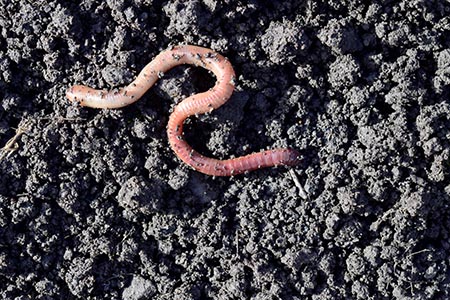
Save a dairy: adopt a worm today!
California’s Central Valley has long been the leader of American dairy production by volume, but the industry is shrinking fast. In just over two decades, the number of licensed U.S. dairy herds has plummeted by more than half - from over 70,000 in 2003 to around 24,000–26,000 by 2025. Almost 15,200 farms disappeared in just five years between 2017 and 2022, with the steepest losses hitting family and mid-size dairies.
While production is up, only the biggest operations seem to be growing. Against this backdrop of relentless consolidation and mounting regulations, Alberto Dairy stands out. Now in its third generation, the family-run operation hasn’t just survived, it has quietly reinvented itself. Many dairies turn to complex and costly methane digesters to meet environmental mandates, however the Agueda family opted for a solution inspired by nature: a worm-powered filtration system known as BioFiltro.
Millions of earthworms now recycle the dairy’s manure-laden water, removing carbon and nitrogen before it’s reused on the farm. This has cut costs, improved herd health, and reduced environmental impact. The proof is in the pudding: cleaner water has led to healthier cows and lower veterinary expenses, while the simple, low-maintenance system has insulated the dairy from the financial risks and technical headaches that come with high-tech machinery. This is something that has been plaguing smaller operations and contributing to their decline. By documenting their environmental gains, the family also earns carbon credits and demonstrates to regulators and the public that dairies aren’t "a problem that needs to be solved."
For Anthony Agueda, who now manages the operation started by his immigrant grandparents, sustainability isn’t a fad, it’s the next step to keeping the family dream alive. As thousands of dairies exit the industry each year, Alberto Dairy’s shines an example of how small and mid-sized family farms can carve out a future.
Source: Engineering the Future: How One California Dairyman Uses Worms to Innovate
BARC Accused of Euthanizing Healthy, Adoptable Animals
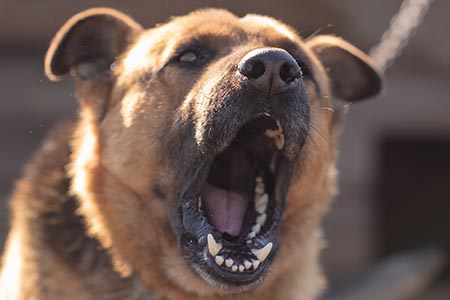
Houston’s Bureau of Animal Regulation and Care (BARC) has come under fire from Best Friends Animal Society (BFAS) for killing the highest number of “healthy, treatable pets” in Texas. BARC responded to the accusations with a reminder that the full story can’t be told by numbers alone – context matters.
In this case, the context is that BARC serves as Houston’s only city-operated, open intake shelter. By law, they have to take in pets, regardless of the animal’s breed, size, health,or temperament. And the conditions the animal originated from don’t matter, either. Whether the animal is an unsocialized stray picked up off the street, or was confiscated due to abuse or other criminal activities, it goes to the shelter. Unfortunately, for a lot of animals – especially larger dogs – a rough background makes adoption a more difficult option.
BARC broaches this touchy subject in its response to BFAS by citing the numerous public safety calls it receives each year, and then (at least as we read it) casts a bit of shade:
“We do not limit intake, restrict services, or reduce enforcement to influence outcomes. Our responsibility is to respond to dangerous situations, care for injured and abused animals, and make humane decisions when animals cannot be safely placed.”
OK, that wasn’t exactly a stemwinder, but we all read “influence outcomes” and know exactly what that means. And it did subtly lay out the irony of limited-admission shelters criticizing open-admission shelters as wanton pet-killing factories.
Now, we’re not here to say every open-admission shelter is good and well-run, while every limited-admission/no-kill shelter is placing unsafe dogs and playing a numbers game. That would be unfair as well as untrue. But it is important to remember that different shelters work within the framework of different missions, and to some extent, even different realities. Were 4031 of the animals euthanized at BARC “healthy and adoptable” as BFAS claims? Unfortunately, our best guess – especially given Houston’s pet population dynamics – is probably not. But could those same numbers be damning in another city? Absolutely. Context is important. What matters most here, and what we'll be watching, is whether progress toward better outcomes – for both pets and public safety – is being made.
Source: BARC euthanizes more adoptable dogs and cats than any other shelter in Texas, says nonprofit
A Milestone Baby Elephant Greets Her Adoring Fans
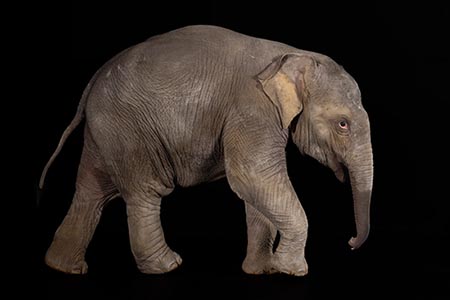
Lin Mai. Photo credit: Roshan Patel, Smithsonian’s National Zoo and Conservation Biology Institute
Linh Mai, an Asian elephant calf born at the Smithsonian’s National Zoo earlier this year, made her public debut this past Wednesday. Her birth is a celebration for more reasons than one: it marks an important milestone for the zoo and for Asian elephant conservation efforts in North America. This is the zoo’s first elephant birth in nearly a quarter century, and it kicks off a renewed commitment to breeding a species whose numbers are still dropping in their range countries throughout Southeast Asia.
Zoo staff say Linh Mai’s genetic background is especially valuable since both of her parents carry genes that are rare among elephants in American zoos. This makes her birth a meaningful step toward increasing genetic diversity in managed populations.
Breeding programs aren’t just about numbers, they’re also about learning. Elephants are complex, social animals, and zoos like the National Zoo provide researchers with a unique window into their social structures, health, and intelligence. While much of what we know about elephants comes from anecdotes and field observations, zoos offer a place where scientists can systematically study everything from herd dynamics to veterinary care – knowledge that could help protect wild populations down the line. At just a couple months old, Linh Mai is already showing signs of being curious and lively, traits that keepers have noticed during her early days behind the scenes. Her name, which means “spirit blossom” in Vietnamese, reflects both her heritage and her personality.
Although her mother needed a little extra support bonding with her calf at first, another adult elephant played a crucial “auntie” role, underscoring the importance of social bonds in elephant herds. All elephants perform allomothering, the act of different females stepping in to ensure the success of a calf’s development, something humans do too. Linh Mai’s public debut was intentionally low-key, letting her explore at her own pace. Like any newborn, she spent much of her outing napping, while lucky visitors caught a glimpse of her first steps into the wider world. For those who missed the event, highlights are available online.
Source: Baby elephant Linh Mai makes her public debut at National Zoo
Look Into the Eyeballs: Primates, Canines, and Nonverbal Communication
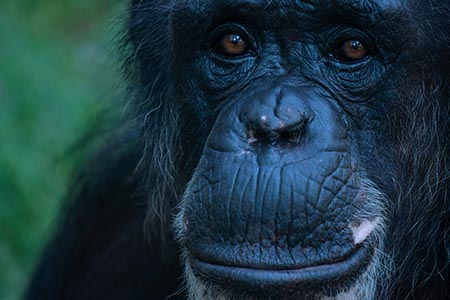
Stare not.
Our sclerae – the whites of our eyes – are very bright, and make it easy for others to see what or who we are focusing on. This isn’t a unique trait among mammals, but it is rare. Most other mammals, including our closest primate cousins, typically have darker sclerae that help them stay camouflaged.
Scientists think the whites of our eyes evolved to help us communicate and cooperate by making gaze direction obvious. Research shows that human babies, unlike apes, follow eye movements more than head movements. This adaptation likely helped early humans work together more effectively, and perhaps give a mean side-eye when necessary. Another theory suggests that white sclerae resulted from humans becoming less aggressive and more social, affecting the pigmentation in our eyes as nonverbal communication became more important.
Of course, this doesn’t just affect communication between human beings – anyone who has trained a clever dog knows how closely they follow our eyes. Indeed, studies also show that dogs and primates with brighter eyes are more cooperative and social, a possible sign that individuals in closer knit communities aren’t afraid to let a passing gaze give away our interests and intentions.
Source: Why Do Humans Have Clear White Eyes While Most Apes Have Dark Ones?
Snakebit II: The Bitening
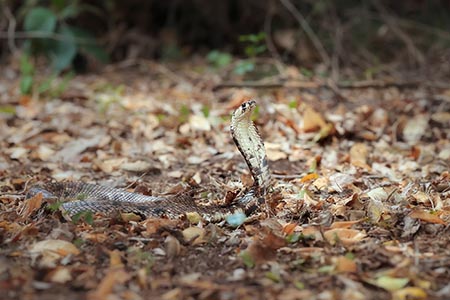
Hard to spot. An Egyptian cobra (Naja haje) bite put Mr. Friede in a coma.
In our previous newsletter, we discussed “free handlers” and their vexing habit of getting bitten by their own venomous snakes. This predictable outcome burdens zoos, emergency and medical services, and the exotic pet community in general. People often view those folks as cocky lunatics, and not without reason. But do you know what’s even more hardcore than handling a venomous snake with your bare hands while acting like you’re too smart/fast/skilled to ever be bitten? Hanging out with venomous snakes and allowing yourself to be bitten. All for the greater good, of course. Let us explain…
For the last two decades, Tim Friede, a Wisconsinite window cleaner, amateur scientist, and full-time snake fanatic has been letting venomous snakes bite him. The goal: to develop immunity, and ultimately, become a life-saving source of antivenom for the hundreds of thousands of people who suffer death or disfigurement from venomous snake bites each year. For the first decade of this unusual endeavor, pretty much everybody agreed – quite understandably – that this was a really bad idea, and to be fair, the results bore that viewpoint out. Blacking out. Comas. Nearly having a leg amputated. And on top of that, Friede reports that the pain from the venom is excruciating.
But a strange thing happened along the way: after surviving enough bites, Friede actually did start developing immunity (that which does not kill us...?), and his body now boasts the ability to neutralize the venom from several of the world’s deadliest snakes. In fact, he boasts that he has been bitten by the world’s most venomous snake, the inland taipan, 22 times. While it took until 2019 for anybody to take Friede’s obsession seriously, he is now employed by a vaccine company, and an animal trial using Friede’s very own replicated antibodies is about to take place in Australia – snakebite capital of the world.
Despite Friede's remarkable story, I think most of us are still in agreement that this was a bad idea. Friede suffered serious pain and injuries, and will likely face long-term health consequences down the road (assuming he isn’t already), due to his exposure to so many toxins. His success here may also spur copycats who aren’t so lucky. All that being said, it takes all kinds to make a world, and we sincerely hope the trial goes well! If the new, Friede-derived antivenom saves people and pets from death and disfigurement, that would make for a pretty amazing conclusion to this story.
Source: Bitten by snakes 200 times – on purpose: US man’s quest to help deliver new antivenom
Also in the News...
★ With return of spring and emergence of baby wildlife, Kentuckians reminded to let young animals be (Your Annual Reminder!)
★ 43% of large freshwater animal species spread far beyond native ranges (Consequences: Intended and Unintended)
★ Animal Control Officers recognized during appreciation week (A Rarely Celebrated Aspect of Public Health & Safety)
★ Man facing animal cruelty charges for allegedly attacking a nesting goose (Goose and Eggs Are Fine; Man Awaiting Trial)
★ Humanoid Robot Spotted Chasing Wild Animals Through City (Yesterday's Science Fiction Against Today's Wild Boars)
★ Petsitter who beat dogs handed animal ban (Animal Abuse; Ban Lists; Vet Your Pet Sitter!)
★ Top 10 most dangerous animals in the world (Goofy Deadly Lists; Similar to Previous Lists; Hippo Has Fallen!)
Click here to see what is happening legislatively