Inside This Issue:
- And Now a Right: Biomedical Research Attacked from All Sides
- A Ban on Dog, Cat, and Rabbit Sales Takes Its Next Logical Step
- When It Comes to Behavior, Doodles Might Not Be the "Best of Both Breeds"
- Louisiana Alligator Comeback Driven by Economic and Ecological Interests
- An Animal Control Becomes Animal Care
And Now a Right: Biomedical Research Attacked from All Sides
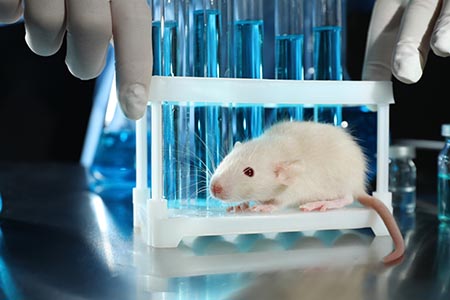
Last week, a New York Times piece covering the anti-animal research White Coat Waste project (WCW) and the recent unexpected smattering of animal rights activism coming from the Republican/MAGA quadrant of the political spectrum really struck a nerve with several of our readers.
For us, it wasn’t so much a raw nerve, but a pinging reminder that animal rights ideologues employ the same old playbook, regardless of who they are trying to sway.
The first and most obvious play, is finding a villain to fight against – real or spun out of whole cloth – then throwing every accusation under the sun at them. Sometimes this villain is a specific class of people, with the worst outliers among them held up as if they are the norm. In these cases, every breeding operation is a wicked “puppy mill,” every farm is affixed with the damning “factory” pre-modifier. Other times, a smaller group of people, or even an individual is chosen for the special honor of “villain.” For WCW, Dr. Anthony Fauci was chosen as the individual personification of corruption, animal torture, and who knows what else. Given that Dr. Fauci was already a highly controversial figure with many conservatives, it’s hard to imagine a more convenient target: “Beagle-gate” was only icing on the cake; he would have been perfect for the familiar “villain” script regardless.
The second play is piggybacking on causes that already have an existing base of support, then hanging on for dear life. This is why, in 2026, you run into so many people who think veganism is primarily about climate change, rather than avoiding animal products on ideological grounds – but we digress. Anyhow, since WCW is preaching to a different choir than HWfA or PeTA, they have attached themselves, remora style, to the bugbears of the right – things like fiscal waste and transgender issues. Ironically, if WCW were to succeed in its “America First”-sounding goal of defunding “wasteful” government-funded animal research, it wouldn’t put a stop to anything on a global scale. Such research (which, by the way, continues to be incredibly valuable for both human and animal health) would merely be outsourced and placed under the control of foreign countries – most likely countries with fewer animal welfare safeguards than the United States. Kind of hard to frame something like that as an “America First” success story!
Source: Waste, Fauci and ‘Transgender’ Mice: How MAGA Is Warming to Animal Rights
Reality TV Star Wins Second Iditarod in a Row
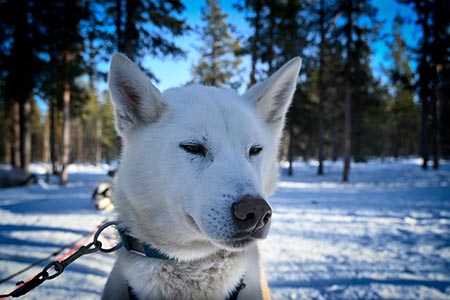
Zeus, Holmes' dog, is an Alaskan Husky, a purposely crossbred dog that is often mistaken for a Siberian Husky.
The Iditarod, Alaska’s iconic sled dog race, remains a celebration of the enduring partnership between humans and their canine companions. This year, Jessie Holmes, a name familiar from television, but not native Alaskan culture, claimed a second consecutive victory, showcasing how the Iditarod’s spirit welcomes newcomers and honors dedication. Holmes’ journey, supported by a devoted team of dogs, highlighted the mutual trust and training that define this sport. Over nine days, Holmes and his dogs tackled unforgiving terrain, from mountain ranges to the icy Bering Sea coast, demonstrating the resilience and adaptability of both musher and team. Holmes’ story reflects the growing diversity of participants: he first competed in 2018 and has since become a regular top contender, using his earnings to invest in dogs, better equipment, and a homestead near Denali.
This year’s race saw increased support from philanthropists, and it consciously made the welfare of dogs and veterinary oversight visible throughout the event. Although the field remains small due to the challenges of such an endeavor, the Iditarod continues to unite people from all backgrounds, brought together by their love for dogs and the shared pursuit of adventure.
Source: Former reality TV star Jessie Holmes repeats as Iditarod champ
When It Comes to Behavior, Doodles Might Not Be the "Best of Both Breeds"

Pampered goldendoodle.
We’re not in the business of posting anti-Doodle content. Whatever type of dog someone chooses to get – whether it’s big or small, young or old, mutt or purebred, from a rescue or a breeder – it’s ultimately a deeply personal choice, and we truly, genuinely hope it works out for everybody! For the dogs, the owners, the community. Everybody. That being said, we also hope people’s choices are based, as much as an emotional and unique choice can be, on the best and most accurate information available – not on urban legends, marketing, or social pressures.
So, let’s be honest: Doodles have benefited from more than their fair share of urban legends and marketing. For a long time, the big marketing legend was that they are hypoallergenic and don’t shed, which most folks today know isn’t exactly true. To be fair, the meaning of “hypoallergenic” isn’t fully understood by a lot of prospective dog owners, and even purebred Poodles aren’t entirely hypoallergenic (no dog is). These days, when people discuss the Doodle’s lack of shedding or how it is “hypoallergenic,” some egghead usually inserts themselves into the conversation to say “Well… actually,” so the legend is less vigorous than it once was, though it does persist.
Another selling point for Doodles (speaking of vigorous) is the idea that they benefit from “hybrid vigor” (a term bandied about on Doodle breeder websites) and will likely carry the best traits from their parent breeds. The ideal here is that the family gets a dog with, say, the delightful affability of a lab combined with the intuitive sensitivity of a Poodle. Meanwhile the traits that people perceive as negative somehow magically disappear. Alas, this best-of-both-worlds scenario is not necessarily the case, as supported by a big new survey out of the UK. In fact, your Cavapoo, Labradoodle, or Cockapoo may very well exhibit more undesirable traits than its progenitor breeds. Surprise!
Now, we’re just here to help bust a few myths, not slam the Doodle Industrial Complex. Behavioral traits are inherited, sure, but it’s even more important to know about the owners. For instance, did you know that Doodle owners are nearly twice as likely to have children living in their homes compared to owners of mixed breed or purebred dogs? There is no universe in which this detail doesn’t play into the energy level of the owners, how much training the average dog receives, and even which type of mischievous behaviors are likely to be deemed “acceptable” vs. “problematic.” So while we are delighted to see “just so” beliefs about Doodles challenged, we feel the most important thing here is the reminder of what a truly deep subject this is, as well as the opportunities for discussion and inquiry such challenges open up!
Source: Some 'designer' crossbreed dogs may have more problem behaviors than pure breeds
Louisiana Alligator Comeback Driven by Economic and Ecological Interests
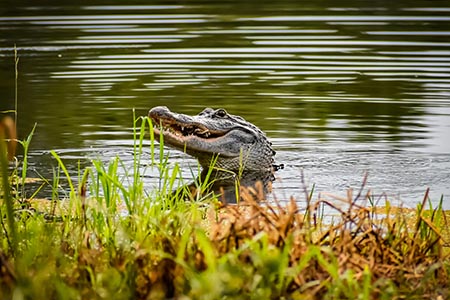
We just thought this picture was both majestic and adorable – did not realize the alligator
was in the process of eating a turtle until a few minutes later.
Louisiana’s alligator farms are an example of an American conservation success story, turning what was once a crisis for the species into a model for sustainable wildlife management. Decades ago, American alligators teetered on the brink of extinction, driven there by overhunting and habitat loss. But then, Louisiana state scientists came up with a creative solution: instead of simply banning alligator products, they allowed farms to raise gators for their meat and leather, while also requiring them to release a portion of their animals back into the wild each year. This approach not only satisfied the demand for luxury goods like boots and handbags, but also gave local landowners and farmers a real incentive to look after wetlands and protect wild alligators.
Today, there are an estimated three million alligators living in Louisiana’s swamps and bayous, a huge rebound from their lowest point of 100,000 in 1962. The state’s tightly regulated tracking system ensures that every alligator skin can be traced back to a legal source, discouraging poaching and supporting transparency in the global trade of exotic leathers.
While some animal rights groups worry that farming perpetuates demand for wild animal products, many conservationists see the program as proof that economic interests and wildlife protection can go hand-in-hand. The alligator industry even funds research on the species and their habitats; recent studies suggest alligators may play a role in helping wetlands store carbon, yet another reason to keep their numbers at sustainable levels. As luxury brands and consumers grow more conscientious about their role in conservation, Louisiana’s gator program stands as a hopeful example of how thoughtful, science-backed management can benefit both people and wildlife.
Source: Louisiana's alligator farms raise the reptiles for meat, skins — and conservation
An Animal Control Becomes Animal Care

Genesee County Animal Control wants to move away from the idea they are just "the pound."
With respect to Juliet, “what’s in a name” can be quite weighty – and in the case of Michigan’s Genesee County Animal Control, there has been a growing feeling that a rebranding is in order. Control is soon transforming into Genesee County Animal Care (perhaps by the time you read this). The swap is just a minor change, but “care” is less likely to conjure up images of dog catchers or “the pound,” and better represents the agency’s current ethos and growing array of community-friendly services.
Among these services are vaccines and a food pantry, which, like the name change, probably seems minor on the surface. However, given the rising cost of veterinary services and pet care in general, this sort of help can make a major difference for pet owners. It's great for the community, and serves the larger goal of emptying shelters – after all, providing struggling pet owners with services that help them keep pets in their homes is a great way of preventing those pets from being surrendered in the first place.
Source: Director says renaming Animal Control would take away dog pound stigma
Also in the News...
★ John Ball Zoo opening day 2026: New animals, events and experiences (It's Almost Zoo Weather)
★ Lenexa animal control respond, provide warning after ‘several reports’ of raccoons with canine distemper (Animal Illnesses; Public Health & Safety)
★ Shocking Find Near Lake Carmel, 7 Animals Discovered Mutilated in Bags (Decapitated, Uneaten Fowl)
★ ‘Best Birthday Ever’: Rare Animals Make Snowboarder’s Year (Outdoor Adventures; Lynxspotting)
★ Live Possum Found Hiding in Stuffed Animal Section of Airport Gift Shop (Possumspotting; Duty-Free Shopping in Australia)
★ Women charged after nearly 30 horses removed from Lexington County property (Alleged Felony Mistreatment; Horse Rescue Gone Wrong)
★ Animals With Bizarre Abilities Science Still Cannot Explain (Fascinating & Fanciful Lists; Finally a Cuckoo Feat that Doesn't Involve Parasitism)
Click here to see what is happening legislatively