Inside This Issue:
- 13 Holiday Weekend Fun Facts!
- The World's Oldest Official Rodeo, Now a Tradition
- AVMA to Vote on Updating Its Policies
- News Bites: A Couple of Follow Ups, Cool Pigs, and More!
13 Holiday Weekend Fun Facts!
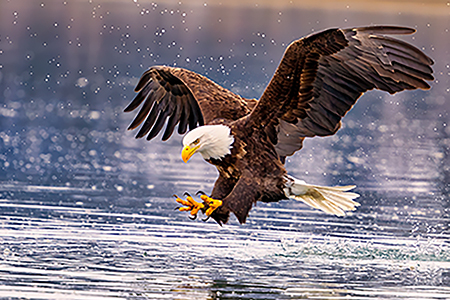
Benjamin Franklin was decidedly unimpressed by the bald eagle's penchant for stealing fish from
other birds. However, the bald eagle is quite capable of fishing for itself when the need arises!
Each year, we come across a ridiculous number of fun and interesting animal facts while scouring the news. And since we don’t want to send you off to Independence Day with nothing but admonishments about how this holiday makes animals miserable, we decided to share – in honor of the original 13 states – thirteen fun facts about animals and the human-animal bond. So, with no further ado...
- Have you heard the myth that Benjamin Franklin once proposed that the wild turkey should be our national bird? Well, it is just that – a myth. However, it is true that Franklin disapproved of using the bald eagle on our Great Seal, due to its "laziness" and general “bad moral character.” He felt that the wild turkey, by comparison, was at least a brave bird (though a little vain). Today, the wild turkey stands as a symbol of the resilience and adaptability of the first settlers here in America and has become synonymous not with the Great Seal, but with Thanksgiving.
- The American Alligator, once considered an endangered species, has made a remarkable recovery thanks to the efforts of a group that often goes unheralded: alligator farmers and hunters. The American Alligator was listed as an endangered species in 1967, with an estimated population of less than 100,000, but today, are no longer considered endangered and their range is actually expanding.
- The recovery of the American Bison is one of North America's most remarkable conservation success stories. In the 19th century, bison were hunted nearly to extinction – often as a deliberate strategy to force Native American tribes onto reservations by removing their primary food source. Photographs from the era show massive piles of bison skulls and bones, illustrating the scale of the slaughter. Even famous figures like Wyatt Earp participated in bison hunts. By the late 1800s, as bison numbers plummeted, a movement to save them began to take shape. President Teddy Roosevelt became one of the earliest advocates for wildlife conservation, helping to establish protected lands and pioneering efforts to preserve both animal populations and natural habitats. Thanks to captive breeding, the creation of protected herds, and the leadership of Native American tribes, the American Bison population has rebounded and can now be found in national parks and reserves across the country.
- Shout out to our very own – and only – marsupial, the American Opossum. One of the most misunderstood native animals in the United States, these lovely hissing weirdos are known for their prehensile tails and ability to 'play dead' when threatened. While they may not be the most charismatic of creatures, they deserve credit for providing pest control and ecosystem balance as consumers of ticks and rodents.
- East Coast vs. West Coast comparisons extend to the animal kingdom. Did you know that there are often Eastern and Western counterparts to the same animal? The uplift of the Rocky Mountains, which began about 70 million years ago, created a natural barrier that led to the evolution of distinct species in the east and west. The most well-known example is the eastern and western meadowlark, but it is not the only one; there are also eastern and western diamondback rattlesnakes, monarch butterflies, and gray squirrels, to name just a few.
- Have you heard of the food web unique to the Southwestern United States that includes the Harvester Ant, the Horned Lizard, and the Roadrunner? This ecosystem has been shaped by millions of years of evolution and has created a web of relationships that are unlike any other in North America. This food web has been affected by human activities, especially the introduction of non-native fire ants, which have had a devastating impact on the harvester ant population. Since the harvester ant is a keystone species and ecological engineer, not only does the soil quality suffer, but also the entire ecosystem is impacted when the horned lizards can’t find their favorite food, and the roadrunners can’t find their favorite snack either. Conservation efforts include protecting the habitat of these species, controlling the spread of fire ants, and reintroducing native species via captive breeding.
- The beloved honey bee is not a native animal to North America, but it has become a vital part of our agricultural success. Originally from Europe, they were introduced by early settlers (the earliest records of beekeeping were from the pilgrims), and have been happily buzzing along here (for the most part) ever since.
- The extinction of the Passenger Pigeon has become a reminder that when we know better, we do better. Once populous enough to darken the sky according to old newspapers, the Passenger Pigeon was hunted to extinction as a food source. The last remaining pair died in captivity in 1914, and it is now a symbol of the devastating impact of taking species without understanding the consequences.
- America’s tallest animal is the moose, an enormous member of the deer family. While seemingly peaceful, moose can be quite aggressive, especially during mating season. The moose is an important part of the ecosystem, helping to disperse seeds and create pathways through dense vegetation. Unfortunately, moose populations are declining due to habitat loss, prompting conservation efforts to protect their habitats and reduce human impact.
- Hummingbirds are only found in the Western Hemisphere, with the majority of species residing in the United States. These tiny birds are known for their iridescent feathers and ability to beat their wings up to 80 times per second. Contrary to popular belief, hummingbirds do not live off of nectar, they use it as rocket fuel, to help them jet on high speed missions of consuming spiders, gnats, mosquitoes, aphids, and other small insects.
- The horse is arguably the most important animal in human history, so we will keep it relegated to its impact on America. The domestication of the horse by Native Americans in North America is believed to have occurred around 6,000 years ago, with evidence of horse domestication found in the Great Plains region. These horses went on to carry the conquistadors, soldiers in the American Revolution, mail in the Pony Express, and they even helped mine coal up into the 20th century. Today we honor horses in parades, bet on them in races, and in some jurisdictions, they serve with police.
- Striking fear into the hearts of humans and animals alike is the rattlesnake. With over 30 species in North America, they are one of the more venomous snakes in the world. Rattlesnakes, though they can be dangerous, are an important part of the ecosystem, helping to control rodent populations and maintain the balance of nature. Believe it or not, they are also an important food source for other animals like eagles, hawks, and owls.
- Now, we circle back to the bald eagle. No animal could be more iconic to the United States than the bald eagle. Their status as the national bird began with their presence on the Great Seal in 1782, cementing the bald eagle's status as an American icon, though they did not become our official bird until 2024! These eagles have been through a lot. Centuries ago, they were a common sight across the continent, but by the 1960s, a combination of pesticides, habitat loss, and illegal shootings had left an estimated 412 nesting pairs in the continental United States (consider this tiny number in the face of the literal tens of thousands of bald eagles that were shot in previous decades). However, robust conservation efforts helped the devastated species to recover rapidly, and by 2007, bald eagles were removed from the Endangered Species list and officially designated as "recovered!”
The World's Oldest Official Rodeo, Now a Tradition
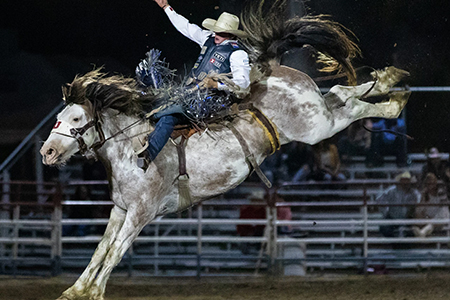
Image from the Prescott Frontier Days
Nearly 140 years ago, Prescott, Arizona, became the birthplace of the world’s first official rodeo, a tradition that has become a cornerstone of American culture and the legend of the Wild West. Several other towns contest the “first rodeo” title, but Prescott’s 1888 event stands out for charging admission and setting formal rules, laying the groundwork for professional rodeo as we know it today.
Over the years, Prescott Frontier Days has evolved from casual cowboy gatherings into a major event that draws thousands of spectators and top competitors from across the United States and around the world. This rodeo is not just a showcase of skill and grit: it’s a living link to the rugged spirit of the West, reflecting the values of resilience and independence that shaped the American frontier. The timing of the rodeo, held each year around the Fourth of July, deepens its significance. The event serves as a celebration of American independence, echoing the freedom and camaraderie of the early ranching days. The rodeo’s festivities, including live performances and one of Arizona’s largest parades, unite the community in a shared tradition that goes beyond competition. Local businesses benefit from the influx of visitors, but the rodeo’s true importance lies in the way it brings people together. Maintaining strong community involvement ensures that the spirit of the Wild West, and the sense of unity it inspires, remains alive for future generations. Even as the event grows in size and reputation, its roots in community, history, and national pride remain central to its enduring appeal.
Source: Arizona is home to the world’s oldest rodeo and it’s in full swing
AVMA to Vote on Updating Its Policies
The American Veterinary Medical Association (AVMA) will be voting on updating its policies this month, and the lineup is pretty interesting. Several of the issues these policies cover require nuance, forcing veterinarians to carefully balance the numerous duties they are expected to perform for animals, people, and the public good. Below are a handful of the items.
First off, and the one we are most focused on is the pediatric sterilization of animals. For decades, it felt like spaying and neutering each and every non-breeding animal that walked through the doors was simply “how it is done” at many animal hospitals. Six months for dogs, a little earlier for cats. In some cases, it almost felt like a moral crusade, with pet owners of intact animals feeling hectored or even judged by their veterinarians. Best practices and scientific knowledge of animal care are not static facts, however. As more and more research comes out demonstrating that sterilization doesn’t necessarily equate to a happier or healthier pet (especially if we are talking about dogs that are still maturing), more pet owners are opting to delay spaying or neutering until their animals are older – or in some cases, not going through with the procedure at all.
The proposed AVMA update shows they are clearly aware of all of this. While it supports the concept of pediatric spaying and neutering, it also says a lot more. To summarize: it says to follow the best current information, recommends sterilization based on the individual animal and population level, adds rabbits to the policy, and supports further research into the positive and negative effects of sterilization at all ages, as well as new methods (including nonsurgical) of sterilizing animals. Along those lines, it would change the term “spay and neuter” to “reproductive sterilization,” acknowledging that there are numerous methods of sterilizing pets.
Next up is simplifying the language surrounding “Therapeutic Pet Food Health Claims,” to basically say the AVMA supports federal and state oversight on labeling these foods. Given that the current policy manages to be a nearly unreadable word-salad at only one paragraph and five bullet points, perhaps opting for brevity is for the best.
Sow housing, like pet sterilization, is an issue where numerous factors need to be considered. What works for one animal or one farm may not work for another – lots of right and wrong answers, and no perfect housing currently exists. Here, we see a shift of focus to developing science-based improvement and focusing on good outcomes, rather than fixating on specific facility designs.
Finally, on the subject of cat declawing, the policy language shifts from “discourage” to “strongly discourage.” This, by itself, isn't a big shift. Veterinarians who perform the procedure already suggest alternatives to their clients, and explain to them that it’s a normal and healthy behavior for cats to, well… scratch. The unfortunate part of this resolution is the inclusion of charged language that makes the policy read as if it were informed by a PeTA intern. Is the suggested policy language factual and based on current research – yes. But it also carries a distinct “activist” flavor that is troubling. Words and tone matter.
Source: Pet food claims, sow housing, cat declawing policies go before AVMA House
News Bites: A Couple of Follow Ups, Cool Pigs, and More!
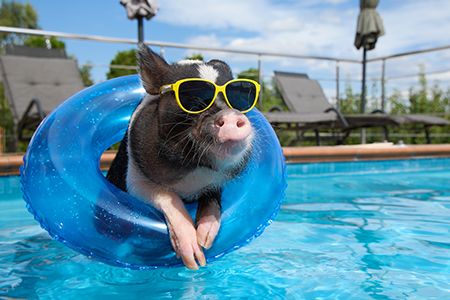
Pet pig keeping VERY cool.
Follow up from last week: Krystal Cherika Scott, the infamous Indiana woman who spent time in prison for making grotesque videos of animal cruelty, has been arrested and is back in jail after being caught with 12 cats and dogs – a major violation of her parole. Sadly, there have been no updates on the whereabouts of the German Shepherd, Bruno – the dog who led to Scott’s arrest. Bruno was last seen on a ring (doorbell) camera being dragged away by two of Scott’s companions.
Another follow up: you may be tired of hearing about keeping animals safe from the summer heat, but we really liked the angle of this story. Here, a man is told by his 7-year-old granddaughter that her pet pig, Norman, is uncomfortably hot. He sees her fanning off the pig in an air-conditioned room, and she explains to grandfather that Norman needs to stay inside, because he can’t handle the heat. Grandad’s first impulse was to pat his silly city-slicker grandkid on the head and go about his day. A pet pig lounging about in front of the AC, doted upon by his young human? Kids these days – absurd! But the exchange piqued his interest. So he looked up some facts on pigs, and learned that pigs are actually quite a bit more sensitive – and susceptible – to heat than he had ever imagined.
This was an important epiphany. We all have wrong or outdated assumptions on how to provide our animals with the best care. And there is nothing wrong with that. The science of animal care is constantly evolving, so the truths we learned a few decades ago could very well be false today. What does matter is that we remain curious and open to new information as it comes along, even if it seems a little counterintuitive. This doesn’t mean bringing pigs into our air-conditioned living rooms during the summer, of course – that would be absurd – but your animals will thank you for keeping up with the best methods of high-heat care! Especially if it involves cool treats.
It’s 2025, and one thing that people still desperately need to learn is that anything an animal enterprise gives up to animal activist groups will only appease them for a short time: they’ll always be back for more. In this case, just six months after New York’s statewide ban on (non-rescue) dog, cat, and rabbit sales from pet stores went into effect, we have a new call to ban the sale of (non-rescue) birds in New York City. And this comes on the heels of a bill banning the (non-rescue) sale of guinea pigs. As one exasperated pet store employee sighed, “If you take out the birds, it’s only gonna be fish.” But don’t worry: if the bird bill passes, the fish will be gone before too long, as well – unless, of course, they are being sold as rescues by an activist-approved group.
Good lord, would folks please stop throwing their dogs off of bridges and buildings? This violent form of abuse has been in the news far too often lately. All these stories raise a question of whether the crime itself has become more common in recent years or whether people are just getting caught more often, due to the omnipresence of cameras (someone is always recording) and social media (a perpetrator may be called out or confess their crimes online). There's also the possibility of copycat behavior. Whatever the case may be, we have two more stories this week. In the first one, a suspect has been arrested (dash cam footage was a big help). In the second story, it looks like we are at least getting a happy ending: a bystander caught an unidentified individual in the act, and managed to “talk them down,” and recover the dog before it was tossed to its doom. The medium-to-large size dog weighed an emaciated 26 lbs, and on top of that, was heartworm positive and seemed like she had never seen the inside of a house. But she is being rehabbed by a foster and doing much better. The dog, Star, is still painfully thin, and could stand to gain another 20 lbs. But in the meanwhile, she’s learning that home appliances aren’t terrifying and that it’s fun to walk nicely on leash – and best of all, seems to genuinely love her new lease on life!
Well, at least we were able to end things on a positive note. And on that, have a very happy and safe 4th of July Weekend, everyone!
Also in the News...
★ South Bend animal shelter pleads for help after swamped with 53 dogs and cats in 2 days (Rescue & Shelter Opportunities; Adopt, Foster, and Reclaim Lost Pets!)
★ (Video) Watch Arizona Animals Romp In Summer Snow (Summer Zoo Fun)
★ From bison to ticks, these are the 12 deadliest animals found in Kansas (L1: Lethal Neighbors)
★ Several animals killed in fire at northeast Las Vegas farm (Chicken & Goat Farm; Fire Controlled)
★ Nearly 60 animals found living in ‘deplorable conditions’ in middle GA (Hoarding Arrests)
★ Ocean Ramsey Reveals the Unexpected Animal She Trained with to Prevent Deadly Shark Attacks (Don't Try This at Home)
★ Which animals can count and understand simple math? (L2: How Many Fun & Goofy Lists Can We Get to in 2025?)
Sign up for the 2025 NAIA Conference at the early bird rate!
Click here to see what is happening legislatively