
Inside This Issue:
- Hannaford's Cage-Free Egg Pledge Comes Home to Roost
- Teenager Killed by the Pack of Dogs She Was Caring For
- News Bites: Coral Cures; No More Bison Selfies; Theileriosis in Iowa Cattle
Hannaford's Cage-Free Egg Pledge Comes Home to Roost
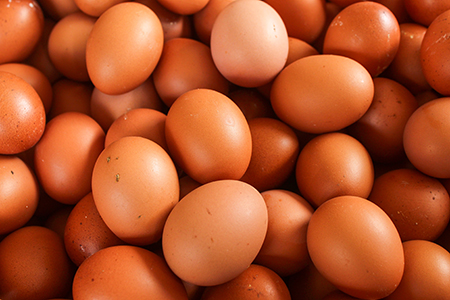
Nearly ten years ago, under pressure from animal rights activists, Hannaford’s parent company, Ahold Delhaize, made a promise that it would sell only cage-free eggs in U.S. stores by 2025. Now, its non-binding, self-imposed deadline has been kicked down the road to 2032, and animal rights groups are protesting. Hannaford says the delay comes down to supply shortages, cost, and lingering effects from avian flu. Most store-brand eggs on shelves aren’t cage-free, and the price gap – about 20 cents per dozen – remains a sticking point for budget-conscious shoppers.
Animal rights groups frame Hannaford’s delay as a failure to prioritize animal welfare. But this is a familiar script. For example, animal rights groups, like the former Humane Society of the United States (HSUS), pushed Massachusetts voters to adopt Question 3 in 2016, requiring cage-free eggs statewide. But years later, implementation is – predictably – still tangled up in cost concerns and farmer resistance. The reality is, these campaigns force companies and states into agreements with groups whose ultimate goal isn’t “better conditions,” but to make conventional egg sales (and eventually, all egg sales) impossible.
In these deals, the agricultural producers have to surrender something to get the activists off their back, while the only thing the activists have to “surrender” is their most current campaign (which will immediately be replaced by another). In the end, Hannaford and others got into this deal by chasing public goodwill – but signing up for promises that are tough to keep when costs hit and supply falls short. As with Massachusetts, a major location for Hannaford’s, the gap between activist demands and economic realities is wider than a promise can bridge.
Source: Animal rights group pressures Hannaford over delay of cage-free egg pledge
Teenager Killed by the Pack of Dogs She Was Caring For
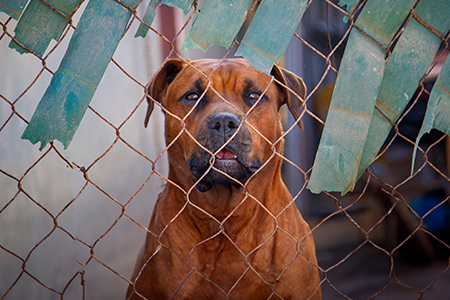
Last week, a teenage girl in Saline County, Arkansas was mauled to death by a pack of neglected dogs that she and her mother were trying to provide care for. This story is horrific on too many levels to count, and tragically, it was preventable.
The dogs – 30 to 40 – were kept on a property by someone who called their operation a “rescue.” Neighbors note that it was not a registered or licensed rescue operation, and that while it may have started with good intentions, it had clearly become a hoarding situation. Beyond the barking and mess that comes with keeping dozens of dogs, the animals were neglected and needed help (hence the girl volunteering), and several of the dogs were known to be vicious.
Neighbors who were interviewed after the attack say they had repeatedly complained to the county about the vicious, out-of-control dogs. Unfortunately, help didn’t arrive until too late. In fact, after the attack, the city of Benton's animal control stepped in to handle the dogs, because Saline doesn’t have its own animal control.
What a sad, pointless loss. Animal rescue operations really need to be licensed, inspected, and held accountable like any other entity that cares for animals. Simply claiming you are “rescuing” animals does not make you a rescue – and failures when it comes to caring for strong, 50+ pound dogs can have fatal consequences.
Source: 15-year-old Saline County girl killed by dog pack
News Bites: Coral Cures; No More Bison Selfies; Theileriosis in Iowa Cattle
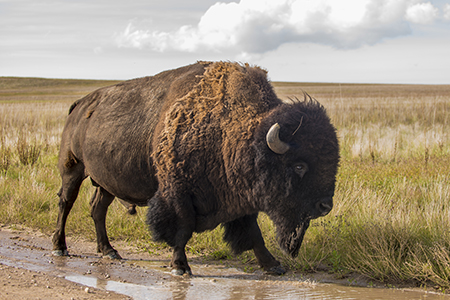
Who are all these people who think bison selfies are a good idea?
Corals are vitally important animals. They protect the coast, provide habitats for marine life, generate billions of dollars for the world economy, and on top of that, many of them are just beautiful to look at, too. But in case you still don’t appreciate corals, get this: they may also help you stay alive. Research led by UC San Diego’s Scripps Institution of Oceanography on soft corals has isolated the coral genes that produce cancer-fighting and anti-inflammatory compounds – and importantly, these compounds can be synthesized in a lab (kind of important, since we don’t want to be taking corals out of the ocean right now).
Does it ever seem like people who are super into causes like conservation or animal rights identify more with animals than their fellow human beings? Yeah? Us too. But have you ever considered that maybe they’re not misanthropic, so much as reading human traits into animals more than the average person? Extrapolating from the reporting in this Discover article, it seems like it could be possible!
An outbreak of a deadly, highly contagious strain of feline distemper has forced the Humane Society of Tampa Bay to halt the adoption and intake of kittens under the age of four months, and to enact a quarantine through Wednesday, July 2. But while kittens are unavailable at the humane society right now, if you’re up for adopting a guinea pig, you’ll have no problem – they recently received a ton of surrenders.
Can’t believe we still have to say this, but wild animals aren’t characters in a Disney movie, they don’t care about being in your next Instagram reel, and there’s no sure way to predict how one will act if you invade its space. With that in mind, the Utah Division of Wildlife Resources and Division of State Parks want to remind you that just because an animal isn’t a predator doesn’t mean it won’t hurt you. Respect their personal space: don’t get closer for photographs, and whatever distance you think you should keep from a wild animal… you should probably double it!
Be safe, cattle producers: theileriosis has made its first appearance in Iowa this year. The nasty protozoan disease is carried by the Asian longhorn tick (which recently appeared in Iowa), and is especially hard on younger cattle. It’s gonna be a long, hot summer. Cattle producers will need to be aggressive in controlling parasites. Those who suspect either the disease or the tick are encouraged to collect and submit appropriate samples to Iowa State University Veterinary Diagnostic Lab for testing.
Michigan wildlife officials recently managed to capture a black bear that had survived for two years (!) with a plastic lid trapped around its neck. The animal was first seen as a cub in 2023, but despite the lid, it managed to find food and make it through two winters. When the bear showed up again on cameras in May, experts set a trap, sedated it, and removed the lid. Although its neck was scarred and missing fur, the bear was in better health than expected. It is unclear how the bear got stuck, but the holes on bait barrel lids needs to be large enough to avoid incidents like this. It's a bummer it took two years to find that bear again, but we're impressived with its resilience and hope it has a much smoother-sailing adulthood!
Also in the News...
★ 52 cats surrendered to Mass. animal shelter from one cat owner (Shelter Takes on Rescuer-Turned-Hoarder Situation)
★ Who “Nose” what Cows Can Smell? (Understanding Preferences; Animal Care & Welfare)
★ Coyotes are out in NC. Here’s why, how to scare them off & keep pets safe (The Healing Power of Goats)
★ Swifts’ decline: how can Britons help these remarkable birds? (Bird Conservation; Insect Decline & Habitat Loss)
★ State Board of Animal Health requiring lactating dairy cows to be tested for avian flu before entering state fair (State Fair vs. Bird Flu)
★ Sheriff’s Office seizes 250 animals in alleged Carrollton cockfighting ring (A Really Bad Scene; We Are Legally Required to Say "Alleged")
★ 19 Wild Animals You Might See While Camping In Maine (Wildlife Spotting Lists; Outdoor Summer Fun)
Sign up for the 2025 NAIA Conference at the early bird rate!
Click here to see what is happening legislatively