

Inside This Issue:
- The Unsung Heroes of Wildlife Rehabilitation
- Three Rodeo Horses Die After Bizarre Bee Attack
- Animal Enrichment Isn't Something You Can Just Brush Off
- Mother Bit, Child Seriously Injured at Shelter
- News Bites: Not-So-Wild Axolotls; More Dangerous Dogs; Beware of Animal Scams
The Unsung Heroes of Wildlife Rehabilitation
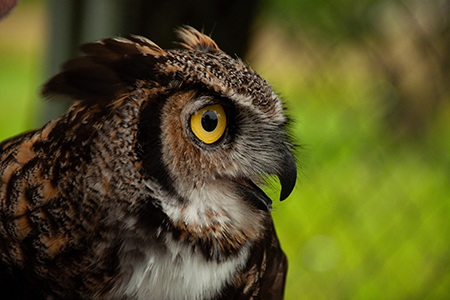
Great horned owl.
Wildlife rehabbers are the oft-forgotten champions of conservation, quietly working behind the scenes to save injured and orphaned animals. At places like Second Chance Wildlife Care Center (SCWCC), founder Debbie Pappas and her small team take in animals that need help, often after calls from the public or authorities.
Organizations like the Division of Wildlife Resources often rely on rehabbers when animals are found in distress. Pappas is one of the few rehabbers in Utah who is licensed to care for all wild species. She and her volunteers juggle this demanding work with their regular 9-to-5 jobs, and they don’t get paid for their efforts. Pappas, in fact, often spends her own money to keep the center running. While large organizations rake in sizable donations, small groups like SCWCC scrape by and take in every animal they can responsibly care for.
Some animals can’t return to the wild, so they become ambassadors for education, helping to teach the public about wildlife. Others, like a great horned owl named Aretha, help raise orphans of their own species, passing on the skills they need to survive. Many of the animals that come through SCWCC’s doors are victims of preventable harm, often through carelessness, or, sometimes, cruelty.
Pappas stresses that no one can care for a baby animal better than its mother and urges people to think before intervening (this is a refrain you are probably sick of hearing from us, but it is true). Despite the challenges and occasional heartbreak, Pappas and her volunteers find joy in every successful release back to the wild. But they can’t do it alone. All rehabs rely on donations and volunteers. Just a few hours of help from volunteers each week can make a difference, as can seemingly “basic” material donations like bleach, paper towels, or medical supplies like syringes and Lactated Ringers.
Source: Second Chance Wildlife Does What DWR Doesn’t
Three Rodeo Horses Die After Bizarre Bee Attack
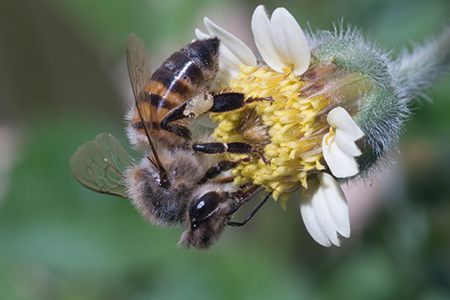
Can you tell what type of bee this is?
Three beloved rodeo horses died after being attacked by what was likely a swarm of Africanized bees in Comanche County, Texas. Until recently, Africanized bees were not thought to be present in this part of Texas, making the incident especially alarming for local residents and authorities.
When the bees descended on the animals, their owners tried to help but suffered numerous stings themselves. Emergency crews responded, using protective suits and spraying soapy water to drive off the bees, but the horses were fatally injured, their organs failing after suffering hundreds of venomous stings.
Officials believe Africanized honey bees were responsible, given the intensity and persistence of the attack. While all bees will defend their hives, Africanized bees – sometimes called “killer bees” – are especially aggressive toward perceived threats, responding in larger numbers and pursuing their targets farther than European honey bees. Africanized honey bees look nearly identical to European bees, so behavior is an easier way of gauging what type of bee one is dealing with. Africanized bees also survive in a wide range of environments, often nesting in places we might not expect, like hollow trees, wall cavities, junk piles, or even holes in the ground.
If you suspect you’ve found an Africanized hive, don’t try to remove it yourself. Instead, contact your local agricultural extension office. They can confirm the bee type, advise on safe removal, to better help protect other bees, people, and animals in the area.
Source: 3 beloved rodeo horses killed in bee attack, fire department says
Animal Enrichment Isn't Something You Can Just Brush Off
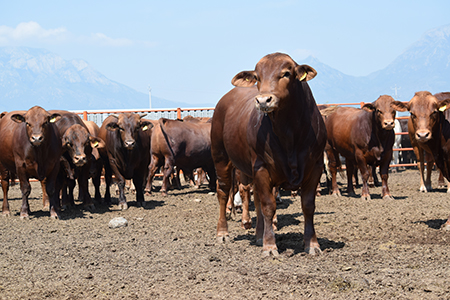
Where's my brush?
Recent research from Murdoch University shows that feedlot cattle given access to grooming brushes experience less stress and are noticeably friendlier. This kind of simple enrichment, tested on about 170 cattle over 100 days, made the animals more content and playful and demonstrated that even small changes can make a noticeable, positive difference.
Associate Professor Teresa Collins, who led the study, explained that providing cattle with something to do – like grooming – supports their natural behaviors and keeps them engaged. The cattle consistently used the brushes throughout the study, suggesting they truly value this mental and physical stimulation. The grooming brushes probably feel pretty great to the cattle, too.
This fits with what we see across almost every species: animals thrive when they’re given a chance to act with purpose and interact with their environment. Environmental enrichment, whether for cattle or for other animals, leads to healthier, less stressed creatures and often benefits the humans who work with them too. For beef farmers, these small changes not only improve animal welfare, but also meat quality, and help them meet sustainability goals without much extra cost or effort.
Source: Grooming brushes help feedlot cattle stay calmer and more sociable, study finds
Mother Bit, Child Seriously Injured at Shelter
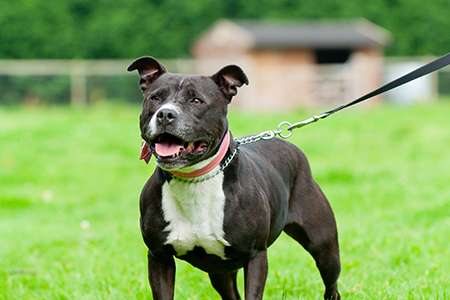
Good dog? Bad dog? Doesn't matter, it shouldn't be able to jump on a strange kid.
Imagine taking your eight-year-old child to the shelter to adopt a dog, only for your kid to end up at the hospital with severe bite wounds, probable life-long scarring, and perhaps even a trauma-induced aversion toward dogs. That’s what happened when Lauren Seagroves took her daughter to North Carolina’s Wake County Animal Center.
According to Seagroves, she and her daughter were in a small room where they were going to be introduced to a dog they had expressed interest in, a young Staffordshire Bull Terrier. But there was no pleasant introduction here – the moment the dog entered the room, it lunged at Seagroves’ daughter, biting down, and leaving wounds so deep that muscle was visible. Seagroves herself was bitten while trying to pull the dog off her child, but did not require hospitalization. She feels the staff did not handle the encounter appropriately (her description of them during the incident sounds like they were standing around in shock, rather than helping), and she questions why such an aggressive dog would even be available for adoption.
The investigation into this incident is ongoing, so anything beyond Seagroves’ description is speculation at this point. This terrifyingly botched encounter – where it sounds like the dog just charged into the room – may be a dangerously casual operating procedure that needs to be changed, a failure in training, or staff simply not performing their jobs correctly. The dog itself may have been unvetted or improperly assessed, but while shelters should strive to gather information and create accurate behavioral profiles of their dogs, that’s kind of beside the point here. Because even if this was the world’s friendliest, most loving dog, it should have never had an opportunity to simply run up and tackle a small child! What an awful day for the child and her mom. More on this story as it develops.
Source: Dog attack at Wake County Animal Center leaves mother and daughter injured
News Bites: Not-So-Wild Axolotls; More Dangerous Dogs; Beware of Animal Scams
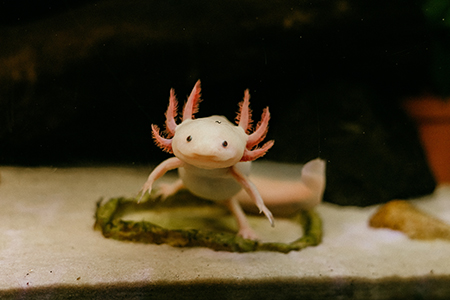
Domesticated axolotls like this have been bred to have lighter colors than their wild counterparts, but these guys do pretty well in the wild, too!
Axolotls’ cute faces and unusual appearance make them popular pets, and their remarkable ability to regenerate organs (including parts of their brain!) makes them invaluable subjects for research. Unfortunately, factors like pollution and habitat loss have made these adorable amphibians critically endangered in the wild.
There may be unexpected hope for the species’ wild populations, though. New research demonstrates that captive-bred axolotls released into the wild actually do, well… pretty darn good! This success goes against the common belief that once an animal is brought into captivity, it and its offspring are no longer suitable for reintroduction to the wild. However, this and other successful reintroduction programs – from fish to parrots, to gazelles – are proving this old line of thinking wrong. And for a critically endangered critter like the axolotl, what a wonderful time for conventional wisdom to be wrong!
Speaking of dangerous dogs, a proposed bill in Texas, House Bill 2806, would increase penalties against dog owners if their dogs attack someone unprovoked, and the attack causes bodily injury. If this seems a bit wordy and oddly specific, it is: there is already a similar law in Texas holding dog owners accountable for letting their animals hurt others. But currently, the attack has to happen off the owner’s property and the injury must rise to the level of “serious” (or worse), which makes it harder to penalize negligent dog owners.
A lower threshold for applying penalties may help. After all, when a dog grievously injures or kills a person or pet, neighbors almost always come out of the woodwork after the incident to say that the dog had displayed aggressive behavior numerous times in the past – sometimes they’d even called animal services or the police to voice their concerns. In other words, it is usually a problem that ramps up over time, rather than simply appearing out of nowhere. So from that perspective, HB 2806 could help the problem of aggressive, uncontrolled dogs before the problem behavior becomes a tragedy. It's certainly a nice idea. However, as with all legislation, it would need to be enforced if we want it to have any chance of being effective.
You already know you have to be careful about which animal groups you donate to… but did you know you probably want to double check your animal group’s username and URL before you hit “donate,” too? Most donations are handled online these days, and unfortunately, scammers are all too eager to use this quicker, more impersonal format to take advantage of your goodwill – and steal your cash. This investigative piece covers the way scammers steal organizations’ logos and create names that are just slightly off from the real McCoy, and gives you tips on how to avoid being scammed by impersonators before you click on the "donate" button. Check it out. It’s a wild world on the web – protect yourself and your favorite animal organizations!
Also in the News...
★ Woman arrested after animal cruelty caught in ‘disturbing’ video: Sheriff (Animal Cruelty & Domestic Violence; Crime on Camera)
★ Boy Draws 99 Animals for David Attenborough’s 99th Birthday– Researching Which are his Favorites (Now That's a Gift!)
★ Endangered New Zealand bird caught fighting ‘at risk’ reptile in rare footage (Bird Brawl)
★ Animal Foundation may have to euthanize animals due to overcrowding (Shelter & Rescue Issues; Legislative Piggybacking)
★ Ancient reptile footprints upend theories about when animals evolved to live on land (Surprise Findings; Foot & Claw)
★ 220+ animals found during Howard Township animal cruelty investigation (Hoarding; Warrants & Seizures)
★ 16 Most Dangerous Amazon Animals: Look but Don't Touch (Deadly Lists; A Few Surprise Entries)
Click here to see what is happening legislatively