

Inside This Issue:
- California Sanctuary Owes Big Money to State After Violations
- Do Beehive Fences Deter Elephants? The Context Matters.
- Tragedy in Texas: Dogs Kills Their Dogsitter
- News Bites: Chimera Organs, Magic Monkeys, and More!
California Sanctuary Owes Big Money to State After Violations
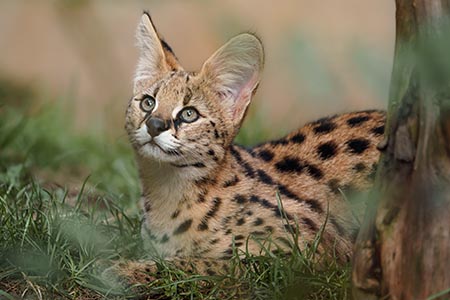
Serval!
A Ventura County animal sanctuary, Born to Be Free, has been hit with more than $50,000 in penalties for keeping exotic animals without the necessary permits. The sanctuary, located in Frazier Park, had a diverse lineup of animals including lions, leopards, warthogs, a European brown bear, a serval, a fishing cat, and several unusual hybrids such as leopard-tiger and lion-tiger crosses, along with a wolf–dog mix. In March, after receiving “multiple complaints that restricted animals were being housed at the site without proper authorization” (this seems like an oddly specific thing to complain about), the California Department of Fish and Wildlife (CDFW) officials inspected the facility.
Born to Be Free reportedly accepted the animals from another organization, with its owner, Rhea Gardner, believing she could keep them under an existing permit tied to the property’s previous owner. Unfortunately for Gardner, California law requires specific permits for restricted species, and this isn’t something that is transferable, regardless of one’s good intentions. State officials emphasized that these regulations are meant to ensure specialized care and safety measures are followed. The animals were removed in May and sent to other locations deemed more compliant. Now, Born to Be Free must cover civil penalties, court costs, and reimbursements to the state totaling $50,435. The amount of which could have provided plenty of healthy meals for the removed animals.
Now, when it comes to animal care, it is true – sometimes painfully true – that good intentions aren’t enough: standards, regulations, and permits exist for a reason. On this, CDFW is 100% correct. And, frankly, even doing a great job outside of the law isn’t a free pass: letting a shining star ignore rules everyone else has to follow is unfair and sets a terrible precedent. All that said, if someone is truly mistaken about the law, but providing good animal care and willing to come into compliance, our view is that it’s far better to work with them than to run up the score for Team Bureaucracy. Now, is that what happened here? We can't speak to Gardner's true knowledge of the situation, nor can we speak to the care standards or safety at her facility (though the animals looked pretty healthy), but at least from our vantage point, this all seems pretty heavy handed.
Do Beehive Fences Deter Elephants? The Context Matters.
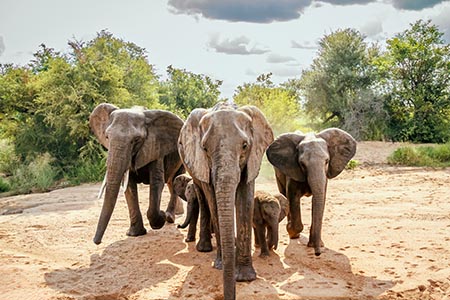
A magical scene for many... but a nightmare vision for Botswanan farmers. Context matters.
In Botswana, elephants stand out for how secure their lives are compared to those in neighboring countries. Poaching isn’t the constant threat it is elsewhere, and political stability means big die-offs are rare. The country’s natural bounty, ample food, reliable water sources, and expanses of untamed land, hasn’t gone unnoticed by elephants from across Southern Africa. Over time, these “immigrants” swelled Botswana’s herds, making it home to the continent’s largest elephant population.
All that elephant abundance comes with real challenges, especially outside the parks in rural areas where people rely on the land for their livelihoods. Botswana’s famous beef industry dots the countryside with cattle fences, which cut across wildlife migration routes. Resident elephants find their age-old paths blocked and, over the years, start crowding together in accessible spaces. With too many elephants in the same patch and not enough wild food to go around, some will target village crops or even wander into the outskirts of towns, setting the stage for frequent conflicts with people. For local families, keeping a farm afloat often comes down to whether hungry elephants trample fences and devour months of the family's hard work in a single night.
Conservation researchers like Dr. Tempe Adams are searching for strategies that let people and elephants share the landscape with fewer run-ins. Recent scientific efforts have explored creative deterrents, including high-tech fence barriers and the surprising potential of using bees. In some African countries, strings of live beehives were placed as living fences around fields (here is an example of their construction). Elephants, recalling bad run-ins with angry swarms, quickly learned to avoid these buzzing lines of defense. Before rolling out this strategy in Botswana, researchers wanted to see if local elephants would react the same way. Instead of building expensive fences, Dr. Adams tried using recorded bee sounds to see if she could scare elephants away in a simpler, cheaper way. Some elephants turned and ran. Some didn’t even flinch. Results showed moderate success compared to using random noise, but nothing as definitive as in regions where bees are part of elephant memories.
It turns out Botswana’s dry climate and limited flowering plants mean fewer bees and thus fewer elephants with a reason to fear them. Where bees are scarce, elephants might never have experienced those stings that make bees so memorable elsewhere. That seems to be the crucial difference. Scientists learned an important lesson: not every conservation hack from one country will automatically work somewhere else. Local context matters: for example, bee hive fencing in Southeast Asia may not work because the region's bees are relatively docile. Testing new deterrents in Botswana’s harsh landscape means grappling with low bee populations, different elephant experiences, and the realities of subsistence farming. The research suggests future strategies might need to focus just as much on rebuilding bee populations as on changing elephant behavior. Traditional farming mixed with modern science, and collaboration across borders, may offer the fewest casualties for both people and elephants.
Tragedy in Texas: Dogs Kill Their Dogsitter
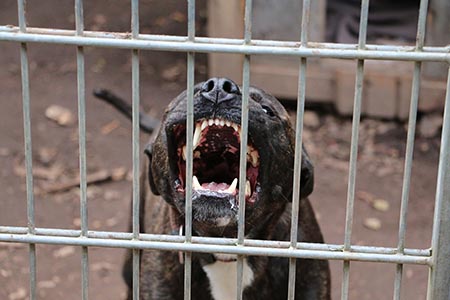
Stereotypical "Scary Pit Bull" picture.
In Tyler, Texas, a 23-year-old college student, Madison Riley Hull, was viciously attacked and killed by three pit bulls she was caring for. The young woman was familiar with the owners of the home and their dogs and had even cared for the homeowners’ children in the past. Hull did not appear to have any reservations about the dogs, though before the attack, she apparently told her mother that something seemed different about their behavior. After the attaack, the sheriff’s office was called, and one of the dogs was shot and killed by a deputy who arrived on the scene after the pack* turned its attention on him. The other two dogs were euthanized last week after an agreement was reached between the parties involved.
The length of time between Hull’s death and the euthanasia of the remaining dogs involved in the attack, and the fact that an agreement over the euthanasias had to be reached definitely raises a few questions. Like, were people actually arguing that the dogs shouldn’t have been put down? Of course, we aren’t privy to the particulars, and likely never will be.
Regardless, this tragedy highlights the horrific, lethal damage that can be wrought by large, powerful dogs, especially when attacking as a group. Anti-pit bull people will use this story as fuel for their BSL campaigns – which we oppose – while pit bull/bully advocates will largely stick to the “blame the deed, not the breed” or “not my pittie” script while evading or even denying the practical issues that accompany a dog’s size, strength, and inheritable behaviors. If we want to prevent tragedies like this in the future, we need to come together for a serious discussion about responsible dog ownership, liability, consequences, and public safety – one where “solutions” like breed bans or the denial of basic physics are off the table – and we need to start this dialogue today.
* depending on the source of the story, the deputy was attacked by one dog, all of the dogs, or none of the dogs. The facts regarding this aspect of the attack are unclear. What is clearly established is that the deputy shot and killed one of the dogs, at which point the other two ran away.
Source: 23-year-old dog sitter fatally attacked, leading to euthanization of involved dogs.
News Bites: Chimera Organs, Magic Monkeys, and More!
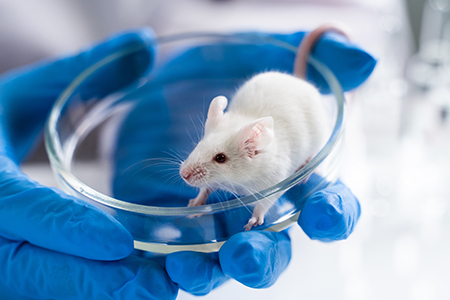
Cute lab mouse. Probably 100% mouse.
If you’ve ever read Margaret Atwood’s Maddaddam trilogy, you already know how this ends, but for everybody else, just imagine the possibilities: eight years after the human-pig chimera (essentially, pig fetuses acting as hosts for human cells), scientists have figured out a way to bypass the “alarm system” present in an organism’s cells that prevents alien (in this case, human) cells from growing and competing alongside its native cells. What this means, essentially, is that scientists are much closer to growing full-on human organs for transplant in animal hosts than they were only a few years ago. Now, much like a mouse’s RNA innate immunity creates a barrier for human cells to flourish, ethical questions and a general ick factor around the idea of “organ farms” stand in the way of fully appreciating this as a scientific achievement – some compartmentalization is necessary. But regardless, this breakthrough is huge, especially in light of humanity’s rapidly growing need for organ transplants.
Here’s a neat blurb from the world of animal cognition: animals that possess human-like hands may be more susceptible to sleight-of-hand tricks than other animals. When the ol’ French drop was played on different species of monkeys using their favorite treats as a reward, the monkeys with more human-like hands fell for the trick way more often, suggesting that the monkeys’ lifelong experience with their own hands affected their expectations when watching human hands perform a magic trick. In a cruel twist of fate, they were betrayed by their own knowledge – proving once and for all that it takes thumb to know thumb (sorry).
The lioness that mauled a Brazilian teen to death after he climbed into her enclosure will not be euthanized. The horrific incident occurred at a zoo in João Pessoa, Brazil, and as most things are these days, was captured on video. The young man, who had been diagnosed with schizophrenia and institutionalized multiple times, had a longstanding dream of being close to lions, and had already acted on that dream once by trying to sneak onto the landing gear of a plane bound for the continent of Africa – where he believed he would become a lion tamer. Luckily, he was found before the plane took off. Tragically, nobody was able to stop him this time, as seen in the heartrending video. After the man's death, there was a lot of online concern over the fate of the lioness, but in a post to Instagram, the zoo said that despite the bloody incident, they never considered euthanasia for their lion: “Leona is healthy, does not exhibit aggressive behavior outside the context of the incident, and will not be euthanized.”
Also in the News...
★ Dogs, parrots and peacocks live at this school and help ease student stress (Human-Animal Bond High School)
★ (Video) What Blind Cave Fish and Venomous Snails Can Teach Us about Diabetes (Animal Studies; Human & Animal Health)
★ Midstate animal shelters team up to find homes for animals this holiday season (Rescue & Shelter Events; Adoption Opportunities)
★ This High Arctic rhino may change what we know about ancient animal migrations (Arctic Rhinos Were Indeed a Thing)
★ 17 animals rescued and 4 found dead in Ontario County home Tuesday (Neglect & Abuse; Animal Investigations & Rescues)
★ PetSmart Reveals List of Top 15 Most Festive Pet Cities (Holiday Lists; Is Your City Among Them?)
Click here to see what is happening legislatively