
Inside This Issue:
- NAIA at CITES CoP20
- Unexpected Animal Interest Alliances
- Halloween in December: Animal Horror Stories
- Michigan DNR Completes Ranch Purchase, Acquiring Over 8,800 Acres of Public Land
NAIA at CITES CoP20
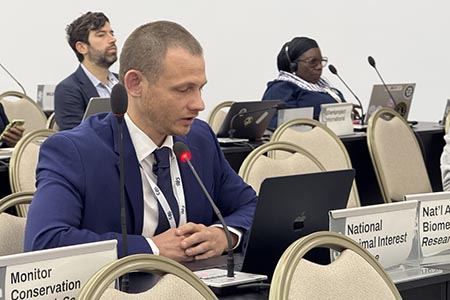
NAIA Advisory Board Member and CITES Engagement Program Director Art Parola at CITES CoP20
The Convention on the International Trade in Endangered Species, better known as CITES, is a treaty with 185 signatory countries, including the United States, with a mission of ensuring that international trade in fauna and flora does not threaten species with extinction. Every 2 to 3 years, the Parties to the Convention meet to make decisions on the framework of the Treaty, as well as to amend the species regulated under the Treaty.
Since its inception in 1973, the CITES has been a valuable tool for recovering species once on the brink the extinction. The American Alligator and Saltwater Crocodile both owe their recovery partially to the regulation provided by CITES. However, CITES has also been misused to prohibit or restrict trade on ideological grounds as opposed to scientific ones. Over the years, animal rights activist groups have gained increased influence in decision-making in CITES, leading to outcomes that harm species conservation in contravention to the Treaty's purpose. Therefore, it is critical that groups that support sustainable use of wildlife and fisheries resources have the opportunity to be heard in the decision-making processes of CITES.
NAIA Advisory Board Member and CITES Engagement Program Director Art Parola attended the 20th Conference of the Parties in Samarkand, Uzbekistan November 23rd through December 5th as an Observer to monitor discussion, provide subject matter expertise to delegates, strategize with other allied groups from the United States and around the world, and directly advocate for sustainable use of wildlife and fisheries resources through interventions. NAIA has been involved with CITES for decades. While CoPs are held only every 2-3 years, participation in intersessional meetings, providing input to working groups, and monitoring implementation and proposals results in a constant workload for NAIA on CITES issues. NAIA will continue to engage to ensure the best outcomes for wildlife and people and has already started preparations for a Standing Committee meeting in Fall of 2026.
We consider ourselves blessed that we can observe and actively participate in these events. Please stay tuned at naiaonline.org for Art's full recap of 20th Conference of the Parties – opinions, video, and predictions – late next week.
Unexpected Animal Interest Alliances
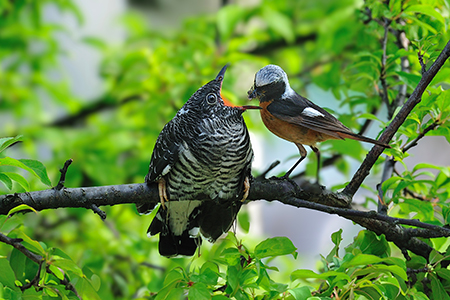
Are they related?
So often these days, we read stories about people – colleagues, friends, romantic partners, family members – who, due to their differing world views, reach a point where they can simply no longer abide one another. They can’t communicate without arguing, they are unable to agree on even the most basic concepts of greater good, and there’s a reasonable chance they don’t even accept the same version of reality. It’s so disheartening! Fortunately, the animal kingdom has provided us with some fantastic examples of cooperation lately – sometimes between unexpected partners – and what fascinating and inspiring lessons they have been!
First off, we have numerous species of birds uniting against a common enemy: the dreadful cuckoo. An October study by Nature Ecology & Evolution shows that numerous species of birds across multiple continents share the same call for “cuckoo,” a brood parasite that is understandably reviled within the larger bird community. Once a cuckoo is spotted, this call is emitted, and birds from far and wide will show up to beat the ever-loving tar out of it.
Birds and squirrels also share common warning alarms for raptors, and birds will even come together to drive off a perching raptor. It’s not all about choosing violence, though – in at least one case, birds with great vision combined forces with birds that have a great sense of smell, ultimately resulting in both species of bird catching more fish. OK, the fish delegation just informed us this still very much counts as a form of violence, but hey – the point about cooperation still stands!
Sources: How Animals Form Unlikely Alliances to Keep Predators Away
Halloween in December: Animal Horror Stories
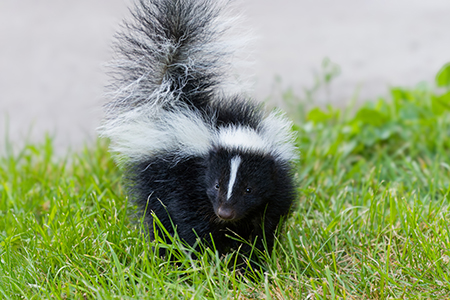
Adorable. But you're going to have to change your upcoming plans if you get sprayed or bit (or scratched) by one...
We’re a little late for Halloween, but these horrific animal stories won’t wait until next year. First off, we have a nightmare in Michigan, where the recipient of a life-saving kidney transplant became ill about five weeks after surgery, was hospitalized as symptoms worsened, then died. The cause? Rabies that had been hiding out in the donor’s kidney. Yikes! This recipient wasn’t the only party affected. Three other people were found to have received corneal grafts from the donor, too. These folks immediately received post exposure prophylaxis (PEP) and had their grafts removed (the surgery is supposedly not that painful, but this still sounds awful) – fortunately, none of them were symptomatic, and they’re probably in the clear now.
Originally, it was believed that the donor, who already suffered from numerous chronic illnesses, had died after experiencing a cardiac arrest. But delving deeper into his past, it was uncovered that five weeks prior to his death the donor had been scratched by a “predatory” skunk. The donor believed he had only been scratched by the skunk, not bitten, so this contact was glossed over as unimportant at the time. Tragically for both the organ donor and the recipient, you can get rabies from a scratch, too – it’s very important to receive PEP after any sort of scuffle with a potentially rabid animal. Had the donor sought PEP care after the incident, both he and the person who received his kidney might still be alive today.
A team of researchers exploring Antarctica’s remote seafloor uncovered a remarkable predatory sea sponge shaped like a perfect ball… of death. This sponge captures and digests live animals with tiny hooks, a rare adaptation in a group better known for passive filter feeding. The expedition used robotic submarines to study areas newly opened by a drifting iceberg, exposing parts of the seafloor far beneath any sunlight. Their remote cameras revealed rich coral gardens, hydrothermal vents, and glimpses of rare animals.
Most of the deep ocean in the Southern Ocean remains largely unexplored because of harsh weather and limited ship access. We haven’t even begun to discover all the unusual species and unique habitats and with growing interest in commercial exploitation, quicker assessment is crucial. By using on-board workshops and genetic techniques, this team was able to speed up the identification of new species, helping fill important gaps in knowledge. These discoveries show how varied life in the deep Antarctic can be, with creatures that survive in extreme cold, total darkness, or on volcanic vents fueled by chemical energy instead of sunlight. As scientists race to catalog these species, they hope this information can shape conservation efforts before these habitats change or disappear.
Finally, on a lighter note, we came across yet another silly list of “deadliest animals,” this one covering the supposedly eight deadliest animals in the Southern region of the United States. This list certainly doesn’t do snakes any favors, with various vipers occupying four of the eight slots, but it does us, as readers, a big of favor with its short form descriptions and several lovely photographs – including a gorgeous, but rather unsettling closeup of several hungry yellowjackets. As always, these animals are just being animals – they’re not actually out to get you. But it’s important to be aware and respectful of your surroundings… and to avoid accidentally smashing up a critter’s home (especially if it’s a venomous critter)!
Sources: Man dies of rabies after kidney transplant from donor who saved kitten from skunk, Killer sea sponge, unlike anything seen to date, traps and devours live animals, The 8 Deadliest Animals In The Southern United States
Michigan DNR Completes Ranch Purchase, Acquiring Over 8,800 Acres of Public Land
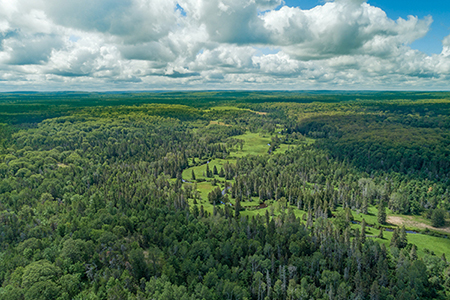
A whole lotta land. Photo: Michigan DNR
The Michigan Department of Natural Resources (DNR) just completed its purchase of Cheboygan County’s Black River Ranch, adding over 8,800 acres to the Pigeon River Country State Forest. This land includes trout streams, lakes, and wildlife habitat that numerous black bears, white-tailed deer, and elk (especially elk) call home. Some of the sportsmen who hunted on the ranch’s property weren’t thrilled about the land opening up for public use, and that’s a fair grouse – lots of people have doubts when it comes to the concept of state ownership and management, and even more people don’t like change (especially when they already enjoy things as they are). However, the conservation, land management, and recreation opportunities afforded by this pristine area are something the state has been drooling over for almost a half century, so the purchase was likely a matter of “when” rather than “if.” The DNR is understandably quite pleased with this sale, and hopefully future public users will be, too. In our era of perpetual screentime, being able to find spots outdoors where we can unplug and get away from it all – and preserving those spots – is more valuable than ever.
Source: Showcasing the DNR: A landmark investment in public land
Wildlife Sting Seizes Record Number of Illegally Traded Animals
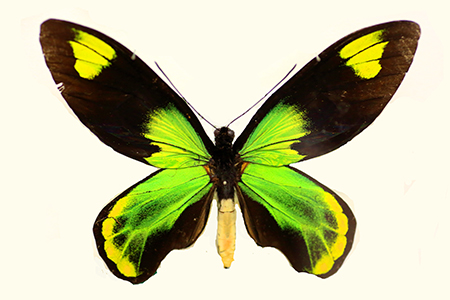
When it comes to wildlife trafficking, butterflies usually aren't the first animal you think of...
Law enforcement from 134 countries took part in the latest annual crackdown on illegal wildlife trade, part of a long-running operation led by INTERPOL and the World Customs Organization that began in 2017 with participation from 138 nations. This year’s sweep, held through September and October, resulted in the seizure of nearly 30,000 (!) live animals as the trade in illegal exotic pets surged. Alongside animals, authorities confiscated record quantities of wild animal meat, insects, plants, and timber. Investigators identified more than 1,000 suspects and made several arrests across multiple countries.
There was a notable increase in cases of wildlife products trafficked from Africa to Europe, including large hauls of bush meat from giraffe, zebra, and antelope. The operation also uncovered a sharp rise in the smuggling of butterflies and other arthropods, with nearly 10,500 seized, raising concerns about ecological disruption and public health risks. The illegal wildlife trade is thought to generate at least $20 billion annually, with most trafficking involving animal parts and products, often for food or traditional medicine, though demand for live exotic pets continues to grow.
Source: Interpol-led global wildlife sting makes record seizures of animals, plants, timber
Also in the News...
★ Just how monogamous are humans? Scientists break down how we compare with other animals (A Different Kind of Mirror Test)
★ At This Animal Hospital, Your Pet Gets Treated Like a Human ("Human Grade" Medical Treatment for Animals)
★ Adoption fees waived for pets at Animal Rescue League this week (Rescue & Shelter Events; Adoption Opportunities)
★ Millions of Years Ago These Animals Shaped the Arabian Sea (The 21 Millon Year History of Sea Cows)
★ Saratoga County women under court order not to have animals facing new charges (Cruelty, Injury, and Unlawful Animal Possession)
★ Pictures of the year: Animals (Lists I: Photo Edition)
★ Scientists discover funky-nosed 'Pinocchio chameleon' is actually three species. Here's the fun way to tell them apart (Lists II: Known by the Nose)
Click here to see what is happening legislatively