

Inside This Issue:
- Animal Liberationist Who Took Four Chickens Found Guilty of Trespassing and Conspiracy
- Idealism and Elephant Conservation
- News Bites: Climate Change and Plasticity, Cool Puppy Story, and More!
Animal Liberationist Who Took Four Chickens Found Guilty of Trespassing and Conspiracy
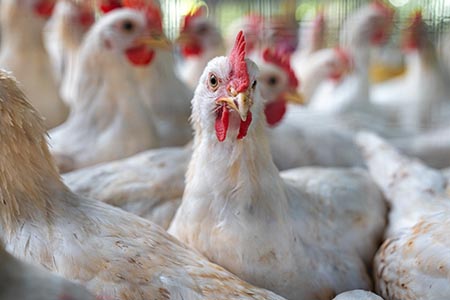
Broiler chickens.
An animal liberationist from the San Francisco Bay Area, Zoe Rosenberg, was recently convicted on charges including trespassing and conspiracy for taking four chickens from a processing plant in Northern California. Rosenberg, 23, openly admitted to participating in the incident with other activists, framing the act as a “rescue” or like she was a good samaritan, arguing that stealing the chickens was simply analogous to, say, breaking a window to let a dog out of a hot car.
Despite Rosenberg’s stated motive, the jury recognized that her actions broke the law, and she will be sentenced in December. While this was a legal loss for Rosenberg, it does not mean a ton for her organization, Direct Action Everywhere (DxE), an activist group known for orchestrating events where members remove animals from farms and slaughterhouses in protest over animal agriculture. Over the years, DxE has encouraged numerous stunts similar to what Rosenberg engaged in, often documenting them for publicity, with the goal of challenging laws around private property as they relate to animals. The group’s leadership, including co-founder Wayne Hsiung, has relied on legal arguments aimed at undermining traditional concepts of property in service of their animal rights agenda. Hsiung, himself a lawyer, has faced criminal convictions for his involvement in these protests but continues to argue that their initiatives are justified by the need to liberate animals.
Sonoma County, where Rosenberg’s case was tried, is no stranger to DxE’s activities, reflecting ongoing tension between the region’s agricultural industry and animal rights activists. DxE no doubt would have preferred an acquittal, but they will still capitalize on Rosenberg’s conviction to garner as much attention and activist support as they can. Look for more publicity as this conviction is appealed.
Source: She Said She Was Rescuing Chickens. A Jury Convicted Her of Conspiracy.
Idealism and Elephant Conservation
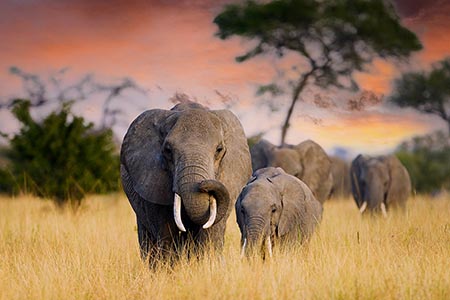
Conservation efforts aimed at rebuilding elephant populations, such as the high-profile translocation project in Malawi’s Kasungu National Park, have often produced unintended consequences for local communities. The prevailing logic behind these initiatives is simple: move elephants from overcrowded reserves to areas where the species has been decimated, and both people and wildlife will benefit. Sounds great, but the reality is far more complicated. In villages bordering these parks, families have lost homes, crops, and loved ones to wandering elephants. School attendance has also dropped as children are kept home for safety. As people are inconvenienced, injured, or even killed, resentment toward both the animals and the conservation organizations grows.
Much of the support for these projects is drummed up by donation campaigns that tug at the heartstrings of animal lovers around the world. These campaigns promise quick fixes and dramatic results, but rarely deliver on long-term solutions for either the elephants or the people affected. True rewilding, which means returning animals accustomed to humans back to unsupervised wild existence, almost never works as advertised. Many relocated elephants lack basic survival instincts, the resilience to cope with their new environment, or immunity to local diseases. Populations in both source and destination parks can suffer as a result. Conservation projects can also lead to unintentional imbalances: in some regions of Africa, elephants are vanishing, while others have so many that the animals end up destroying their own food supply and throwing whole ecosystems out of balance.
Malawi’s Majete Wildlife Reserve offers a stark illustration. In 2022, $8 million was spent to relocate 263 elephants from overcrowded Liwonde National Park in a bid to restore populations depleted by rampant poaching. Yet, inadequate planning and infrastructure (like fencing) led to severe human-wildlife conflict with over 1,600 destroyed homes, lost crops, and at least 13 deaths. The relocated elephants, struggling to adapt to sparse vegetation, became even more vulnerable to poaching, with dozens killed and populations once again plunging. Promised aid and compensation largely fell short, pushing affected communities to pursue legal action against funders and highlighting a persistent rift between the rhetoric of conservation efforts and everyday realities.
Underlying all of this is a deeper crisis: it isn’t just about elephant numbers. Human activity - deforestation, fragmented migration routes, and urbanization – shapes nearly every conservation challenge. Dogmatic approaches, often promoted by international animal rights groups, may sound noble but frequently ignore the messy complexities on the ground. If species like the African elephant are to survive, genuine solutions must embrace this reality: people and nature are intertwined. Effective management – not just idealism and ideology – is crucial and must include humans moving forward. We are, after all, how we got here in the first place. Robust barriers, long term tracking, community-inclusive objectives, and real compensation are essential to balancing animal and human well-being.
Sources: The Wild Elephant in the Room
Summary of New Report: More Cows, Fewer Emissions
Stock photo. Not one of the missing monkeys.
A Montana State University study examining the reaction of large Yellowstone animals to climate change demonstrated a remarkable plasticity, with animals changing their behavior in response to heat in numerous ways depending on their local habitat and individual needs. Nobody relishes the idea of animals being stressed by extreme heat, but these findings were, nonetheless, quite promising. They showed that larger animals like moose can quickly change their behavior to cool themselves down. The cleverness of large animals, especially herbivores, is not widely appreciated, but it is well-earned here. And this behavioral plasticity is especially important, because larger animals are slower to undergo physical adaptations than smaller animals. The study also suggests to conservationists that maintaining a wide range of habitats within an ecosystem is desirable, as it provides more options for individual animals and species.
One of the most important goals of our recent conference was to help animal caretakers articulate and confidently share themselves and their stories; to help these hands-on experts pass on their expertise, passion, and – even more importantly – the value of their work. We were literally having a conversation about this exact issue when one of our board members popped into a meeting and shared this fascinating and inspiring 2024 post from a dog breeder, Ellie Doerksen, who had a “fading puppy.” The puppy, named Fudge, didn’t appear distressed, but he also had zero interest in nursing – he just kinda wanted to lay around and stay warm.
After tube feeding Fudge and taking him to the vet, Doerksen recalled a similar condition in larger animals called neonatal maladjustment syndrome (dummy foal syndrome), and that it is sometimes successfully treated in failing foals by mimicking birth canal pressure. Figuring that she and Fudge had nothing left to lose, Doerksen attempted the technique, and to her delight, experienced dramatic and near immediate results – after experiencing the “squeeze,” her sleepy, disinterested pup became quite the eager eater. Amazing stuff! Doerksen wants to make it clear that she is not a veterinarian, nor giving anybody veterinary advice – people should go to their vets when they need medical help for their animals – but despite the disclaimer she was happy to share the story and even happier with the outcome.
Now, if that is not an example of the hard work and clever, applied thinking you get from the best in animal husbandry, we don’t know what is. And on top of everything else, this makes for a great, clearly articulated story that really demonstrates the passion and value of a good dog breeder. We can’t wait to hear more stories like this, folks!
As of this writing, 18 of the 21 Rhesus research monkeys that were involved in a Mississippi truck crash are accounted for. 13 have been picked back up, five were killed, and three are still on the loose. After the crash, the Jasper County Sheriff’s office posted on social media that the truck’s driver had informed them the monkeys were chock full of diseases – Hepatitis C, Herpes, COVID – and a danger to humans, which is why they took “appropriate action” (i.e. shooting) with the escaped monkeys. The chaotic crash, the sheriff department’s follow-up posting, and our proximity to Halloween understandably launched a slew of 28 Days Later memes. Since then, Tulane University (the entity that used to own the monkeys) has released a statement explaining the monkeys have not been exposed to any sort of infectious agent, meaning they’re only carrying normal monkey diseases, and efforts are still underway to locate the remaining monkeys.
Also in the News...
★ Community foundation awards $10,000 to Paws-N-Claws Animal Shelter (Rural Rescues & Shelters; Of Good News and New Roofs!)
★ Maryland Department of Agriculture Announces Expanded Animal Health Diagnostic Services (Animal Care & Welfare; Public Health & Safety)
★ The Post goes undercover: Queens pet store selling Asian-bred pups for up to $38K despite NY sale ban (Pet Store Bans; Completely Unsurprising Results)
★ Prevalence of diseases in rescued dogs and cats in areas affected by subsidence in the city of Maceió, AL (Sanctuary, Pony Rides, and Petting Zoo)
★ (Video) Teens show off their animals for livestock show at State Fair of Louisiana (4-H/FFA/Youth Agriculture; State Fairs; Just Look at Those Goats!)
★ Collective intelligence in animals and robots (The Biology to Robotics Pipeline)
★ How the first animals evolved: A new clue from a tiny relative (Biology & Ancient History)
★ Let’s celebrate nature’s spookiest and freakiest animals this Halloween (Fun & Spooky Lists; Gordian Nightmares; Happy Halloween!)
Click here to see what is happening legislatively