

Inside This Issue:
- The Chihuahua and Xoloitzcuintli's Coyote Heritage
- Two Jarringly Different Goat Tales
- Elephant Medicine, Elephant Rescue
- Dachshund Love, Pop-up Pet Sale Ban, and More!
The Chihuahua and Xoloitzcuintli's Coyote Heritage
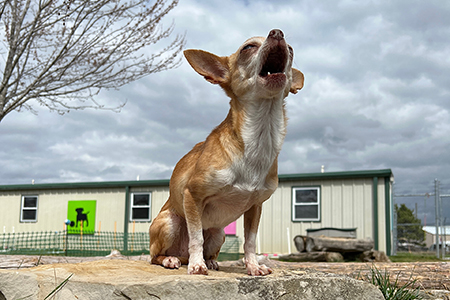
The coyote call and the howlin' winds wail.
They say strange things come in pairs, and we're going with it this week, with twin tales featuring dogs, goats, and elephants!
So you think your dog’s pedigree is all domestic dogs and docile wolves? Think again: new research out of Stanford has something wild to say about the “charming, graceful, and sassy” Chihuahua and the “alert, loyal, and calm” Xoloitzcuintli: they both share DNA with coyotes!
This is a fascinating discovery, and predictably, numerous commentators have been quick to quip about how this revelation explains some of the stereotypical unpleasant behaviors people associate with Chihuahuas (e.g., noisy and territorial, skittish yet aggressive, etc.). The Xoloitzcuintli, which also includes some surprise Arctic dog DNA, has been glossed over for the most part, probably because few people in the United States know anything about the breed of dog, and nobody knows how to spell its name. Nevertheless, the coyote DNA has been used to help explain the Xoloitzcuintli’s “primitive” alert and territorial nature. That sounds a bit rude to us, though coyotes technically are a more primitive form of canid than the gray wolf – so take that as you will.
We’re glad this research is raising interest in the DNA of domestic dogs, and the Chihuahua-coyote connection has indeed led to some genuinely amusing articles. However, it’s worth pointing out that most modern dogs have some post-domestication wolf in them, and all dogs descended from a now-extinct line of wolves – yet somehow, we don’t feel compelled to write clever think pieces every time a dog displays unpleasant wolf-like behaviors (e.g., scent marking, resource guarding, howling, escape artistry, etc.). What gives? Is it the perception that they are nothing but yaps and anxiety? Do people feel safer picking on a dog that can't bite past their knees?
Nervous purse dog animosity aside, Chihuahuas were recently ranked as the most popular breed of dog in the United States by U.S. News & World Report, so they are clearly doing something right! And as the most popular dog, we would venture to guess a lot of these little guys are owned by novice owners who love the idea of having a Chihuahua, but don’t have the skill or time to properly socialize and train a dog, or maybe even just view it as an accessory. So while we don’t discount genetically inherited behavioral tendencies – especially in dog breeds that have been selectively bred for ages – it just makes more sense to us that the dog’s owner, environment, and training contribute more to its behavior than a few scraps of coyote DNA. That being said, keep the reels and the memes coming – and don't forget about the Xoloitzcuintli!
Source: Chihuahuas Have a Little Wild Coyote in Them, New Study Finds
Two Jarringly Different Goat Tales
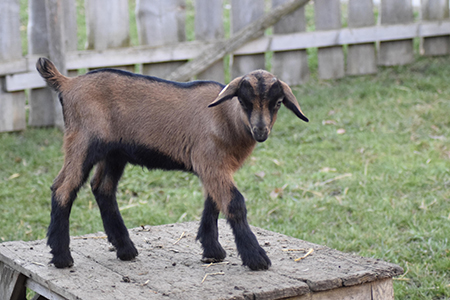
Oberhasli dairy goat. Does this look like a troublemaker to you?
Two recent cases involving goats and alleged criminal activity had very different outcomes: one ending in an animal-cruelty investigation and the other in a halfway house for a mischievous runaway.
In Oconee County, South Carolina, a 14-year-old boy faces several charges after deputies linked him to multiple reports of dead or missing animals in the Salem area. The investigation began Sept. 18, when deputies responded to a suspicious person report. Nearby property owners said someone had trespassed and killed a goat on their land. Security footage helped investigators identify the teenager. With permission from the boy’s guardian, deputies conducted an interview with him. He was later taken to a Department of Juvenile Justice facility on an initial charge of ill treatment of animals. As the investigation continued, authorities received more reports involving animals that had disappeared or been found dead near that exact same area. Authorities said the available evidence suggested that a person, and not a predator animal, was responsible. Upon searching the teenager’s home, deputies recovered additional evidence, including animal remains that appeared to match descriptions from some of the missing-animal reports. The boy now faces another count of ill treatment of animals, along with charges of malicious injury to animals and livestock theft.
Meanwhile, police in Dayton, Ohio, spent months dealing with a far less gruesome type of billy goat’s gruff. A one-year-old Oberhasli goat had been roaming the area, climbing onto parked cars and leaving scratches and dents behind. He also appeared to challenge his own reflection in vehicle doors, mistaking the image for another goat – a less egregious wrongdoing than door dings from someone parked too close. On Aug. 13, three Dayton police officers went after him for about two miles over the course of 90 minutes. After chasing him through yards, streets, and wooded areas, an officer finally secured him with a snare. The officers named him Cardio in honor of the workout he gave them.
Cardio was transferred to the Humane Society of Greater Dayton last week. Shelter employees found that the notorious neighborhood troublemaker was social, but a little shy. He accepted food from staff members but seemed unhappy by himself, often standing against the walls of his stall and calling out when he heard other animals (goats are herd animals that truly hate being by themselves). The shelter sought an experienced adopter who could offer Cardio companionship, patient care, and plenty of room away from parked cars. Within a day, Cassie Keeton decided Cardio belonged at Delilah’s Place, her animal sanctuary in Fairborn. The facility cares for goats that need medical attention or new homes. Cardio now lives with a herd and spends his time eating treats such as apples, honeysuckle, and pine needles. He’s probably still a troublemaker, but his career as a four-legged fugitive appear to be over.
Source: Deputies: 14-year-old faces more charges after missing animals found dead on property, A runaway goat damaged cars and fled police. Now he’s found his herd.
Elephant Medicine, Elephant Rescue
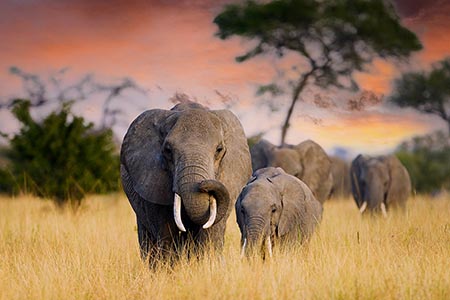
On the lookout for some Angurweet.
Continuing our paired theme, we feature self-medication and a heartwarming rescue.
Natural Medicine: African elephants appear to have a remarkable understanding of the many natural remedies found in the world around them. In Kenya’s Mount Elgon region, elephants have been observed using up to 35 plant species when they or their calves are unwell, including 25 plants that are known by locals (people, not elephants) for their medicinal properties. Researchers gathered these accounts from wildlife scouts, community elders, and others who live alongside the animals.
One scout described mothers chewing medicinal plants into a smooth mixture, combining it with milk, and feeding it to their calves. Scientists are now using cameras and laboratory testing to confirm these behaviors and study the plants’ biological effects. Similar practices have been observed by mahouts in Asian elephant range countries like Cambodia and Laos.
The observation of wild animals engaging in natural healing with local flora isn’t new or even that uncommon – it has been observed in animals ranging from insects to apes, and observations of self-medicating elephants go back to the third century! However, the number of natural remedies employed by elephants coupled with the fact they are so darn charismatic makes this hugely appealing area of study. Observing the ways animals tend to their own illnesses and injuries teaches us about the history of medicine and provides us with clues for future cures.
Elephant Rescue: Elephants’ close family bonds were also on display in West Bengal, India, when fishermen rescued a newborn calf swept nearly three miles down the Teesta River by strong currents. The fishermen pulled the days-old calf into a boat and worked with forest officials to locate its mother several miles upstream. After a search lasting nearly two hours, the calf was returned to her. She immediately accepted and nursed the baby before rejoining the herd.
This heartwarming search and rescue story not only demonstrates how a bad day fishing is still better than the worst day at work (wonder if the fisherman’s friends will believe THIS catch and release story?), it is also a nice reminder that elephants, their communities, and habitats aren’t always intertwined with ours in a human-animal conflict sort of way.
Source: Elephants use medicinal plants to treat themselves, researchers find, Baby Elephant Swept 3 Miles Down River Is Saved by Fishermen and Reunited with Its Mom
Dachshund Love, Pop-up Pet Sale Ban, and More!
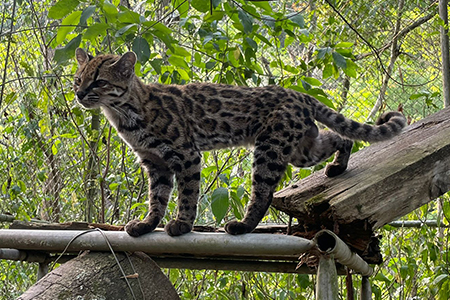
A photo of leopardus tilcayo by researcher Paola Nogales Ascarrunz. CC BY 4.0
Have you been seeing more Dachshunds lately? Can’t say we have, but the data tells us Dachshund love is growing. In 2025, the wonderful wiener dog secured the 5th spot as AKC’s most popular breed, with Business Insider summing up the dog's newfound appreciation as a kind of goldilocks effect: smaller than a Golden Retriever, less “problematic” than a French Bulldog, and less “basic” than a Doodle. More recently, this popularity inspired an article that asked “Why Does Everyone Have a Dachshund Now?” covering the breed’s rising popularity not just in the United States, but places like China, England, and Italy.
As it turns out, there are numerous solid answers to this question. The first one is practical: people have less disposable income and live in smaller spaces than they did a decade ago. Bigger dogs take up more space and resources, and if you live in an apartment, there may be size or breed restrictions that disqualify you from renting. No matter how cool an Irish Wolfhound might be, it's simply not an option for most people. The second reason is the influence of celebrity and social media. Dachshunds have had notable “celebrity boosters” since the birth of the silver screen, and their distinct features and compact size make them one of the most Instagram-ready dogs out there. Then, finally, comes the biggest and most obvious – though sometimes forgotten – reason: people just love dogs, and Dachshunds love you right back! They have a well-earned reputation as one of the most loyal and cuddly companions around, and in an age where so many of our face-to-face interactions have been outsourced to handheld devices and screens, we need Dachshunds more than ever.
"A fanatic is one who can't change his mind and won't change the subject” is a delightful quote that is regularly (mis)attributed to Winston Churchill. It applies well to single-issue interest groups: their intensity and refusal to compromise, their disproportionate influence in the public and political squares, and quite regularly, a zealous ends-justifies-the-means mentality when it comes to achieving their goals. This applies especially well with the most devoted believers of the animal rights movement. What do they do in their spare time? Why, daydream about a world where they can impose their beliefs on everybody else, of course. Sheesh. Talk about not changing the subject!
In the above case, most of the dream is tied to diet: policies to make vegan or at least vegetarian meals the default at municipal events (and take milk off the menu at public schools), and more animal activist activity on the municipal level, period. Bans on what types of food and animal products can be bought and sold or even advertised, and the classic “force slaughterhouses to have windows and share a live stream.”
It is interesting how much of achieving this utopian quest is tied to diet, rather than things like pets and animal husbandry, clothing, or research – though considering eating is something most people do a few times a day, it is a pretty basic place to start. Anyhow, while the opening quote about fanatics is quite nice, judging from the content of the author's vision, it clearly didn’t go far enough – it’s not just about possessing inflexible views you can't shut up about… it’s about finding ways of imposing those views on others.
In Georgia, the Tucker City Council unanimously approved an immediate ban on pop-up pet sales in parking lots, flea markets and along roadsides. The ordinance applies to people selling dogs, cats, rabbits and other animals, though it allows prearranged transfers at police stations and transactions at approved animal shows, so as not to exclude 4H events. Interestingly, the pop-up pet sales that were banned were already prohibited by law. What this ban changes is enforcement: the ordinance allows code enforcement workers and other city agents to issue citations, which makes enforcement less dependent on police availability.
Wake up babe, new cat just dropped! For the first time in over a century, a new species of cat, the tilcayo, has been discovered.
The story begins with Tigrino, a kitten-sized wildcat who arrived at a Bolivian wildlife sanctuary almost a decade ago. He was originally believed to be a domestic kitten and had been kept as a pet until the folks who took him realized his origin was a bit more… wild. Upon intake, Tigrino was misidentified as a similar, but unrelated species of “tiger cat,” and lived at the sanctuary under his assumed identity for years, until an intrepid wildlife biologist stepped in. She was quite familiar with Tigrino but couldn’t shake the feeling that he didn’t fit into any neat classification. Genomic analysis proved her observation correct, and then things went even further: it turned out Tigrino isn’t just a mislabeled species of cat, but a full-fledged, newly identified species of cat! What a cool finding. Very little is known about this cat right now, though its discovery definitely has implications for conservation and the preservation of species.
Also in the News...
★ US fashion CEO resigns after physically restraining animal rights activists (Animal Rights Activism; Playing Into Their Hands)
★ Scientists found something T. rex bones could never show (Cretaceous Paleontology; Walk like a Dinosaur)
★ Petsense by Tractor Supply Launches Round-Up Campaign to Support K9s for Warriors (Veterans and Service Dogs)
★ Clark County approves new Animal Resource Center in southwest Las Vegas valley (Shelter & Rescue Resources)
★ Philadelphia CBP agriculture specialists intercept rare Chief Goliath beetles being smuggled to Germany (Animal Trafficking)
★ 10 Organisms Named for David Attenborough (Natural History & Conservation; Happy Birthdays; Check Out the Rubber Frog)
Click here to see what is happening legislatively