

Inside This Issue:
- As the Purebred Dog Preference Turns
- Beavers, Dams, and the Oregonians Who Love Them
- Man and Dog: Best Friends for Eons
- Strong? Healthy? Wary? Maybe It's Time To Rewild.
- Rarely Seen Shelter Dogs, Pet-Keeping Primates, Bus-Riding Goats, and More!
As the Purebred Dog Preference Turns
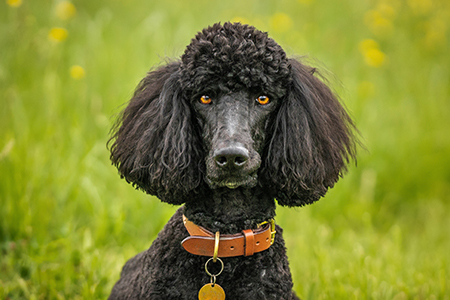
Wait. You're telling me I've been replaced by a, a... Cockapoo?!?
A recent article on the shifts in popularity of specific dog breeds in the UK really gives us a lot to chew on. To summarize the article, breeds like Poodles, Dalmatians, Border Collies, and Greyhounds – as well as pedigreed dogs in general – are a lot less common in the UK than they used to be. Meanwhile, smaller, lower-energy dogs and trendy mixed-breeds are becoming a lot more popular. Given that our love of dogs is wrapped up in aspects of culture, biology, economics, environment, politics, and a lot of extremely deep, yet not-wholly-definable feelings, it’s no surprise that there are multiple factors behind this decline, many of which are not touched on in the news item we're analyzing here.
First and foremost, is the fact that the UK is now a pretty sedentary culture, and people want lapdogs (note: the United States is slightly more sedentary than the UK, so we’re not throwing rocks, just making an observation). Prospective dog owners who spend several hours a day sitting and who get fewer than 150 minutes of exercise a week may find numerous high-energy dog breeds problematic. That's understandable. Given that we love a lot of these highly active breeds, this is genuinely a bummer. However, there is a silver lining: it could be interpreted that prospective dog owners are making informed decisions that are appropriate for their lifestyle and energy levels, rather than going for dog breeds they have romanticized. At the end of the day, it’s much better to pick the right dog than to rehome an adolescent dog you simply can’t keep up with.
Along the same lines of activity level is lifestyle: people are living in smaller homes and working long hours away from said homes. This means you don’t want – or may not be allowed – to have a medium or larger breed dog, especially one that requires a lot of mental stimulation. These limitations immediately disqualify dog breeds like Border Collies and Standard Poodles. As with high-energy dogs, this is kind of a shame, but it comes with the same silver lining. While a clever dog can be exasperating at times, one of the best parts about having a dog is your dog’s brain. Having those moments where you are puzzling something out or training, and you make a connection… that’s great stuff! But on the other hand, you just can’t argue with knowing your lifestyle and picking accordingly.
The rise of “designer dogs” is also a major factor. Designer dogs, or, more commonly, doodles, are typically a Poodle mixed with a Labrador or some other breed, sold with claims the dog is hypoallergenic (they usually aren’t) and healthier due to “hybrid vigor” (the vigor claim has been debunked, though many doodle breeders still use it in advertizing their dogs). As in the United States, Doodles and other deliberate crossbreeds are enjoying massive popularity in the UK, which, by simple math, means fewer pedigreed dogs in homes.
Finally, outside of French Bulldogs, Dachshunds, and a couple other small, popular breeds, there are fewer purebred dog breeders out there – so even if your very favorite dog is a Dalmatian or Poodle and you’ve wanted one your whole life, availability or price might prevent you from getting one. When the time is finally right to get a dog for you and your family, are you going to pick a dog you can bring home in a few weeks or months, or are you going to wait a year? While dogs aren't – and shouldn't be – impulse purchases, let's be real: most dog buyers aren't going to wait more than a year to get a dog.
Anyhow, while we were let down that this piece didn't delve into how "adopt, don't shop!" culture and the importation of street dogs have affected people's choices in dog acquisition – make no mistake, it definitely has – there is still a lot of interesting stuff here, even if the picture is incomplete. There are many similarities between the UK and the United States when it comes to the popularity of dog breeds and perhaps some lessons to be taken. Preserving our larger, more energetic and highly driven dog breeds is going to present big challenges as the cost of living rises and society continues its march toward full urbanization. But we believe preserving iconic dog breeds is very much worth the effort, and that the problems associated with keeping these dogs can be solved by providing owners and communities with access, education, encouragement, and sensible ordinances.
Source: Why you hardly see Dalmatians, Poodles or Border Collies anymore
Beavers, Dams, and the Oregonians Who Love Them
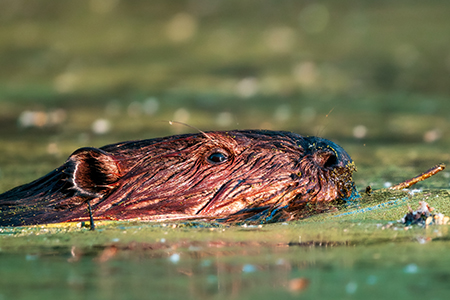
Every sand you paint, every dam you break... I'll be watching you.
It turns out that Oregon’s most beloved rodent ecological engineers can help us restore waterways crucial to the survival of countless other species. Just outside Oregon City, a team of scientists and restoration experts is working hand in hand with some surprising allies: beavers. The Greater Oregon City Watershed Council recently launched a project on a quiet stretch of Jamestown Ranch, laying dozens of humongous fir logs along a tributary of Abernethy Creek. Their goal? To help beavers build sturdier dams that can withstand floods and, in doing so, bring habitats for salmon, trout, and other native species back from the brink.
By engineering log placements that mimic nature, they’re giving beavers the tools they need to do what they do best: slowing water down, creating cool pools for fish, and helping the land soak up more water for local well recharge. While these changes may seem small on their own, the ripple effect (no pun intended) should benefit both wildlife and folks living downstream.
It’s an approach that proves how far we’ve come in understanding our environment. Projects like this, funded by public and private partnerships, show that thoughtful, science-led interventions can help undo decades of neglect and damage. Luckily, beavers are more than willing partners, building bigger, more resilient homes with only a little help from us.
Source: Why beavers are the real stars of this Oregon City watershed restoration project
Man and Dog: Best Friends for Eons
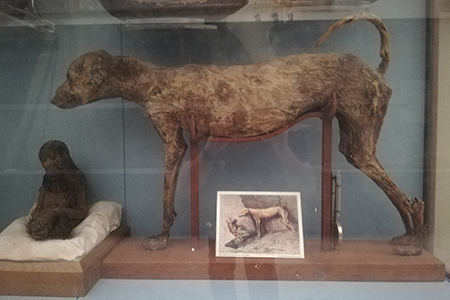
Mummified protector of Pharaonic Egypt.
Are you sick of us yammering on about dogs? If so, sorry – we aren't done, and we're about to double down with a little celebration.
Dogs have been by our sides for millennia, but calling them “man’s best friend” barely scratches the surface. Across continents and centuries, people and dogs have chosen each other – not just as pets, but as partners in the struggle to survive. Ancient graves show humans and dogs laid to rest together, hinting at a bond that’s as old as civilization itself. These animals weren’t simply tamed; they adapted alongside us, learning to hunt, guard, pull sleds through Arctic ice, and slip quietly through tangled rainforest. In harsh conditions that might have beaten us alone, dogs became our lifeline.
What’s remarkable is how this relationship shaped both species. In the frozen north, sled dogs grew strong and thick-furred to brave the cold, while in the tropics, leaner, agile dogs became expert hunters. Some even developed genetic traits like high-altitude tolerance, mirroring the people they lived with. Culture played a role too. In some places, dogs provided wool for ceremonial blankets or became woven into religious rituals, showing how deeply their presence touched every part of human life.
Even today, this partnership runs deeper than companionship. For many, dogs are emotional anchors, especially for veterans with PTSD or anyone facing hardship. The story of humans and dogs isn’t just about biology or history; it’s about mutual survival, trust, and a kind of shared hope that many find difficult to articulate. How we evolved wasn’t a one-way street. While we shaped them, they shaped us right back. And in a world that will forever change, that connection matters more than ever.
Source: For 15,000 years, humans and dogs have been changing each other
Strong? Healthy? Wary? Maybe It's Time To Rewild.
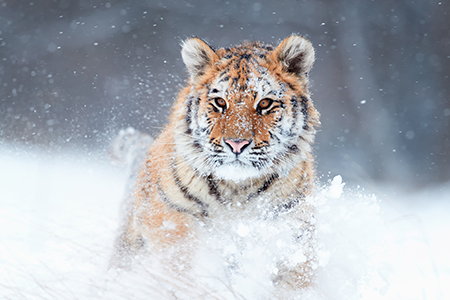
Siberian Tiger. It is estimated that there are currently fewer than 800 in the wild. This
is an alarmingly low number, but more than double the tiger's 2005 wild population!
Rewilding is more than a hopeful experiment for a handful of animals; it’s a global effort, and its success can shape the future for entire species. Each and every release tells a bigger story: animals that once suffered from habitat loss or human mistakes can get a second chance, thanks to the dedication of conservation scientists.
Umit, a female Amur (Siberian) tiger, was released into the wild at Kazakhstan’s Ile-Balkhash Nature Reserve. As the first of four Amur tigers making their way back to a landscape they haven’t roamed in decades, she will pave the way for other critically endangered members of her species. Meanwhile, on the German island of Juist, a harbor seal named Ernie poked his head from a crate, just moments before returning to the sea. The pups are rehabilitated at the Norddeich Seal Sanctuary. The Wadden Sea area there is experiencing a loss of its native seals, so each successful release keeps the population from crashing. Each of these moments is the result of careful rehabilitation and evaluation: are the animals strong enough, healthy enough, and still wary enough of people? Only then are they given their shot.
Of course, the real impact goes beyond these individual stories. With each successful reintroduction, we’re learning what it takes to restore wild populations, knowledge that could one day help us bring back animals when their numbers fall dangerously low. It’s a reminder that humans, having made and learned from mistakes of past centuries, now hold the knowledge and power to tip the scales back toward recovery. There’s a sense of optimism in every release; that a new chapter can be written, not just for these animals, but for the places they call home.
Note: It is definitely worth a few moments of your time to click on the photo essay below – there are several powerful images.
Source: Photos: Releasing Animals Back Into Their Habitats
Rarely Seen Shelter Dogs, Pet-Keeping Primates, Bus-Riding Goats, and More!
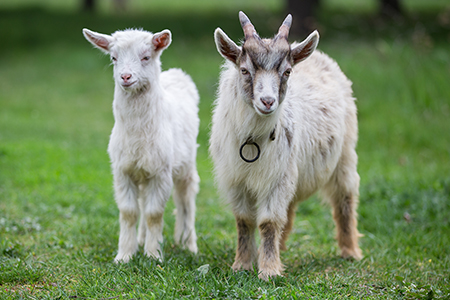
Just two cute goats; not the virally famous fare-jumpers.
Here’s a cute article about the dog breeds you never see in shelters anymore that is worth it for the pictures as well as a laugh over some of the obvious choices. I mean, Otterhounds? Really? There are between 700-1000 Otterhounds in the entire world, and the people who breed and keep these dogs are extremely invested in preservation. So yeah – odds are pretty low one of these guys ends up in a shelter. Anyhow, like we said, it’s just a fun list with some nice pictures, though it’s a lot more fun if you know anything about the dog breeds that are listed.
While keeping animals is an imprecise, messy business (How much poop have you picked up today?), most of us can agree that clearly defined rules with properly funded enforcement and reasonable consequences for bad apples are good for animals, as well as public health and safety. Of course, when you get into the finer details, this can break into arguments – or break down entirely. Who defines the rules? Hands-on animal experts or politicians and bureaucrats who have been worked over by various activist and business interests? How much funding is enough? The truth is, it’s never going to be enough for some people, and it will always cost too much for others. Then, even if we can somehow agree on everything else, comes the most important problem: do you trust the intentions of the person, organization, or political party that is in charge of it all? Given the current cultural and political climate of this country, there’s a reasonably good chance that at least 33% of us won’t!
It's not just people who keep pets... or is it? A recent New York Times piece provides several examples of non-human primates (not just Koko) keeping various animals in a manner that could be interpreted as proto-pet-keeping. We’ve got lizards, chickens, deer, dogs, and mice being played with, cuddled, and groomed in ways that will seem familiar to anybody who’s ever held a guinea pig or has petted a dog. To our eyes, it’s cute, but why? A lot of the prevailing ideas behind human pet-keeping suggest it is tied to how useful the animal was: it’s a good guardian, can help with hunting, or hold vermin at bay – plus it is useful in giving us a sense of caretaking (love, duty, and routine) and reducing our loneliness. While the nonhuman primates in this article’s examples certainly aren’t employing guard chickens in a utilitarian manner, the “pets” in this scenario do seem to genuinely fulfill an emotional need and provide a bit of interspecies companionship – or the basic roots of pet-keeping. Our desire to keep pets may go back – and deeper – into our DNA than we ever suspected! Pretty neat stuff!
Better living through, uh… ginormous wheeled parasols? Well, yes. That’s exactly what’s rolling through the field, protecting cows from summer heat, directing their usage of the pasture, and helping to spread manure through all the right places. While the article on this gadget can be accused of serving as an advertisement or product placement, the fact remains: when tools like this work, it makes life easier for livestock and farmers, and everybody wins.
Finally, the owner of the two goats that recently boarded a city bus has been tracked down and is answering questions with good cheer. Apparently, his two seven-month-old goats wandered off his property, took a short walk and boarded the bus, then returned home before he even noticed. In fact, he only learned about his goats’ shenanigans from social media! He clearly enjoys keeping goats, despite their mischief and proclivity for eating pretty much everything on his property. Nobody was hurt, and everybody who experienced or witnessed the fare-jumping goat incident seemed to enjoy the rather unusual experience. It is also worth noting the owner learned an important lesson, too: there is now a lock on his gate to keep the goats from pushing their way off his property.
Also in the News...
★ Disease experts urge safe animal practices amid ‘unusual’ rabid beaver attacks (Rabies; Heavily Publicized Incidents)
★ Huntsville Animal Services seeks community support after large intake of animals (Rescue & Shelter News; System Strain)
★ The $44,000 Dog: California Pays More for Service Animals Than Any State (Service Animals; Cost of Living Reports)
★ Clear the Shelters: Finding fun things to do with shelter animals (Rescue & Shelter Events and Activities)
★ What Animals Can Teach Us About Teamwork (Cooperative Honey Bees)
★ USDA inspections find multiple violations at Houston-area aquarium and animal preserve (Failed Inspections; Animal Care Standards)
★ Vietnam’s Dragon Chicken: The Breed with Massive Scaly Legs (Wild and Goofy Profiles; Mutational Upgrades)
Click here to see what is happening legislatively