
Inside This Issue:
- The Animals of Independence Day
- Private Equity Veterinary Clinics Receiving More Attention, Criticism
- A Terrible, Horrible, No Good, Very Bad Week in Animal News
The Animals of Independence Day

One of the more famous statues of George Washington – the horse's "startled" expression
has stirred conversation and controversy since the statue's unveiling in 1860.
As America marks its 250th birthday, we should also honor the animals that took a part in our founding.
Did you know that the familiar European honeybee, with its tireless work ethic, wasn’t always a part of our landscape? The Pilgrims brought these bees across the Atlantic in the 1600s, hoping to recreate a piece of home. Today, they’re woven into our ideas – and ideals – of rural America, but the truth is, our continent already hosted thousands of native bee species – we just don’t think of them very often, because none of them make honey, and they hardly ever sting anybody. The closest true honey-makers before colonization were kept by the Mayans, quite a ways south of the thirteen colonies. Our image of honey and beehives, then, is itself a story of crossing oceans and setting down roots, along with a certain irony in the way we collectively lose our minds and bend over backwards to preserve what is essentially an invasive species. Well, invasive, but also invaluable: bees are why we have almonds, apples, and so many other foods we take for granted. None of which would be available without driving hives across the country to pollinate crops.
No animal, perhaps, has been more entwined with the American story than the horse. Before European contact, horses disappeared near the end of the Ice Age. Their return with Spanish explorers changed everything. Horses became the engines and companions of westward expansion, the muscle behind plows and stagecoaches, and the loyal partners of farmers, explorers, and soldiers alike. The measure of an engine’s strength is owed to them as we industrialized the steam engine and later mass produced the automobile. The Pony Express became our information network and now mail service. Mule teams hauled borax out of Death Valley in the American Old West. And who can forget that horses carried Paul Revere through that urgent midnight, and bore George Washington on the battlefield!
And then there are our dogs. Speaking of George Washington, the general-turned-president loved dogs, breeding his own hounds at Mount Vernon and giving them names that ranged from dignified to downright goofy: Drunkard, Vulcan, Sweet Lips, or Ragman. His foxhounds trotted at his heels through years of peace and war, and he was one of the first Dalmatian enthusiasts in the country, too (“Madame Moose,” in case you are keeping score with the goofy names). Who says that busy military and national leaders can’t also be animal lovers?
So here is to our semiquincentennial – and an American story that is deeper and more alive because of all the animals who made the journey to independence alongside us!
Private Equity Veterinary Clinics Receiving More Attention, Criticism
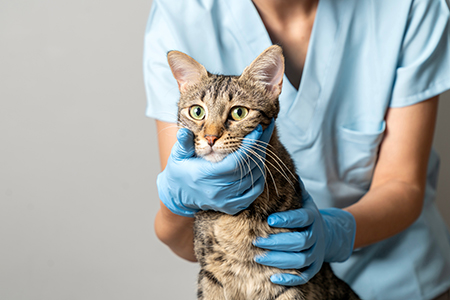
Watch the video, then tell us you still like private equity veterinary clinics.
A few days ago, U.S. Senator Elizabeth Warren released a video message entitled “How Wall Street Took Over Your Vet.” The presentation takes aim at private equity (corporations buying up and profiting from veterinary clinics) and decries the decline of privately owned veterinary clinics. The senator brings up important points about veterinary care and cost issues that many people – even animal people – are probably unaware of, and she gracefully (and correctly) avoids vilifying the people who work in veterinary medicine.
The issue of private equity buying up veterinary clinics is timely and touchy. As with most hot-button issues, it’s more nuanced than anything you can get from a seven minute video presentation, but we are glad private equity (PE) is being broached, and can all agree that there are several troubling aspects to PE veterinary clinics. Aside from the rising costs, which were discussed in the video, there’s also a very real loss of personal touch. One of the first things we think of when PE is brought up is not the increased cost – though that is significant – but how much harder it is these days to forge a relationship with a veterinarian who truly knows you and your pet.
Full disclosure: we love independantly owned veterinary clinics. We feel strongly that they have more to offer from the perspective of client/community-doctor relationships, that they are better suited to care for the specific/unique needs of individual pets, and that they should be able to compete with consolidated, corporate animal hospitals. On top of that, one of our board members is the president of the Independent Veterinary Practitioners Association. So we are definitely biased. However, we did mention nuance, so we ought to offer a few counterpoints to demonstrate that the issue is not completely black and white. Here we go!
First off, it’s worth pointing out that some objective good has come from the massive, evil corporations behind PE. Now, we totally get that Mars is an easy target: it’s a $150 billion company that is better known for candy and snacks than healing your sick pet. However, they have invested heavily and made a difference in areas like preventive medicine, scientific research (e.g. canine genetic testing and state of the art medical equipment), dog sporting events, shelters and adoption initiatives, and wildlife conservation. So even if you hold a worldview that considers any corporation as large as Mars to be an irredeemable pox upon the earth (and you are welcome to feel that way!), Mars’ activities in promoting pet and animal health are real and on the record.
PE is also a boon for some veterinarians. It can provide an opportunity for older/retiring veterinarians to sell their clinics at a better cost than they might otherwise receive. In addition, it provides employment for veterinarians who would prefer, for lack of a better term, to have a life outside of their clinic. What this means is, instead of working 50+ hours a week, as was often the case during the “golden age of veterinary medicine,” veterinarians can work “normal people” hours, where they help animals during the day, enjoy the company of their family and friends at night, and maybe even hit the beach on the weekend.
On the filp side, fewer available hours contributes to the veterinarian shortage we all perceive, and means many clients start accepting any veterinarian they can get in to see, rather than cultivating a long-term relationship as clients. That’s not great. However, from the veterinarian’s side of things, this puts them in alignment with the vast majority of today’s American workers, who place a premium value on work-life balance (note: it’s actually the older respondents who feel most strongly about this – not the lazy youth). It no doubt reduces burnout, as well. Feel passionate about animals, but aren’t sold on spending the majority of your life inside a veterinary clinic? Are you a recent graduate who needs a job, but also likes the idea of starting a family before you are 43? A corporately owned veterinary clinic might be for you!
We are glad this issue is receiving more attention. It’s important for pets and pet owners, and we hope you’re keen to learn more and get involved – ‘cause you’ll definitely be hearing a lot more about it from us once the Healthy Dog Importation Act is signed into law!
Source: How Wall Street Took Over Your Vet
Don't Feed the Bears, Yet More Animal Law, and More!
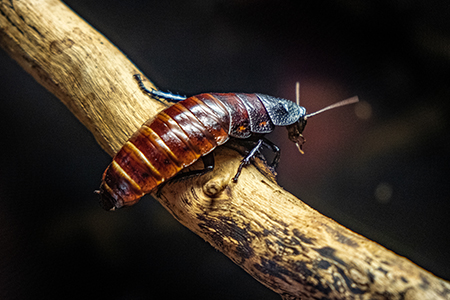
Next time you see one of these guys out "exploring," it's going to make you wonder...
Wow, it's not just the algorithm – there has been SO many awful animal stories this week.
First, in a terrible, but all-too-common story out of Northern California, a 7-year-old girl is in the hospital after being attacked by a pack of dogs last Saturday. She suffered serious injuries to her head and scalp (the scalp was described by her family as basically being “ripped off”), and required surgery after the attack. Six dogs were picked up after the incident and taken to the county shelter, though no arrests have been made as of yet. All things considered, the resilient little girl is doing remarkably well, though obviously, this attack should never have occurred. Incidents like this highlight the importance – sometimes life-or-death – of responsible dog ownership and responsive animal control services.
Speaking of kids getting bitten, we have two stories about rabid bats this week: one of them tragic, one of them morbidly amusing.
First, in Canada, an 11-year-old boy woke up with a bat on his face. The boy’s father captured and released the bat, and thought nothing more of it, since there were no signs of bite or scratch marks on the child’s face. A few weeks later, the boy became extremely ill, and after not responding to normal treatment, was diagnosed with rabies. He was treated for two more weeks, to no avail, then taken off life support. The entire tragic 2024 incident was just written up in the Canadian Medical Association Journal. This serves as an incredibly sad reminder that post-exposure prophylaxis after coming into physical contact with a bat or other potentially rabid animal is a really good idea.
In a similar story with a happier ending, last week, a six-year-old Wisconsin girl was bitten in the thigh by a rabid bat … a fatal mistake on the bat's part, as it was promptly swatted to the ground and “slaughtered” with a sword by her two older, Braveheart-obsessed brothers. Thankfully, the most shocking takeaway from this incident is learning that there are 11 and 16-year-old kids in the world who list Braveheart as their favorite film, because everything else that happened afterward was more or less by the book. The bat tested positive for rabies, post-exposure treatment was administered, and the young, rabies-free girl is once again happily playing outside while her brothers run around swinging homemade swords, shouting fictionalized William Wallace quotes at the top of their lungs. You know – more or less by the book.
In another horrific tale out of Northern California, the situation at Miranda's Rescue, which we touched on last week, has become so bad, it is feeding growing calls for long-overdue reporting and oversight requirements on rescues. We'll be covering more of this issue next week. But for some background, a "no kill" rescue that received money and dogs from other shelters – with a promise that it would rehome the dogs or let them live out their lives – is now accused of euthanizing many of the dogs. 117 dog carcasses and 21 canine skulls have been unearthed on the property so far, many with bullet fragments embedded in them. Of the 918 dogs that were surrendered to the shelter from January of last year to April of this year, only 116 are confirmed as adopted, while more than 700 are unaccounted for.
Ready for a science fiction body horror nightmare? In Singapore, cyborg cockroaches have been successfully fitted with a breathing apparatus that allows them to safely explore underwater areas for up to three hours. The goal here is exploration – specifically disaster areas, space, even the surface of Mars – while taking advantage of the fact that tiny cyborgs, unlike tiny robots, can feed themselves (instead of needing batteries) and are notably better at avoiding obstacles. No word yet from the cockroaches on their feelings regarding this endeavor.
We’re outta here. See you next week, folks – may you and your animals have a fun and safe Fourth of July weekend!
Also in the News...
★ Why fireworks can be a death sentence for wildlife (Fear, Major Routine Disruption, and Occasional Death)
★ State tightens rules on bringing animals into Maine to keep away flesh-eating flies (Screwworm; Biosecurity)
★ Animals Need to Cool Off, Too (Midwest Heat Wave; Zoos)
★ Charlotte Animal Control will no longer take certain animals. New rules (Shelter & Rescue News; No More Non-Emergency Surrenders)
★ 11 of the biggest animals on Earth – number 4 is absolutely massive! (Massively Goofy Lists; Saltwater Croc Gets Some Love)
Click here to see what is happening legislatively