

Inside This Issue:
- NAIA Attending CITES
- Department of the Interior Rescinds Regulatory Definition of "Harm"
- Animal Research Controversy, Shelter Assessment, Free Advice, and More!
NAIA Attending CITES

Art Parola delivers an intervention on behalf of NAIA, detailing the history of trade in a species in
a working group prioritizing reviews of captive breeding.
NAIA is in attendance at the 34th meeting of the Animals Committee for the Convention on the International Trade in Endangered Species (CITES), the international Treaty that governs wildlife trade with the mission of ensuring trade is legal, traceable, and sustainable so as to not threaten species with extinction. The meeting is being held in Geneva, Switzerland in coordination with the United Nations Environmental Program (UNEP).
Representing NAIA at the meeting is advisory board member and leader of the NAIA CITES Engagement Program, Art Parola. An attorney with many years of experience with wildlife issues, Art works closely in coordination with other organizations from the US and around the world which represent sectors that are regulated by CITES, including those representing the pet trade, biomedical research, and aquaculture and fisheries. While these industries may serve very different purposes, all rely on a responsible, well-regulated international wildlife trade to function. In addition, all are commonly targeted by animal rights organizations, including at CITES. Art's knowledge and understanding of how animal rights activists use deception and spin facts and figures is valuable at CITES meetings, were animal rights organizations commonly attempt to hijack the Treaty (and are often successful) to utilize its restrictions as unnecessary impediments to industries that involve animals.
At this meeting of the Animals Committee, NAIA submitted interventions on topics ranging from captive breeding to zoonotic disease. Art's expertise has been invaluable to the meeting, including providing information that has helped the Committee prioritize species reviews, one of the core responsibilities of the Animals Committee.
Despite the general obscurity of the Treaty, CITES affects almost everyone. Whether through lifesaving treatments developed using animal models such as the CITES-listed crab-eating macaque, to the CITES regulated crocodilian leather handbag carried on a dinner date, to the CITES-listed zebra pleco in a home aquarium, or a CITES-listed parrot viewed at a zoo, the Treaty almost certainly played a role when the animal or its ancestors transited international boundaries. While the Treaty can be a valuable regulatory tool to ensure sustainability of trade, it must be carefully monitored and managed to ensure it is not used for ulterior and malicious purposes. NAIA has been involved in CITES since 1997 and today continues to work to ensure the integrity and effectiveness of the Treaty.
The 34th meeting of the Animals Committee concludes today, July 17th. NAIA will also be in attendance at the 81st meeting of the Standing Committee also held in Geneva, Switzerland in November.
Look for a full recap next week! In the meanwhile, you can donate to help support NAIA's CITES Engagement Program work here.
Department of the Interior Rescinds Regulatory Definition of "Harm"
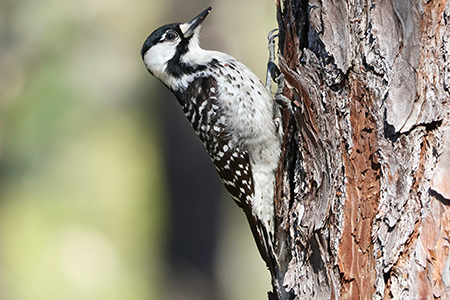
Female red-cockaded woodpecker.
Last week, the Department of the Interior released a statement on the finalization of the term “harm” under the Endangered Species Act (ESA), the intent being to return the definition to its original meaning from the 1973 law. This is in part due to the overturning of “Chevron” or the Loper Bright v Sweet Home decision from 1987 that allowed government agencies to interpret any proposed rule as long as it was “reasonable.” While the full effects of this decision have yet to be seen, the Department of the Interior has stated that the change should help streamline species protection for future conservation efforts. That being said, the true implications of reverting the term are being debated by scientists and conservationists alike. Proponents are grateful for what is being championed as deregulation, however those opposed to the change have concerns that the new definition will make it more difficult for threatened and endangered species to be protected.
Under the pre-2026 rules (in place for decades), the U.S. Fish and Wildlife Service and National Marine Fisheries Service defined “harm” (as part of the statutory prohibition on “take”) to include: “significant habitat modification or degradation where it actually kills or injures wildlife by significantly impairing essential behavioral patterns, including breeding, feeding, or sheltering.”
This broad interpretation, upheld by the Supreme Court in Babbitt v. Sweet Home (1995), made ESA protections beyond direct killing/injuring part of enforcement like land-use activities that altered habitat because it was a reasonable agency interpretation entitled to Chevron deference. After the Supreme Court overturned Chevron in Loper Bright (2024), agencies could reevaluate the term without that deference, leading to the 2026 rule rescinding the expanded “harm” definition as inconsistent with the best reading of the statutory text. The taking of animals on private lands became prohibited and added that federal actions had to be done under consultation. In turn it created more paperwork and steps by requiring permits, biological opinions, mitigation, or project modifications.
Since habitat loss is the top threat for most listed species, these habitat safeguards hoped to foster the intended benefit of widespread protection. Instead, after implementation, it brought in loads of bureaucracy, uncertainty, uncompensated costs for landowners, and in some cases the infringement of private property rights. This, in turn, led to delays, increased project costs, and in some cases spurred preemptive habitat destruction to avoid restrictions.
Needless to say that had the opposite effect, for example in the case of red-cockaded woodpeckers in southeastern US pine forests. This endangered bird needs old-growth longleaf pines for nesting cavities. The broad “harm” rule restricted timber harvests within buffer zones around colonies, sometimes up to 60–300+ acres, costing landowners hundreds of thousands in lost timber value. This led landowners near known or suspected nesting sites to harvest trees too early or clear-cut in an effort to prevent colonies from growing, thus triggering ESA rules. One analysis estimated that the potential habitat gains on private lands were never realized. In turn, the species became a liability rather than an asset, reducing overall habitat on private property where the most significant portion of RCW range exists. Private owners were disincentivized to protect the birds.
The famous Northern Spotted Owl, which made national news in the 90s, also faced similar issues with the broad “harm” rule and its application to old-growth logging. Listed in 1990, the owl needs old-growth forests for nesting. The broad “harm”/take rules made it easier for subjectivity to creep in. Additionally, critical habitat designations led to major logging restrictions on federal and private lands. Along the same vein as the woodpecker, some private timberland owners forced faster clear-cutting or prematurely harvested to avoid owls establishing territories. This contributed to the “timber wars” of the 1990s, with massive economic claims and habitat loss on non-federal lands. The Northwest Forest Plan later tried to balance this, but the initial regulatory shock made for long lasting avoidance action and bad practices.
One last example, also made famous by the national news, is the Delta Smelt found in California. This tiny threatened fish depends on the low-salinity waters found only in the Sacramento San Joaquin Delta. Again, the broad interpretation of the term “harm” was applied to water project operations. Stating that the giant pumps that carry water south for agriculture and cities could kill smelt or degrade their habitat, restrictions were put into place. During high-risk times, or times when the most smelt could be harmed, reductions in water deliveries resulted, meaning less water for farms and cities – even during drought. Farmers and water districts reported upwards of billions of dollars in lost agricultural production, fallowed fields, and jobs. This one little fish became a symbol of ESA vs. economic tensions that sparked lawsuits, congressional fights, and calls for reform. While it forced some habitat considerations and restoration investment, the smelt population continued declining amid broader ecosystem issues.
So how are these three examples tied together? The old expansive “harm” rule provided powerful habitat leverage but often at the cost of flexibility, predictability, and landowner buy-in. On private lands, it had the potential to drive habitat loss instead of encouraging stewardship through education or partnerships. Public backlash and economic impacts were significant, especially where one species’ needs intersected with major industries (timber, agriculture, water). And to further the damage, that public perception never really changed. To this day it is widely assumed that there is rampant environmental degradation due to private interests and lack of oversight, which is far from the truth as many agencies provide a fallback for environmental concerns. By rescinding the regulatory definition of “harm,” the focus shifts to direct/affirmative acts against individuals while leaving core take prohibitions and other tools (critical habitat, Section 7, voluntary agreements) intact.
Source: Department of the Interior Restores Clear ESA Enforcement by Rescinding Misguided “Harm” Definition
Animal Research Controversy, Shelter Assessment, Free Advice, and More!
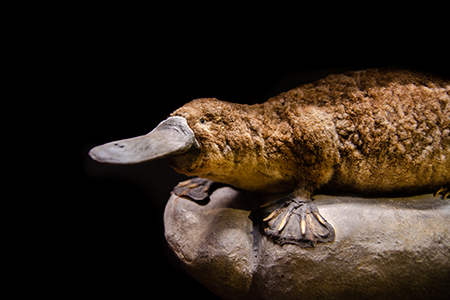
Platypus as museum display.
Looks like the Oregon Health & Science University’s (OHSU) Primate Center might not be turned into a giant sanctuary, after all. This would be fantastic news for anybody whose values align with continued lifesaving advancements in medical science and not having to buy new medicine and treatments from foreign countries.
This is the kind of news we love to hear, however, the way OHSU’s Primate Center is regularly referred to as “controversial” (even in the Oregonian’s story headline) raises some questions. Chiefly: is biomedical research really that controversial? Well, according to the Center for Biomedical Research, "Americans’ support for animal research decreased from 56% to 43% between 2005 and 2022." If accurate, this is a truly alarming decline, and it would indicate that, yes – for quite a few Americans, the very concept of biomedical research actually is "controversial." Yikes! However, looking at the polls, two larger takeaways appear. The first is that folks who have a background in science are far more supportive of animal research than laypeople. To us, this is an indication that a deeper understanding of what goes into – and comes from – animal research really does inform people of its immense value. The second takeaway is related to the first: it shows that on this issue, people’s beliefs and values aren’t set in stone, and that sustained campaigns do change minds. In other words: information matters, minds change, and accomplishing change requires constant reinforcement. So for those of us who understand the value of animal research, we’ve got a clear blueprint… and a whole lot of work ahead!
Ever wonder what goes into running a municipal shelter or animal services? Check out this piece, detailing a recent assessment of San Diego County’s Department of Animal Services, covering everything from sanitation to subsidized spay/neuter services to social media. There’s a lot here! Three areas that received praise were the foster program, the quality of the staff and volunteers, and the ability to successfully treat illnesses that once led to euthanasia. Two areas that were targeted for improvement were maintaining and increasing staffing (always difficult) and establishing clearer guidelines in assessing behavior/aggression. One thing is certain: this is difficult, complicated work that, when done well, makes a huge difference for animals and the community.
Just in case you haven’t heard enough animal news involving violence, abuse, dishonesty, and/or general misery, here are two recent dog attack stories. First, out of Oklahoma: an 85-year-old woman, Beatrice Carruth, died after being brutally mauled by her incarcerated son’s dog. The son had been arrested in May for choking Carruth, which may be what he was in prison for. The fatal attack was the second known incident with the dog. The dog had already sent Carruth to the hospital only days after the choking incident, and despite her family begging her to put the clearly vicious dog down, she kept caring for it at her son’s request. The dog was kept in quarantine, then put down. Next, in Brooklyn, another grandmother, Regina Nicholson, was the victim of a dog attack. In this incident, two off-leash pit bulls followed her to her property, killing her beloved 11-year-old dog and sending her to a local hospital’s cardiac unit. A police report has been filed, and people in the neighborhood have a general idea about who owns the dogs, though no arrests have been made yet. Nicholson, for her part, is back on her feet, and adamant that the owner be caught and the dogs put down.
Monotremes generally, and platypuses specifically, have fascinated people for centuries. A mammal that lays eggs and lactates from specialized sweat glands (yes, they literally sweat milk) sounds wild enough, but that’s just the beginning. These critters also sport a famous duck-like bill (which is very different from an actual duck's bill) and venomous ankle spikes, glow in the dark, and possess the gift of electroreception. All things considered, it's hard to imagine that such an animal exists, and it comes as no surprise that when the first specimen was sent to the British Museum, the curator thought someone was playing a prank on him!
Finally, we conclude with some thoughtful and kind advice to a husband whose big-hearted wife keeps bringing home rescue dogs (they’re up to five now). The advice columnist compliments the wife’s compassionate heart, but correctly points out that having THAT many dogs may not be a good solution for anybody, and rehoming isn’t necessarily cruel: sometimes it is the best choice. And most importantly – when you’re living with other people, you can’t just up and bring a random dog home without buy-in from everybody else. Solid advice all around, and we hope this full house gets their dog situation sorted!
Also in the News...
★ Sarasota County Animal Services seeks adoptions as it nears capacity (Shelter, Rescue, and Animal Services; Adoption Alerts)
★ The Plan To Collect and Save the DNA of Everything on the Endangered Species List (Extreme Wildlife Conservation; That's a Lot of DNA)
★ (Video) Watch a mother orca hunting in front of her baby (Big Cetaceans; Drama Caught on Video)
★ What are the rules for exotic animals in Milwaukee? (Exotic Bans & Regulations; "Tame" vs. "Domesticated")
★ Lowndes County officials urge pet owners to include animals in fire escape plans (Fire & Emergency Plans: Are Your Pets Accounted For?)
★ Earliest known right-handedness found in a 550-million-year-old animal (Deep Paleontology; More Like Right-Bodied)
★ 105 Weird And Wonderful Animals You Might Not Know About (Wild and Goofy Lists; Truly Beautiful and Almost Unbelievable)
Click here to see what is happening legislatively