Inside This Issue:
- Rescue Transport and Brucellosis: Can't Say It's a Surprise
- NYC Carriage Horses: The Ban Is Back
- Primate Center, Hot Dogs (and Cats), Feral Hogs, and More!
Rescue Transport and Brucellosis: Can't Say It's a Surprise
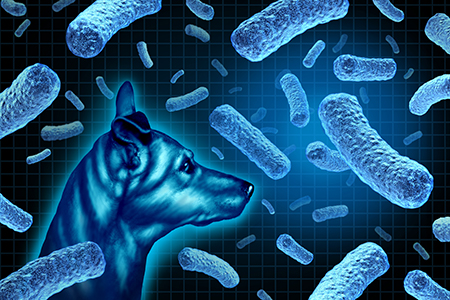
Understandably concerned.
The Minnesota Board of Animal Health gets it: shipping countless rescue dogs over state and even national borders, often with little to no oversight, comes with serious consequences. In this case, it’s bringing brucellosis into the state. Brucellosis is a nasty, highly contagious zoonotic bacterial infection that can be very unpleasant for people. Dogs with brucellosis may be asymptomatic, which in a way, makes it even more dangerous, since the infection can lay waste to a breeding program.
Diseases like this are one of the many risks associated with importing unvetted rescue dogs. The practice, often called rescue transport or humane relocation, is one of those “everybody wins” hustles that sound appealing at a dinner party, but falls apart under the weight of serious real-world scrutiny or experience. The idea is simple: gather up dogs (it’s usually dogs) from a part of the world that is experiencing crowded shelters and/or overpopulation, pack those dogs into a transport of some kind, then ship them to regions where there are more willing adopters than available dogs. Places like, say, Minnesota.
In theory, this is a brilliant “Gosh, why didn’t I think of this sooner?” kind of solution: an innocent dog is rescued at the last minute from a crowded shelter in the Southern United States (often excoriated as a "kill shelter") or the streets of Cairo, Egypt, then trucked or flown to a Northern U.S. family that earns a halo for adopting a dog from a truly precarious situation, which brings the rescue organization and its transporters enough money to continue their altruistic operation. Could this BE more of a win-win scenario?
But of course, whenever numerous moving parts are in play, it creates a difference between theory and practice. And sometimes the differences become so stark, they transform into contradictions or even hypocrisy. Sadly, this is the state of rescue transport.
In the rush to be able to say “We saved a life,” these operations too often ship unvetted dogs with behavioral or health issues and/or communicable illnesses across state lines. This threatens the health of local pets and wildlife, people, and even agriculture, while damaging the reputation of rescue organizations and rescue animals as a whole.
Taking a larger view, it also – perhaps counter-intuitively – actually harms the region these rescues are claiming to help. This is because they create a kind of immediate “release valve” for areas with too many dogs, while neglecting to lay the vital cultural and institutional groundwork (e.g., education, assistance for owners, affordable spay/neuter programs, etc.) that is proven to reduce surplus dog and pet issues. With unwanted dogs being trucked and flown away before someone has to make the difficult choice of paying for their food and housing or euthanizing them, the issue can be kicked down the road for another day in favor of more pleasant business. It's sad to think about, but that is how many of people operate – if a problem can be ignored... it will be. Also, if you possess a modicum of skepticism in the face of seemingly altruistic acts, this strategy makes sense: there is money to be made in transporting rescue animals – why on earth would someone put themselves out of business by working to solve the problem at its source?
We are glad the Minnesota Board of Animal Health understands how serious this issue is, and as always, support strengthening animal importation and transport regulations in the areas that most need it.
Source: Minnesota welcomed more than 20,000 dogs last year: some brought along a troubling disease
NYC Carriage Horses: The Ban Is Back
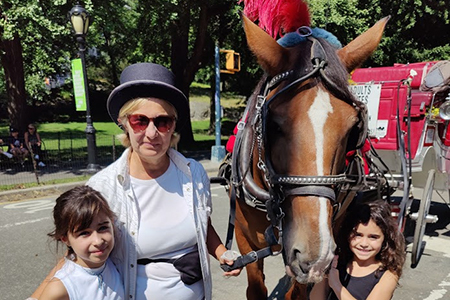
Some lovely people with a lovely carriage horse, August, 2024.
The debate over New York City’s horse-drawn carriages has reignited after two tragic incidents earlier this year: one involving a horse’s death from ingesting a toxic plant, and another where a young tourist was killed after a spooked horse bolted when the driver stepped away to take a photo. The City Council used these as an opportunity ("You never want a serious crisis to go to waste") to reintroduce a bill banning carriage horses in Central Park, with a public hearing set for July 15. Updates and details are being posted on the carriage drivers’ Facebook page, as both sides brace for a pivotal vote that puts the fate of the horses into the hands of people pushing for their removal.
This is yet another chapter in a saga that stretches back decades. Last fall, the carriage industry found itself at the center of a political maelstrom, as Mayor Eric Adams went back on his support for the carriages during his reelection campaign, siding with animal rights group NYCLASS. Since 2008, NYCLASS has pushed to replace horses with electric carriages, citing animal welfare and safety. Their efforts have been met with fierce resistance from carriage drivers and their union, who argue that real estate interests are what lie behind the assault on working horses. Investigations have revealed deep political entanglements that include nothing short of leaked emails and lobbying scandals that cast shadows over both the activists and city hall’s loudest criers.
Above all else, the carriage horse debate is about more than just animals or vehicles - it’s a fight over the soul of New York. While NYCLASS and its supporters tout e-carriages as a modern solution, the drivers and their allies see themselves as stewards of living history, offering expert care to horses and anchoring a multigenerational immigrant community. As the city contemplates its next move, the outcome will shape not only the fate of Central Park’s iconic teams, but also the livelihoods, traditions, and urban character that have defined this corner of Manhattan for over 160 years.
Source: Horse carriage ban legislation gains steam as Council Majority Leader Abreu jumps on board
Primate Center, Hot Dogs (and Cats), Feral Hogs, and More!
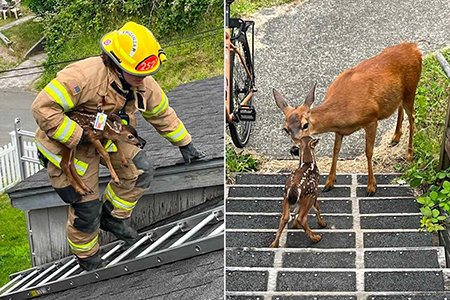
Now that's some serious animal rescue. Photo courtesy of the Astoria Fire Department.
The Oregon National Primate Research Center (ONPRC) is facing yet another expensive media campaign from anti-research activists, and it really underscores the threats currently facing biomedical research and progress in human and animal health. ONPRC conducts vital research, from HIV to age-related conditions to multiple sclerosis, and its range of studies make it truly one of a kind in the western hemisphere. But if you were to listen to the animal rights activists who work day and night trying to shut the primate center down, you wouldn’t know of its great and unique value… or that it had any real value at all. And unfortunately, the activists currently own the conversation on animal research, and to some extent, the purse strings.
We regularly cover the reasons this is so dangerous, so we’ll do our best to keep things brief and minimally redundant. But the fact of the matter is, researchers and the people who support advancements in medical science are rarely their own best advocates. For the most part, they are far more interested in things like improving human and animal health than spending their free time fighting disinformation and debating people – many of whom are congenitally impervious to facts. And on some level, they are probably holding out hope that if they just keep their heads down and work hard enough, their achievements will eventually speak for themselves. That’s a nice, reassuring thought, isn’t it? Unfortunately, given the current cultural and political climate, there may be nowhere left in the United States for researchers to work before too long.
And that’s… not good. I mean, really – does anybody with an ounce of foresight think it’s smart and/or moral to outsource vital medical research to foreign countries with lax animal welfare standards that may not have the United States’ best interests at heart? Is it really worth it to slow the development of tomorrow’s non-animal research models (which learn and improve from animal models) so you can pat yourself on the back for banning animal research where you live today? To anybody who is not utterly consumed with an overriding consequences-be-darned ideology, the answer is a resounding no. Unfortunately, that ideology is exactly what drives many of the loudest and most active opponents of animal research. It is the source of their strength. A good, logical debate where you show your proofs and everybody shakes hands afterward just ain’t gonna cut it.
The Dog Days of Summer are in full swing, and if you’re feeling the heat, your pets are too. Extreme heat is causing more pets to suffer from heatstroke even if indoors or just hanging out in the yard. With summer temperatures soaring across the country, vets say animals are at risk even without the usual triggers like long walks or being left in cars. Many owners have become more cautious about obvious dangers, but surprising risks remain. Simply lying in a sunny spot outside or just resting in the shade? Pets can still get overheated. Cases of heatstroke in dogs, cats, and even small pets like guinea pigs are possible, especially during the hottest months. Some breeds are more vulnerable, particularly: those with flat faces, thick coats, existing health issues, or our older furry friends.
Pets that seem stable can be tipped into distress by extreme temperatures. Watch for signs like heavier panting, confusion, tiredness, or vomiting. To keep pets safe, make homes as cool as possible - close curtains, use fans, and always provide fresh water. On the hottest days, consider walking early in the morning or after the sun goes down. Offer indoor enrichment if you can such as food puzzles or frozen treats. When traveling with a pet, use a well-ventilated carrier and keep things cool and calm. Small changes can make a big difference in protecting their health during these intense summer days!
How many feral hogs does it take to destroy a solid waste transfer station? Looks like the answer is somewhere between 150 to 200. The Hawai‘i County Council has authorized a six-figure plan to remove the feral pigs and other animals that are wrecking the station and threatening animal and public health. Along with the removal of the animals, education and enforcement will be necessary to keep the problem from cropping up again, as people think the animals are cute and love feeding them. Looking at the pictures of the animals… the locals do have a point. However, this is one of those instances where the brain needs to override the heart, because attracting all those animals really does create a genuine nuisance and safety issues.
Looks like the animal rights activists who participated in the Ridglan Farms raid/social media event may face consequences for burglary, theft, and property damage. 47 people face charges and it is good that the crimes, no matter how “justified” the perpetrators claim they were, are being taken seriously. On the flip side, and since we’re talking about having a little bit of foresight, it’s worth noticing that the maximum sentences of some of these crimes are extremely long (12 years!) – martyr-making fundraising fodder when you think about it.
Finally, we’ve all seen images of firefighters rescuing cats from trees… but how about fawns from rooftops? Over the Fourth of July weekend, a fawn somehow made its way onto a rooftop in Astoria, Oregon. Theories abound. Was it the fireworks? Was it spooked by holiday tourists? Did a giant bird grab it and drop it on the rooftop? Who knows, but the fire department was happy to help, and to reunite the fawn with its mother!
Also in the News...
★ Maize-fed animals may have helped Maya farmers solve corn's protein deficiency (A-Maize-ing Agricultural History)
★ 53 hours: Inside the largest cheetah relocation ever attempted (Wildlife Conservation)
★ A Dog Named Dug: The Science Behind Therapy Animals (Pet Adoration, Oxytocin, and Avoiding the Spiral)
★ Russia Captured Chernobyl. The Wildlife Cameras Kept Recording. (Armed Conflict vs. Wildlife)
★ Lake County Dog Shelter relocates animals amid HVAC issues during extreme heat (Rescue & Shelter Emergencies; Animal Care & Community Partnerships)
★ What happens in Vermont when farm animals die? (Composting, Neighborly Concerns, and Investigations)
★ What is your state animal? See the official list featuring all 50 states (Leftover Fourth of July Lists; Do You Know Your State?)
Click here to see what is happening legislatively