
Inside This Issue:
- Tales of Two Commonplace Animal Seizures
- Dog Charges Man and Toddler on Their Property, Gets Shot
- Retail Rescue, Chernobyl's Horses, and More!
Tales of Two Commonplace Animal Seizures
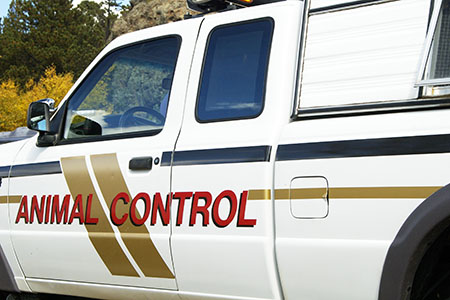
Large-scale animal seizures happen quite regularly, usually due to documentable neglect and/or abuse and dangerous levels of filth. The exact definition and threshold for neglect/abuse varies from state to state and person to person. Unhealthy living conditions are more of an “I know it when I see it” (or smell it) thing. This is why you so often see police or animal control officers wearing protective gear during raids, and see or hear comments like “You could smell the ammonia from outside the house.”
This week, there were two fairly unremarkable raids and seizures that fit examples of the “common” varieties of neglect and abuse.
In the first example, a Louisiana woman with 37 “inside” dogs, 10 “outside” dogs, and a menagerie of other animals (horses, birds, etc.) was arrested for aggravated cruelty after a search of her property revealed severely neglected animals, some with serious health issues, and a few animals that state veterinarians deemed in danger of “imminent death.” So far, 20 of the animals (dogs, horses, and a pony) have been seized. An investigation is ongoing, and more of the animals will no doubt require rehoming in the coming weeks and months.
While it is good that this woman’s animals are now receiving veterinary care and a proper investigation is occurring, it has been alleged that numerous animal welfare complaints had been filed against this property over the course of literally years, with no follow-up or investigation until now, which raises two uncomfortable questions. First, if this situation has indeed been ongoing, what else is going to be uncovered on the property as the investigation goes forward? That is not a pleasant thought. Second, will the frustration of local animal advocates lead the city council to pass unhelpful “overcompensating” ordinances that unfairly limit the rights of responsible animal owners – the feelgood “fix” that fixes nothing – or can a fair and effective agreement regarding reports of abuse, investigations, and timely enforcement be reached?
---
In our second example, an elderly Tennessee couple with nearly 150 animals – 133 of them Chuhuahas – was raided by a rescue organization that had been brought in by the couple’s own family. Sheesh, that has to be tough. Several animals on the property were suffering from a variety of serious medical conditions, some were pregnant, some of the animals were puppies that were nursing. Conditions were so unhealthy inside the home, the couple themselves were relocated, at least while the rescue was taking place. It is unknown if the homeowners were deliberately breeding the chihuahuas or if the litters occurred because they had simply neglected to spay and neuter their animals. From our vantage, we can only speculate, but given the inability of the homeowners to care for their animals and how consistent the property’s conditions were with hoarding, our best guess is that the breeding was not intentional.
Sadly, while animal hoarding isn’t an everyday, common occurrence, it’s really not that rare, either – roughly 3,500 hoarding cases are reported in the U.S. each year, with an unknown number going unreported or detected. Animal hoarding cases are heartbreaking not only due to the large number of animals that are hurt, but also because it is rooted in the mental illness and suffering of people, as well. While the impact of hoarding results in real harm and real crime, hoarders often truly believe they are helping, or even “saving” the animals that are packed into their home.
Source: St. Bernard ‘House Of Horrors’ Bust After Dozens Of Neglected Animals Seized, Animal Rescue Corps rescues 133 chihuahuas from overcrowded Tennessee house
Dog Charges Man and Toddler on Their Property, Gets Shot
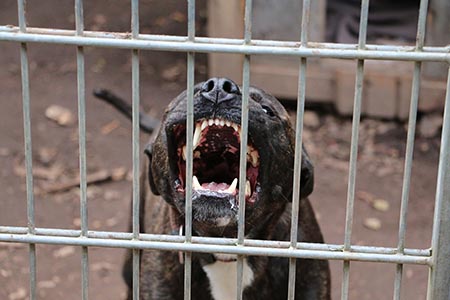
A very tough looking dog.
Adam Stade of Bangor, Maine shot a loose and “aggressively charging” pit bull as it made a beeline toward his son. The dog, named Blink, was later euthanized due to her injuries. The initial reports of this story were pretty vague – basically just “someone shot a dog,” without providing information about the Blink’s history, that she was loose, or the aggressive nature of her behavior. The Court of the Internet, which has never been big on context or nuance (especially when it comes to things like shooting dogs), declared Stade a villain, which led to him receiving some violently NSFW threats.
As more details emerged, opinion toward Mr. Stade and his actions shifted. Blink had allegedly “menaced” Stade on his own property prior to the incident, and animal services had previously warned the dog owner about keeping his pet under control. Making matters worse, the owner claimed that Blink was a harmless emotional support animal, and blamed the neighbor for “agitating” her – in other words, it was the neighbor’s fault that Blink jumped a barrier and charged Stade’s child. Good gracious. Even if everything the owner said here is true, it’s… well – we’ve all heard the “emotional support” story and ridiculous excuses for aggressive canine behavior enough times to take claims like this with a big grain (a groan?) of salt.
Today, as if an Uno Reverse card was played, Stade has been cleared after a police investigation – which included a video review of the incident – while the owner of the dog has been charged with “dogs at large.” On a very basic level, you’d have to be heartless and perhaps a little demented to cheer for a dog being shot. That part of this story really sucks, and if you are sensitive about dogs, we suggest you avoid Internet commentary on the Stade and Blink incident (the anti-pit bull brigade is out in force). However, Stade’s actions were understandable, and a reminder of the “public health and safety” responsibility that goes along with pet ownership. Please keep your dogs safe and under control!
Source: Bangor Pit Bull Fatally Shot After Allegedly Charging at Child; Owner Faces Charges
Retail Rescue, Chernobyl's Horses, and More!
Welcome to the club, buddy!
Are you sick of dog news yet? Well, just one more... We saw a statement on Wednesday from the Humane Society of Tampa Bay about how they were simply “overflowing” with guinea pigs, and got pretty excited. Not just because we love these adorable, highly social rodents, but because it would have been the perfect opening to ask “So if you’re all full up, does this mean you’ll soon be importing a bunch of ‘more desirable’ guinea pig pups from out of state, too?”
Alas, the webpage was misdated: HSTB’s cavy influx occurred nearly a year ago. Which completely deprives us of our setup. However, the issue of private “no-kill” shelters refusing to admit local dogs – especially larger dogs – while going the extra mile to import highly adoptable smaller dogs and pups from out of state is a timeless issue. In the case of HSTB, this happened last month, when shortly after declaring themselves too full to accept any more dogs, they took in a shipment of puppies from another state.
We’re not trying to single HSTB out. This recent example of the retail rescue model, where a private rescue labels itself no kill while being selective about admission and importing desirable pets raised enough hackles to launch a change.org petition, but it is not shocking or rare to see this "have cake/eat cake" model in play. And HSTB are hardly the worst offenders. It does raise some sticky questions about these organizations’ ultimate mission, though. Most notably: at what point does a nonprofit organization for public good become little more than a tax-exempt pet store with extra steps?
Speaking of Floridian private animal rescues & shelters, Sea World just celebrated 43,000 animals saved, which is a large and pretty awesome number! If there is a significance to the number 43,000, we’d sure like to know, because it escapes us (we usually think of celebrating these achievement milestones at 1k, 5k, 20k, 50k, etc.). But regardless of whether there is any deeper meaning at play here, it’s an impressive number saved and an impressive variety of animals, too!
---
And now for three brief animal facts...
If you’ve ever moved from the country to the city or vice-versa, you probably felt a bit of culture shock. Your nervous system no doubt felt it, too, even if it wasn’t something you consciously took note of. Our environments matter quite a lot – and not just for the human animal, but for wildlife and pets, as well. Punctuating this are Journal of Animal Ecology findings that show a universal correlation between urbanization and more active and aggressive behaviors in animals. Looks like the grind never stops! For humans, this could point to increased zoonotic diseases and conflict with wildlife – it may also spur creative changes in urban planning.
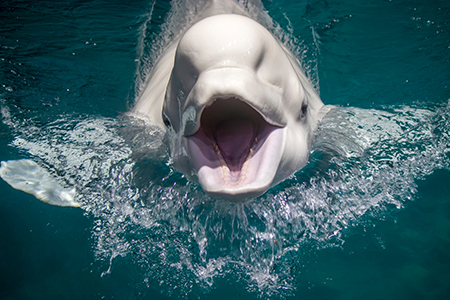
The mirror self-recognition test (MSR) tries to see if an animal can recognize its own individual self when looking into a mirror, rather than viewing its image as that of another animal. The number of animals that have “passed” this test is pretty tiny – some primates, cetaceans, elephants, birds, a few fish, and (surprise?) even three species of ant… and now, we are happy to add belugas to the list!
Beluga whales are, from our perspective, some of the coolest and cutest large animals out there, and we’re happy to see them join the “smart kids” list. How do they feel about this achievement? We have no idea. We think it is pretty neat, though we also feel a need to point out that sight is a supplementary sense for many animals, and doesn’t necessarily correlate with brainpower or "sense of self." For example, if there was a mirror test for animals that utilized scent or vocalization, the club membership would no doubt look a lot different!
The Chernobyl disaster was only 40 years ago, but animal life in the highly radioactive exclusion zone surrounding the meltdown area has not only “found a way” – in some cases, it is thriving! Larger animals like moose and Przewalski's (shuh-vaal-skee) horses are enjoying a particularly big comeback in these abandoned-yet-preserved areas. Historically, the presence of humans has caused a precipitous drop in the number of large animals in any given area; the Chernobyl exclusion zone suggests that these animals enjoy better outcomes sharing space with hazardous gamma, beta, and alpha radiation than they do with humans.
Also in the News...
★ Street View: How Unusual Animals End Up in Hermitage (Animal Escapes; Exotic Pets; Problematic Roosters)
★ It's baby animal season: Don't touch or take home baby deer or elk you find (Responsible Conservation; The Usual Spring Faire)
★ Front Street Animal Shelter program invites students to spend time with a shelter dog (Rescue & Shelter Opportunities; Socialization & Fostering)
★ Man, 77, fatally shot dog that got into fight with his dog at park, police say (Out of Control Dog Park Drama; Texas)
★ Do Animals Enjoy Music? Zoömusicology Has Surprising Answers (Elephants & Beethoven)
★ Crook County Democrats oppose animal rights petition that could restrict hunting, fishing and agriculture (State Level Animal Rights Legislation; IP28)
★ 11 Places to Interact With Animals in Eastern Iowa This Summer (Lists to Get You Out of the House; You Have Places like This in Your State)
Click here to see what is happening legislatively