

Inside This Issue:
- Filling the Gaps of the Growing Dog Shortage
- Veterinarian's Tragic Death Is Mourned by Grateful Community
- Another Trampling Death in Thailand Park
- Vet Tech Arrested, Zoonotic Spillover, a Camera-Stealing Dog, and More!
Filling the Gaps of the Growing Dog Shortage

The number of dogs from observable and regulated sources is dropping precipitously.
When it comes to dog ownership in the United States, we’ve seen the writing on the wall – and it isn’t good: supplying the public with healthy, carefully-sourced dogs is becoming more and more difficult each year… and sooner than we think, it may be impossible for pet lovers to get the types of dogs they want.
If you aren’t a breed enthusiast or actively engaged in the pet marketplace, the idea of a “dog shortage” must sound counterintuitive, if not patently absurd. After all, for more than three decades, there has been a laser-hot focus on rescue and shelter dogs, and the importance of ending dog overpopulation. We’ve been told repeatedly that the United States has dogs of all shapes and sizes practically coming out of its ears. So, if you want a dog, you don’t have to worry. Even if you are interested in a very specific breed, you should be able to find it – after all, we have been reassured time and again that 25% of shelter dogs are purebreds.
Of course, that’s not really the case. Our research, backed by a DNA survey of shelter dogs puts the number of purebred dogs in shelters at 5%, and if you want a specific breed from a reputable, in-home hobby breeder, be prepared for a long wait! If your search is more generalized – say, “40-80 pounds, under 10 years old, breed unimportant” – you still have options to choose from today, but the overall number of dogs from observable and regulated sources is dropping precipitously. Breeds that we grew up with are endangered.
Source: The Growing Dog Shortage
Veterinarian's Tragic Death Mourned by a Grateful Community
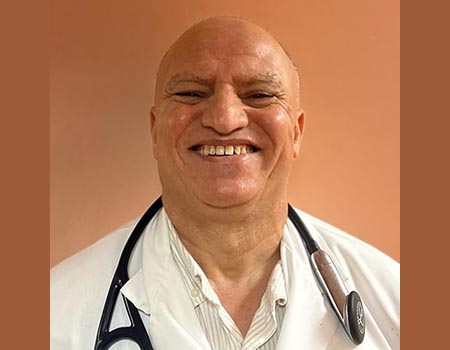
Dr. Hussein, Aadobe Animal Hospital.
Dr. Ashraf Hussein spent his life working tirelessly for the animals we all cherish, to ensure that pets and the families who love them never had to go without care. His devotion began long before he became known in Staten Island; he immigrated from Egypt in the 1980s, rebuilding his veterinary career from scratch while supporting his family as a cab driver. Eventually, he earned his license to practice in New York and became a popular fixture at Aadobe Animal Hospital.
He also volunteered at a low-cost mobile vet clinic in Queens, helping people who couldn’t afford typical care for their pets with surgeries, checkups, and microchipping. Tragically, Dr. Hussein and the dog he was operating on died unexpectedly in his mobile clinic earlier this month. An investigation concluded that he had been overcome by carbon monoxide after the van's attached generator’s vents became blocked with snow, pushing the deadly gas inside the van.
You can't sugarcoat a tragic death like this, but along with the sadness is a reminder of how much we depend on veterinarians like him to care for the animals that light up our lives, and also of the way selflessness and compassion can affect entire communities. Dr. Hussein leaves behind a legacy of service that touched both people and pets alike.
Source: Carbon monoxide killed Staten Island veterinarian: Report
Another Trampling Death in Thailand Park

A sight people come from all over the world to see – but it demands caution and respect.
A "notorious" bull elephant in Khao Yai National Park, Thailand, has killed yet another tourist, making it the third fatal attack linked to the same animal. The victim, a 65-year-old man, was trampled while exercising near his tent at a popular campground. Park rangers managed to scare the elephant away, but not before the attack turned deadly. This incident underscores the risks that come with the park’s reputation as one of the best places in Thailand to see wild Asian elephants, often right from the roadside or in open grasslands. These close encounters, while thrilling for visitors, highlight the difficult balance the park faces between wildlife conservation and public safety as a major tourist attraction. Khao Yai National Park, Thailand’s oldest designated World Heritage Site, draws visitors from around the world for its wild elephant sightings. Rangers work constantly to manage elephant corridors and visitor areas, but as the elephant population has grown, so too have conflicts, with more than 220 people killed by wild elephants in Thailand since 2012.
Efforts like using contraceptive vaccines to control population growth are underway, but the challenges remain complicated. A lot of this human-elephant conflict can be attributed to fragmentation of migratory corridors, something every single elephant range country has to deal with. This problem isn’t unique to Thailand. On the other side of the Bay of Bengal, another bull elephant is causing havoc in rural India, echoing the chaos seen in Khao Yai. Human-elephant conflict is an increasing concern across Asia as populations of both people and elephants rise, leading to more frequent and deadly encounters. While tourists continue to seek out animals in their natural habitat, encounters like these serve as a stark reminder that wild spaces demand respect, caution, and ongoing vigilance from park authorities.
Sources: Tourist trampled to death by elephant in Thailand park, the 3rd human it’s killed
Vet Tech Arrested, Zoonotic Spillover, a Camera-Stealing Dog, and More!
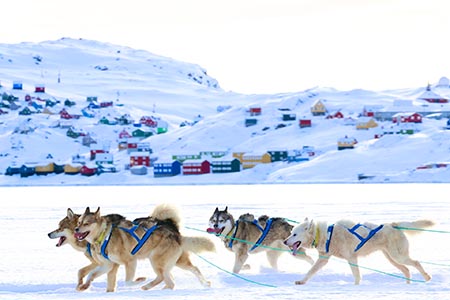
Dogs sledding in Greenland.
In North Carolina, a vet tech who rescued an abandoned doodle from last week’s freezing cold was arrested for refusing to bring the dog to animal control. The tech, Dason Garner, brought the dog inside to warm it up, and called animal control to report she’d found it. Animal control told her that she needed to bring the dog in, as it was viewed as evidence in an animal abandonment case. Garner, who is also a pet groomer, felt the dog was too matted and beat up to do well in a shelter environment. This led her to refuse multiple requests to surrender a stray animal, and ultimately her arrest.
While this drama was unfolding, Garner says she tracked down the dog’s owner (the dog had gone missing from its yard two months ago), who was tearfully grateful for the reunion. Then, Garner lost her job at the vet clinic for going public about her arrest. Now, it is important to consider the possibility that we are missing important details to this story – Garner is the only person talking about it with the media, after all. But at least on the surface, this contentious rescue-and-return creates the perception of a good Samaritan solving a neighborhood-level problem, only to end up pummeled by a ham-fisted, vindictive bureaucracy. Not a good look.
After several months on leave, Rachael Borrelli, the assistant director of San Diego county’s animal services department, is now former assistant director. There were no doubt multiple reasons for the dismissal, but a caught-on-tape rant where she went off about all the “sh*t dogs” that were overcrowding the shelter is probably the biggest. To be fair, she opened her caustic volley with a good point, complaining that some people will fight tooth and nail not to euthanize any dog – even a dog that bites children. That all-too-common attitude ultimately causes more harm than good, and we share Borrelli’s frustration with it. However, further investigation and interviews with staff and volunteers revealed issues with work policy, accounting, chronic understaffing, an alarmingly high turnover rate, and the growing perception that a macabre “euthanize ‘em all” attitude was informing shelter policy.
These pictures are worth far more than 1,000 words. We also know that the birth of a healthy baby Asian elephant at the Smithsonian’s National Zoo and Conservation Biology Institute is technically about lofty, important issues like conservation and genetic diversity and such, but we know you’re gonna forget about all that the second you see this baby elephant!
A cohort study of Spanish children that monitored children from pregnancy up through age seven suggests that having animals in the house – at least some kinds of animals – may have a negative effect on a child’s mental health. The study’s findings go against our expectations and villainize cats to some extent, with researchers suggesting that feline independence and toxoplasmosis might be harmful to a developing child’s mental health. Every time we have seen this study reposted or discussed, the reaction has been overwhelmingly negative, which is understandable given how much we love our pets (plus, it’s usually used as blatant rage-bait). However, the interplay of pet ownership on household and family dynamics – and mental health – is a fascinating and valuable topic upon which we encourage further research.
While much of the recent focus on zoonotic spillover has been on H5NI (bird flu), two new contenders are stepping up to the plate. Influenza D, a scourge that typically afflicts livestock and costs the cattle industry $1 billion a year is doing its level best to jump to humans, with studies showing the presence of antibodies in cattle workers, and one strain in China that can already move between people. Meanwhile, the canine coronavirus has moved from dogs to humans, and has been responsible for some hospitalizations. Yikes! There is a huge amount of value in being able to track the transmission and transformation of these viruses, though nobody would blame you for missing a simpler era when you got chest cold a few days after petting a strange dog, and didn’t feel compelled to wonder “is this canine coronavirus?”
Finally, out of Ilulissat, Greenland, we have an expensive camera going for a wild ride, picked up and then hidden by a playful sled dog. While the video element alone is worth a view, we urge you to watch it with the sound on. Those dogs sure love to talk!
Also in the News...
★ Large Dog Adoptions at Tulsa Animal Services Remain Free; Modest Adoption Fees Resume for Small Animals (Pet Adoption; Rescue & Shelter Opportunities)
★ Deep-sea explorers film massive animal drifting through darkness in South Atlantic Ocean (Phantoms on Film)
★ Animals Say Hello, but Do They Say Goodbye? (Hello, Goodbye; Ethology)
★ Report: Jay man facing 15 animal cruelty counts for malnourished animals on property (This Week in Animal Cruelty Arrests)
★ Animal Shelter Society Announces Two Fun Events to Support Local Animals (Animal Happenings; Rescue & Shelter Sing Alongs)
★ Maryland Zoo will name a pile of animal poop after your ex (Zoo Life; An Proud Tradition Becomes a Little Grosser)
★ From Land to Sea: The Scariest Creatures in America (Fun & Terrifying Lists; Spoiler: Most of These Animals Aren't That Scary)
Click here to see what is happening legislatively