
Inside This Issue:
- Canine Blood Donors Are Important!
- Two Rescues with Similar Tragic Endings
- What Pet Lovers Want, A Sad Goodbye, and More!
Canine Blood Donors Are Important!
If you've ever been to an NAIA conference, there's a good chance you've seen this logo!
This week, Parade reported on a story from Stray Rescue of St. Louis, which recently took in a 2.4 pound puppy so anemic from fleas and hookworms that he refused to eat. Staff named him Hercules. His lifeline was Janie, a 45-pound shelter resident who donated blood without needing sedation. Soon after the transfusion, Hercules was eating and sleeping soundly, and two days later he went to a foster home.
It's a heartwarming story, and a reminder of something few pet owners think about until an emergency. Dogs need transfusions after trauma and during surgery. They need them for rodenticide poisoning, cancer and immune disorders, and, like Hercules, for parasites that can kill a young puppy. Like people, dogs also have blood types, so blood must be typed and matched. But, there isn't enough of it. In 2024, the emergency hospital chains BluePearl and Veterinary Emergency Group said pet blood donations needed to roughly triple to keep pace with demand. Luckily, Stray Rescue had a healthy donor on-site. Most clinics don't, so they rely on blood banks.
For many practices, that blood bank is Animal Blood Resources International (ABRI), a longtime friend of NAIA. Founded in 1988 by veterinarian Stan Carlin, DVM, ABRI was the first commercial blood bank for domestic animals in the United States. It now describes itself as the largest veterinary transfusion supplier in the world. Its program offers blood products for dogs and cats, screened donors, lab support, and world-class technical support – all with regulatory oversight from the USDA and California officials. ABRI also has a robust adoption program for retired donor animals.
Janie's story is ABRI's model in a nutshell, with a healthy donor saving a life with an opportunity to move to a loving home. Multiple media sites and social media posts called Janie a hero. Yet animal rights groups have spent years attacking organized blood banking, even campaigning against ABRI by name for housing donor animals and placing them for adoption afterward. Of course, that is exactly what happened in St. Louis – but animal rightists pick the feel-good story with the "rescue" halo while vilifying the other. Which is silly. Donor animals deserve excellent care, careful screening, and a good home when their service ends. Responsible blood banks – regardless of what end of the animal care spectrum they fall under and what they label themselves – provide a much-needed resource so that veterinarians can save patients like Hercules.
If you would like to help, ask your veterinarian whether your healthy adult dog could become a blood donor. Encourage your breed or kennel club to host a blood drive. Consider adopting a retired ABRI donor. And, if you see ABRI staff at a NAIA conference, thank them for their support!
Source: Shelter Dog Donates Blood to Save 2-Pound Puppy Named Hercules in St. Louis
Two Rescues with Similar Tragic Endings
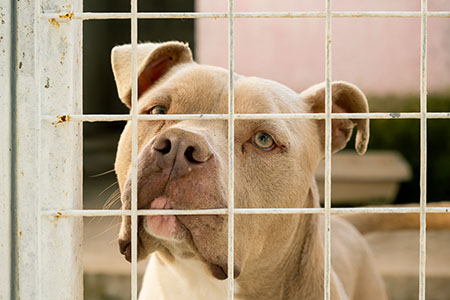
Stock photo that pops up for "rescue dog" – a pitbull-type dog, like Biggie Smalls.
This year, two rescue cases on opposite coasts have demonstrated a similar tragic disregard for the animals in their care. Authorities in California and New Jersey are alleging that some of dogs in the care of the rescues were killed while the operators kept collecting money. No license, inspection, or public record followed the dogs from the shelters.
Miranda's Rescue in Fortuna, California, billed itself as a “no-kill” sanctuary. But in June, investigators excavated the intact remains of 117 dogs and 21 sets of skeletal remains. Owner Shannon Miranda allegedly admitted to shooting as many as 10 dogs a month. The sheriff says about 730 shelter animals sent since January 2025 are unaccounted for. Oakland, California alone transferred 445 animals, generating an estimated $178,000 in fees.
Miranda denies wrongdoing, and no charges have been filed. Yet in September the county lifted a land-use suspension, and the rescue resumed intakes and adoptions. That review covered zoning, not animal care. The county suspended the permit again on October 1, but for weeks a rescue under federal investigation was free to take in dogs.
A similar tragedy was reported two weeks ago in New Jersey. Burlington County prosecutors charged Thomas and Brooke Thompson of Gone Rogue Girls Rescue with animal cruelty. A foster told police that when Biggie Smalls, a senior pit bull, tried to bite Brooke Thompson during an April visit, Thomas Thompson shot him in the head. A month later, the rescue raised memorial donations, claiming Biggie had been euthanized for cancer. Brooke Thompson faces a theft-by-deception charge over that fundraiser. A search warrant removed 12 dogs from kennels prosecutors called overcrowded and filthy.
Biggie came from ACCT Philly, which had sent the rescue more than 100 dogs since 2024. The shelter learned what happened from social media, after the rescue had shut down its website, phone and accounts.
Both cases share a pattern. Shelters sent dogs out by the hundreds and took the rescue's word for the outcome. Money moved with every dog, through transfer fees or donations. And the word "rescue" did the job an inspection should have done. Most rescues look nothing like this. But a fee-driven model, paid at intake with no one checking outcomes, rewards volume over welfare. The same gap enables puppy laundering, when dogs are sourced from shelters and other rescues, breeders or overseas, too often with fraudulent veterinary and vaccination records, and then are "adopted" out at retail prices with no disclosure, no warranty, and no consumer protection.
Regulated markets are subject to rules most rescues do not have to follow. Breeders and brokers selling to stores need a USDA license and face unannounced inspections with public reports. Many states license and inspect pet shops, require vet exams before sale, and mandate breeder disclosure. Roughly two dozen states have pet lemon laws offering refunds, exchanges or vet reimbursement. Some states, like New Jersey and Connecticut, even require two years of clean breeder federal inspection reports. But, in most states, a rescue placing hundreds of dogs a year for fees needs none of these things. Colorado, which licenses and inspects rescues, demonstrates that it can be done.
This is not rescue versus retail. NAIA stands with the volunteers who do honest rescue work. But a family's protections, and a dog's, should not depend on what the seller calls itself. We support standards for any organization that places animals for a fee, including:
- Robust requirements that ensure certificates of veterinary inspection follow every animal across state lines.
- Licensing and inspection of facilities and foster home registries.
- Intake and disposition records for every animal.
- Enforceable shelter due diligence and follow-up on transfer partners.
- Veterinarian-approved health programs and disclosures.
Biggie Smalls and the hundreds of dogs unaccounted for in Humboldt County deserved a system that protected them.
Source: South Jersey couple who ran rescue charged after shooting dog in head
What Pet Lovers Want, A Sad Goodbye, and More!
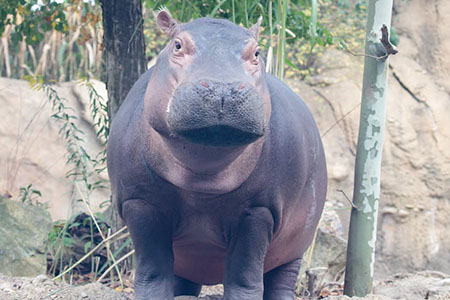
Fiona the Hippopotamus, from Cincinnati Zoo Facebook post, photo by Mark Dumont.
As expected, NYC Mayor Zohran Mamdani signed legislation to ban carriage horses in Central Park by June, 2028. The union representing carriage industry workers and owners has filed a class-action lawsuit to block the law. However, even if this Hail Mary attempt manages to succed, the mere existence of carriage horses and a carriage horse rides in New York City (and many other cities) has been so thoroughly poisoned by decades of misinformation and smears, it would probably only serve as a delaying action at this point. The issue of animal care desperately needs to be reclaimed by experts and people who work in the field – sad case in point: the fate of NYC's carriage horses and their drivers.
Breaking news! Recent findings from the Pet Food Institute point out the obvious: the largest consumer group among pet owners (called “Comfort Companions) want to feel like they are making what they consider the safest and most ethical choices for their pets – as long as those choices don’t cost too much. Who woulda thunk it? Snark aside, this is valuable data and it makes a fairly profound observation: our choices as consumers are shaped by the ethical messaging we have absorbed (right or wrong) and a desire to give our loved ones their best chance at a good life… so long as we can afford it. That’s kind of sweet and kind of sad all at once. Definitely a lot to chew on from what, on the surface, comes off as “obvious” consumer research.
Here are some “cautiously optimistic” updates in recent zoo news: in Oregon, Tula-Tu, who recently suffered an EEHV, is officially out of the woods after much care and treatment. Her white blood cell count is normal, and her viral load is dropping. Thank goodness for the swift response from her caretakers! In case you didn’t click on the EEHV link, the virus is latent in pretty much all asian elephants, can be fatal if it develops into an active disease, and is particularly dangerous for young elephants as their immune systems develop.
Meanwhile, at the Cincinnati Zoo, a child threw a knit cap in the air, which was then hit by a ceiling fan and batted into the hippo enclosure... and promptly swallowed by one of its hungry inhabitants: Fiona the Celebrity Hippo – arguably the best-known hippopotamus in the world. This incredibly unlikely sequence of events has led to around-the-clock care for Fiona, as efforts are made to encourage the digestion – and eventual pooping – of the cap. We are, again, “cautiously optimistic” that Fiona passes the hat. If the hat becomes an obstruction, surgery isn’t on the table.
Afternoon update (11/19/2026): the Cincinnati Zoo just now reported that Fiona was unable to pass the hat, and the obstruction ended up killing her. Ugh. From the zoo: "It is with extreme sadness that we share with you the devastating news that Fiona did not make it after multiple attempts from our amazing vets and keeper team to help her through what ended up being a medical emergency." This is such a sad end for her – she captivated and inspired the globe with her fight for survival as a premature, 29 lb calf, was beloved by millions, and by all accounts had a great life... only to lose that life to a senseless and bizarrely random accident.
When we remind our readers that the end goal of the animal rights philosophy is a world where pretty much all human-animal interactions outside of, say, wildlife rehabilitation and bird watching* are banned, a helpful soul will often pipe up to tell us we’re being hysterical – “Sure, these folks might be a little extreme and misguided, but they just want to help animals. Have a heart!”
And to be fair, it’s understandable that people believe this. Over the last three decades, the animal rights movement has wisely moved – for the most part – away from highly confrontational, occasionally illegal tactics, and adopted a more respectable “suit-and-tie” incrementalist approach. Modern animal rightists wrap themselves in the guise of improving animal welfare/care while tirelessly working toward advantageous (for them) cultural and legal precedents. A performative foie gras ban in towns where only a small portion of the population knows what foie gras even is, banning the sale of (non-rescue) cats and dogs from pet stores in a city that has no pet stores that sell dogs. You know – stuff they can fundraise off of, while making subtle but meaningful cultural and legal changes and simultaneously inconveniencing a minimal number of people and/or business interests. It’s pretty ingenious, honestly. Sure, they ultimately want to abolish animal agriculture, biomedical research, zoos, pet “ownership,” and all those concepts, but unlike the more strident activists of past years, they know they’re in a long game, and that the change they seek will take generations, not a revolution. This is why, this Thanksgiving, one of the many things we’re thankful for are groups like PeTA (the OG of animal rights!) for always being willing to say the quiet part out loud: ultimately, it’s not about loving and appreciating animals, it’s not about the connection we share with animals, it’s not even about the level of care we provide for animals. No level of care is high enough – it’s about eliminating the human-animal bond entirely.
*after filling out all relevant avian observation consent forms and hiring a court-appointed animal behaviorist, of course.
Also in the News...
★ Clark County animal shelter urges pet vaccinations after distemper reports (Rescue & Shelter News; Public Health & Safety)
★ Newly Discovered Monkey Pops Up in Camera Trap Footage (Wake Up, Babe: New Monkey Dropped)
★ Flesh-eating parasite found in 5 Arizona animals, including 2 dogs. What pet owners need to watch for. (Screwworm Update; Biosecurity)
★ Lions and tigers are kept legally in Ontario backyards. No one knows how many there are (Exotic Pets of an Extremely Large Variety)
★ RIDOH reports significant annual increase in statewide animal rabies cases (Urban Chickens and Why Roosters Aren't Neighborly)
★ Federal jury swiftly convicts animal-abuse YouTuber in disturbing case (Abuse, Crime, and Punishment)
★ 10 most dangerous, deadliest animals to humans (Lethally Goofy Lists; Oh, it's THIS List Again...)