Inside This Issue:
- A Second Opinion on Recent Pet Store Advice
- Animal Services Director: Economic Stress Factor in Crowding
A Second Opinion on Recent Pet Store Advice
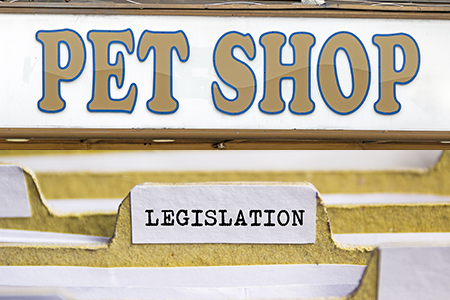
Can you see pet stores through a 2026 lens?
In a recent opinion piece, a veterinarian offers readers a simple prescription: never buy a dog or cat from a pet store. The problem with this view is that it is through a 1990-2010s lens, missing the laws that now protect animals and consumers. Memories of pet shops from the author’s childhood and early career, adding the pejorative phrase “puppy mill,” and applying the resulting framework to the entire regulated pet marketplace of 2026 is not a well-considered perspective. For a column advising consumers to do their homework, the homework is noticeably missing.
On some points, there is little disagreement. Adopting from a shelter can be a wonderful choice. Substandard breeders exist, and they should be identified, prosecuted, and put out of business. But a commercial breeder is not automatically a puppy mill. One term describes a business activity; the other describes unacceptable care, and treating them as synonyms erases the distinction between an operator who evades oversight and one who is licensed, inspected, keeps records, and complies with veterinary and husbandry standards.
We support breeders and dealers that seek USDA licensure under the Animal Welfare Act. A USDA license requires a pre-license inspection and routine unannounced inspections. Animal Welfare Act standards address housing, sanitation, food, water, veterinary care, recordkeeping, identification, and transportation. USDA's 2024 report found 96 percent of all regulated facilities in substantial compliance and 74 percent with no violations. Those figures cover the full Animal Welfare Act population, not dog breeders alone, and no one should mistake them for proof that every facility is excellent. But these statistics show why an opinion piece that treats the commercial breeders who supply pet shops as substandard is not serious analysis. Enforcement against unlicensed breeders, illegal importers, and regulatory evasion protects the breeders and businesses that did obtain licenses and keep the required records. Good policy raises the bar and removes bad actors. It does not remove the bar and drive buyers elsewhere.
New Jersey’s Pet Purchase Protection Act is the clearest answer to the outdated ideology presented in this Op-Ed. Enacted in 1999 and strengthened in 2015, it bars pet shops from sourcing from unlicensed breeders or those with recent serious USDA citations, puts the breeder’s name and inspection reports in front of customers, and requires veterinarian exams before sale. If a puppy is certified sick within 14 days, or with a congenital condition within 180 days, the family can get a refund, an exchange, or keep the pet and be reimbursed for vet care up to twice the purchase price.
While New Jersey arguably has the most stringent law in the country, it is not an outlier. Florida, Connecticut, Minnesota, and Pennsylvania, among others, combine veterinarian exams and mandated health and sourcing disclosures. Many other states also include similar protections.
Retail bans, as promoted in the Op-Ed, do not license, inspect, or close substandard breeding operations. Such bans just change where families get the pets they want. Demand for puppies does not disappear without pet shops. Buyers move to websites, social media sellers, parking lot handoffs, and high-volume retail rescue operations; places where adoption language becomes the favored description and there is no regulated pet store equivalent to sourcing disclosures or health remedies.
The stronger national policy is to demand accountability from every third-party seller, including rescue organizations. Everyone should disclose where an animal came from, provide complete health and transportation records, meet meaningful welfare standards, and offer enforceable remedies when an animal is sick. The law should follow the animal, whether the transaction is called a sale or an adoption. The useful advice is to demand health and breeder details from every source you consider. Before diagnosing an entire pet community, an examination is helpful, as is a bit of current research about the topic.
Source: I’m a vet. Here’s why I’m against buying dogs and cats from pet stores.
Animal Services Director: Economic Stress Factor in Crowding
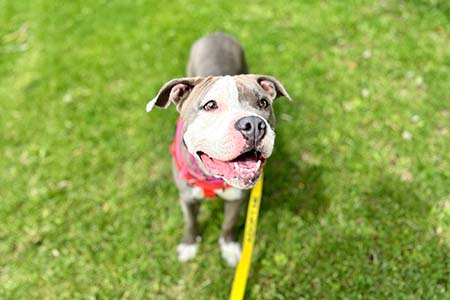
Crowding makes it harder for staff to give dogs the attention and exercise they need.
In Alabama, the Huntsville Animal Services is at critical capacity for dogs. Animals (especially dogs) are feeling overcrowded, staff is feeling overworked, and everybody is feeling stressed out. There are many culprits, such as numerous unclaimed dogs from known owners and a recent high-volume raid that brought in tons of cats all at once (the shelter is actually not as overrun with cats as it is dogs, though this doesn’t help!), but the overarching theme, according to Animal Services Director John Fischer, is economic.
People can’t afford to feed their pets. They can’t afford veterinary services – including spaying and neutering their pets. They can’t even afford to move into less expensive housing with their pets.
While the situation is genuinely rough – kennels are being divided so extra dogs can fit inside – Fischer wants to be clear that they aren’t euthanizing for space. He also reminds the community that Animal Services offers a food pantry for people who are struggling to feed their pets, and that locals can receive free spay/neuter services. While Animal Services can’t pay your rent or require a landlord to accept your dog, food pantries and free or low-cost spay/neuter can be essential tools for keeping people and their pets together and preventing unexpected litters. It’s fantastic that Huntsville Animal Services offers these for the community. Unfortunately, in our experience, a lot of people who are struggling with pet ownership (retention) are completely unaware that these resources exist for them. It is important that folks like Fischer – and us – keep letting people know until it is common knowledge that animal services are often so much more than just "the pound."
Source: Huntsville Animal Services at critical capacity: Pet costs could be factor, director says
Also in the News...
★ Legendary Whidbey Island lone elk Bruiser found dead at age 18 (Farewell to Record-Chasing Wildlife Celebrities)
★ Chimps Caught Guiding an Infant’s Hand to Teach Tool Use (Wildlife Caught on Camera; Ethology & Tool Transfer)
★ Woof! Animal welfare advocates want Georgians to know their state lawmaker’s record on pet issues (Animal Care/Welfare/Rights Legislation)
★ Animals may have evolved 200 million years earlier than we thought (Serious Old School Paleontology – Backward Ticking Clock)
★ New collar sensor could reveal how wildfire smoke affects animal health (Wildlife Health & Safety)
★ Hundreds of exotic animals missing after house fire in Lapeer, owner says ("Suspicious" Fire, Missing Animals & Money)
★ The wildlife winners set to appear on your banknotes revealed (Fun & Goofy Lists: These Animals Are Money! Hedgehogs & Bumblebees)
Click here to see what is happening legislatively