Inside This Issue:
- Thoughts on the USDA Animal Welfare Strike Force
- Giant Pandas Arrive in Atlanta
- New Low-Cost Spay/Neuter Clinic to Open in Georgia
- Prospective Pet Owners: Be Aware!
- Petting Zoos and Supervised Human-Wildlife Encounters: Not an Either/or Proposition
Thoughts on the USDA Animal Welfare Strike Force

It goes without saying that nearly everybody is against dog fighting; besides the obvious violence and cruelty,
its association with other criminal activities is important to note.
If you follow animal news, you no doubt heard the September 21st announcement of the USDA Animal Welfare Strike Force. It is a cooperative, multi-agency effort tied to the regulation, oversight, and enforcement of numerous animal welfare issues. There are several aspects of the task force where NAIA is in agreement, notably dog fighting and its association with other criminal activities, the illegal importation of dogs, the substandard and illegal breeding of dogs and other animals, and the importance of enforcing the law – regulations without enforcement are doomed!
However, we also have several concerns. For one, the composition of the task force was noticeably devoid of stakeholders. Rescues, enforcement officials, and animal activists were well represented, but licensed operators like breeders, researchers – i.e., the people who would be most affected by regulation, oversight, and enforcement – were absent. Along those same lines, while it is essential that licensed operators are inspected, the vast majority of these people are already in compliance, while today's major busts and violations overwhelmingly come from unlicensed, underground operations. This must be addressed. There are also hundreds of thousands of dogs and cats moved throughout the country each year by rescues that have long avoided regulation by merit of the “halo effect” that the word rescue confers. These operations are in desperate need of oversight due to animal welfare, consumer protection, and public health and safety concerns.
Overall, we recognize and appreciate the focus on regulation and enforcement, though going forward, we hope the USDA hears the voices of the regulated community – we share many of the same goals and are made up of countless hands-on animal experts with unique insights. We have a lot to offer. Read our full letter regarding the Animal Welfare Strike Force Announcement below.
Source: NAIA Letter Re: Animal Welfare Strike Force Announcements
Giant Pandas Arrive in Atlanta

Hey there!
Two giant pandas, 6-year-old male Ping Ping and 5-year-old female Fu Shuang, have arrived at Zoo Atlanta under a new 10-year agreement with China. The duo traveled about 8,000 miles to get here from the Chengdu Research Base of Giant Panda Breeding after completing a month-long quarantine and crate training for the flight. They will remain behind the scenes for about a month before making their public debut.
Their arrival restores Zoo Atlanta’s panda program after its previous four bears returned to China in 2024. Those pandas returned to the motherland when the zoo’s 25-year loan agreement ended. China retains ownership of pandas loaned to foreign zoos, including cubs born abroad, and the agreements generally require them to return when the contracts expire. Although the departures came during strained relations between Washington and Beijing, new panda loans to Atlanta, San Diego and Washington show that conservation partnerships between the countries haven’t gone the same direction as economic and geopolitical tensions.
The tradition began in 1972, when China gave Ling-Ling and Hsing-Hsing to the Smithsonian’s National Zoo following President Richard Nixon's historic visit. The gift was an olive branch for relations after years of limited contact, turning the bears into symbols of diplomacy. China later replaced gifts with long-term "panda loans" connected to research and conservation, making Ping Ping and Fu Shuang the latest participants in what became known as panda diplomacy.
Zoo officials hope the pair will eventually breed, although panda reproduction has been notoriously difficult under human care. Females are fertile for only a few days each year, and potential mates do not always accept each other. Still, captive breeding has been instrumental in giant panda conservation by increasing their numbers, preserving genetic diversity and improving scientific knowledge of their health and reproduction. These efforts contributed to the species being reclassified from endangered to vulnerable, though habitat loss, fragmentation, and urbanization continue to threaten the 1,900 pandas in the wild.
Source: The newest pandas in the US have arrived in Atlanta. What we know about Ping Ping and Fu Shuang
New Low-Cost Spay/Neuter Clinic to Open in Georgia
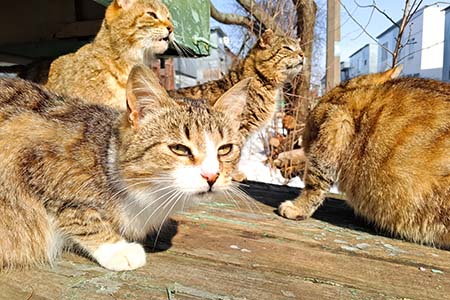
That old chestnut about one unspayed cat producing two million offspring in eight
years is a bit, uh, idealized, but the point is well-taken.
These days, “pet overpopulation” in the United States is, at least with dogs, better described as a “retention” or “distribution” problem, given that many parts of the United States no longer have that many intact animals. Also, the idea of letting your pets roam free – especially if they aren’t fixed – is a huge no-no. That said, there are also regions that have not kept pace with current trends, and when a new, low-cost spay/neuter clinic opens up in one of those communities, that’s worth celebrating.
In central Georgia, the Rescue Ranch, which has provided its community with 40,000 spay/neuter surgeries since 2010, is opening a second clinic… and with approximately 400 animals already on the wait list, its services can’t come fast enough. While spaying and neutering isn’t the only way to avoid pet overpopulation, it’s an essential factor in managing existing problems, especially in areas with lots of strays and a permissive roaming culture. Low-cost services and outreach like this that address issues at their source do so much more to help animals and communities than simply packing animals in trucks and relocating them to other states. It’s not easy, and it doesn’t make for a great Instagram fundraiser, but it makes a real, long-term difference.
Prospective Pet Owners: Be Aware!

Beautiful dog. Not an ideal choice for sedentary apartment life. Photo: AKC.
Speaking of the joys and responsibilities of pet ownership, read the link below for a delightfully even-handed bit of veterinary wisdom: the things you should know before you bring your pet home. Also, as a special treat for those of you who can read the paywalled article, take a look at the comments section. Gosh, the “adopt don’t shop” crowd really came out in force to attack the author. If only hobby folks and business owners had that kind of time and passion!
Anyhow, the first bit of wisdom is a practical matter of time and money. We go gaga over puppies and kittens, but the first year of life comes with a lot of bills. Beyond acquisition, there are frontloaded costs associated with veterinary care, supplies, socialization and training, and more – and that can really take a chunk out of an unwary pet owner’s wallet. Then, what happens when the pet loses some of their cuteness and becomes an obnoxious adolescent? That’s suddenly a lot more work for a lot less “awww” (sadly, this age is associated with owner surrenders). And it doesn’t stop there – with luck, your dog or cat will live at least another decade, and those golden years are often backloaded with new costs and responsibilities. Pet ownership is one of the great joys of life, so it is our sincere hope that this doesn’t make the prospect of pet ownership sound too costly and unappealing, but it really is vital that we go into it with a realistic understanding of our obligations!
So here we come to the first boldfaced warning about common mistakes pet owners make: choosing an older pet, with the idea it will be less work and responsibility. As most of us already know, this is not necessarily true – older animals are often surrendered to shelters and/or rehomed by owners due to behavioral issues, and along with a readjustment period, will need your guidance and training. And if they’re elderly, be ready for the aforementioned backloaded vet bills, medications, and such! While this was a warning to prospective owners, we would be remiss not to point out that there are also practical and emotional benefits that come with taking in older pets: lower energy level, a more solidly "set" personality, a shorter timeframe of responsibility, or simply the joy that comes with giving an older pet a fresh start!
The next warnings are about health – ignoring signs of ill health in a pet you are adopting and/or assuming a dog is healthy because it came from a breeder. This is a problem we hear about a lot, and the psychology behind it makes sense. We fall in love with puppies and kittens in a way that can utterly override common sense – maybe we ignore or make excuses when there are clear signs of ill health or bad conditions. Maybe we see a frail or runtish pup and think – consciously or not – that we have to “save” it. Whatever the reason, it’s important to keep a clear head about the conditions of the potential pet, the facilities it comes from, and the people who are trying to get you to adopt or buy the animals.
Finally, is a warning to take breed and background into account when getting a pet. This is true for both dogs and cats, but “beautiful animal, wrong type of household” is a notorious problem for dogs that can end with the dog in a shelter or worse. Understanding the tendencies and needs of a specific dog breed – not just that it’s gorgeous – before getting it is incredibly important.
Source: I’m a vet. Here are 4 common mistakes I see new pet owners make.
Petting Zoos and Supervised Human-Wildlife Encounters: Not an Either/or Proposition
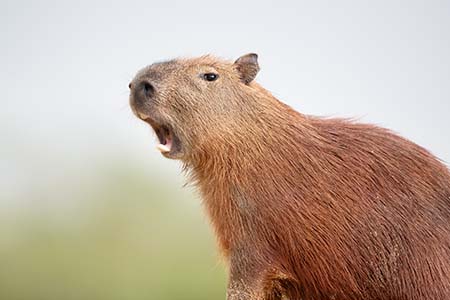
You haven't lived until you've been victimized by the capybara side-eye.
Recent rabies concerns at petting zoos near Charlotte highlight the need for responsible oversight of human-animal encounters. While animal exhibits at agricultural fairs are regulated under Aedin’s Law, petting zoos featuring domestic animals operate without comparable monitoring. Rabies is exceedingly rare – and deadly without post-exposure treatment – which is why the case made the news. However, animals can carry many other zoonotic illnesses without showing symptoms, so facilities must maintain strong hygiene standards, work with veterinarians, and provide clear safety guidance. Families can reduce their risk by washing their hands, asking about vaccination and veterinary care, and closely supervising children.
Similar questions have emerged around Fort Lauderdale’s new Capybara Café, where visitors can interact with capybaras and other animals. Animal rights activists have called for the café to close over zoning and animal-housing concerns, while city officials have said they have not found grounds to shut down the business itself - Capybara Cafe is legally licensed to operate in the state of Florida. The café is owned by a nonprofit animal sanctuary, and revenue from its locations helps support rescue and rehabilitation work.
We can't speak for or against the Capybara Café, but it must be said that animal encounters differ widely in type, purpose, and quality, and they should be evaluated based on their actual practices rather than how they make animal rights activists feel. Human-animal contact can be educational, enjoyable, and financially supportive of recovery efforts when facilities prioritize veterinary care, sanitation and housing, supervised interactions, and opportunities for animals to retreat (all required under federal and state law to be in operation). The goal should be responsible care and meaningful oversight – this is not about either unrestricted contact or knee-jerk, blanket condemnation.
Source: NC state veterinarian explains how families can stay safe at petting zoos after rabies concerns, Capybara Café opens in Fort Lauderdale; PETA isn't pleased
Also in the News...
★ A Connecticut zoo celebrates the birth of one of the world’s rarest animals (Zoo News; Red Pandas and Other Charismatic Arboreals)
★ Mexican Senate passes bill holding pet owners accountable for abuse or negligence (Animal Law: Global Edition; Responsible Pet Ownership)
★ Rabies alert issued in Martin County after raccoon tests positive in Stuart (Wildlife Alerts; Public Health & Safety; Rabies Alert)
★ Roseau County woman charged with animal torture after dog starves to death (Weekly Animal Horror Stories)
★ Japan to survey animal cafes for first time over welfare and disease concerns (Animal Care & Codes: Global Edition; Exotic Animals & Events)
★ Deadly Rabbit Virus Hits Two Minnesota Colonies, Killing Up to Half of Their Animals (RHDV2; Rabbit Care & Biosecurity)
★ "There's an animal that's part vegetable..." 103 incredible, extraordinary animal facts (Massively Long & Goofy Lists; Flying Frogs & Snakes; Poison Rats, and More!)
Click here to see what is happening legislatively