

Inside This Issue:
- Putting the Electric Cart Before the Horse Ban
- Smuggled Birds Sewn into Passenger Clothing at Miami International Airport
- Seize First, Ask Questions Later
- Cane Corso Breeder's Litter Is Seized After She Posts Tail Docking Video
- News Bites: Lost Dog Found Just in Time; Tiger Attack; Cat Parasites; Wildlife Crossings; and More!
Putting the Electric Cart Before the Horse Ban
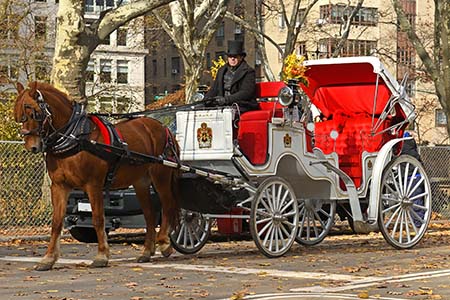
Carriage horse on a fall day.
New York City’s carriage horses are under legislative attack… again. Mayor Zohran Mamdani and Council Speaker Julie Menin have agreed on legislation that would end horse-drawn carriages in Central Park by June 2028. This agreement comes after the ban legislation known as Ryder’s Law was voted down by a council subcommittee last November.
What changed? In some ways, nothing – the attacks on New York’s carriage horses have been going on more or less continuously for decades. But this year brought two new tragedies – or perhaps grim “opportunities” if you are an anti-horse carriage activist. First, a horse died after eating a toxic plant; then, an 18-year-old was killed when a horse spooked and bolted after its driver stepped away to take a photo. Both incidents are heartbreaking and deserve a serious, thoughtful response. Instead, the Council went along with the ol’ “never let a serious crisis go to waste” playbook, and here we are, with the fate of these horses back in the hands of some of the very people who have spent years trying to get rid of them.
Since 2008, New Yorkers for Clean, Livable, and Safe Streets (NYCLASS), an animal rights organization with an opaquely bland name, has pushed for a ban on the City’s 150-year-old carriage community, with the stated goal of replacing them with electric vehicles. The drivers and their union have long argued that the effort is really focused on the valuable West Side real estate their stables sit on, rather than the horses. Over the years, leaked emails and lobbying controversies have raised questions about both the activists and some of the Council members’ motives.
A driver stepping away from his horse is a human error that calls for a human fix, and the carriage community has already proposed improved driver training, tougher licensing exams with a hands-on component, and clear rules for bringing new horses into service. A careless driver is a real problem. It is not proof that a tradition more than 150 years old is cruel.
These horses receive top-notch veterinary care and welfare. Each horse is licensed by the city’s veterinary office. They see a vet every four to eight months on top of an annual exam. Multiple organizations monitor the animals, and the American Veterinary Medical Association and the American Association of Equine Practitioners have visited the stables to discover clean barns and healthy, well-cared-for horses – but of course, the level of care has never mattered to NYCLASS and their ilk. The horses have been a part of New York City for more than 150 years and we urge New Yorkers’ to stand up for them.
Source: Mamdani and City Council Speaker Julie Menin strike deal to ban NYC horse carriage industry
Smuggled Birds Sewn into Passenger Clothing at Miami International Airport
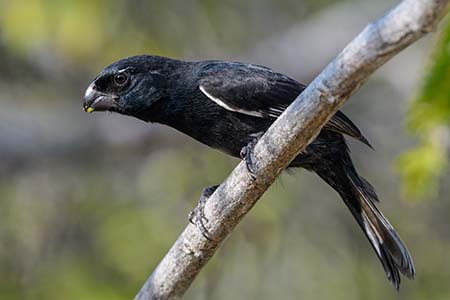
Cuban bullfinch
U.S. customs officers found 21 live birds hidden beneath the clothing of two passengers who arrived separately at Miami International Airport from Havana, according to federal criminal complaints.
In the first case, officers conducting a secondary inspection discovered 10 birds inside plastic tubes concealed in pockets sewn into a passenger’s underwear. Two days later, officers found another 11 birds in ventilated hair-roller tubes taped together beneath a second passenger’s clothing. The birds included yellow-faced grassquits, blue grosbeaks, Cuban bullfinches, and Cuban melodious finches. Both men are Cuban nationals and lawful permanent residents of the United States. They face federal smuggling charges. One reportedly said the birds were for personal use, while the other told investigators he planned to breed and sell them for $100 to $120 each. Authorities have not said the men were connected, and the birds’ current condition has not been confirmed. The cases reflect the continuing demand for Cuban songbirds in South Florida, where they may be kept as pets, bred for sale, or valued for their songs and cultural significance. That demand cannot be safely or lawfully met through illegal importation. Smuggling birds puts animals at serious risk because it bypasses health, welfare, and disease-control safeguards.
At the same time, efforts to end the sale of regulated, responsibly sourced birds fail to address the demand driving the illegal trade. Removing transparent and lawful ways to acquire a pet does not eliminate the market. It can push buyers toward unregulated sellers, making trafficking harder to monitor and potentially more profitable. A more effective response would combine firm enforcement against smuggling with clear, humane, and accountable legal avenues for responsible bird ownership.
Source: 21 live birds found hidden in Cuban travelers' clothes at Miami airport
Seize First, Ask Questions Later

Lawsuit!
Here’s a story that should give every animal owner in Pennsylvania pause. Barry Orndorff, a Shippensburg livestock dealer, was acquitted of every one of the thousands of animal cruelty charges against him, and he has now filed a civil lawsuit against the Pennsylvania State Police, Cumberland County, Speranza Animal Rescue and others. In June 2021, about 404 live animals were removed from his property over two days, including goats, sheep, rabbits, ducks, chickens and a horse. He was first charged with 450 counts, and prosecutors later added more than 2,000 more. In 2024 a jury heard the evidence and found him not guilty on all of them. His suit alleges malicious prosecution, unlawful seizure and abuse of process, and he says the animals were never returned to him.
Let’s be clear: NAIA doesn’t know all the facts of this case. We weren’t on his property in 2021, and we haven’t seen the evidence the jury saw. The rescue described troubling conditions at the time, and Mr. Orndorff’s lawsuit makes allegations of its own that must still be proven in court. Some reports also say he voluntarily surrendered a number of animals during the seizure, which may explain why at least some of his animals were not returned. But regardless, Mr. Orndorff’s version of events are familiar. When overzealous activists drive an investigation and nobody with real expertise is consulted, even the best of intentions can turn into a legal and financial nightmare for the owner and a lot of uncertainty for the animals.
Mr. Orndorff says investigators never spoke with a qualified expert in either agricultural standards or in the transport and slaughter of livestock before charging him. He says the search warrant application left out important information about his licensed animal dealer and hauling business. He also alleges the rescue promoted the seizure on social media, and that the operation was broadcast on Facebook Live.
We have documented serious due process violations in animal seizure cases like this for years, and have repeatedly pointed to the conflict of interest that arises when a tax-exempt organization acts as both accuser and enforcer while also raising money from campaigns aimed at the suspect and/or from fees raised by caring for the seized animals. That’s why we have always supported due process for owners targeted this way.
NAIA supports cruelty laws, inspections, and enforcement. We also support due process. Before a farmer, dealer, or breeder is charged, investigators should consult someone who understands the issue – and who actually knows what’s at issue. Charities that raise money from animal seizures should not be helping to carry them out.
Source: Man acquitted after hundreds of animals seized from Pennsylvania home files lawsuit
Cane Corso Breeder's Litter Is Seized After She Posts Tail Docking Video
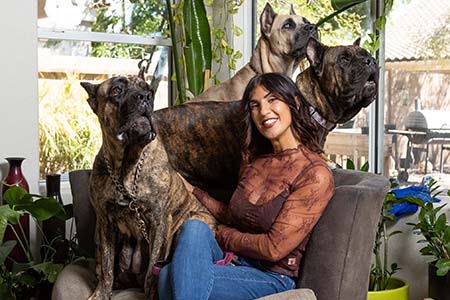
A dog breeder and her couch of Cane Corsos
Speaking of seize first... In Arizona, Lauren Ortiz, a Cane Corso breeder, posted several videos of her AKC-Registered dog’s new litter, including one of her tying (docking) the puppies’ tails. An anonymous viewer sent the video to the Arizona Humane Society, which sent an animal control officer and a police officer to her home while she was out. They said she was being cited for “Intentional abuse and torture” of the puppies, and seized the six-day-old litter and the mother. The police officer on site noted the good conditions of the animals, the home, and the dogs' treatment, but also concluded that Arizona law had been violated. The breeder, being from Idaho and caring for previous litters in that state, may not have been aware that Arizona requires tail docking to be carried out by a licensed veterinarian.
In fighting the seizure of her puppies, Ortiz was threatened with a major fine and court costs, and no guarantee of getting her puppies back. Prosecutors, no doubt aware Ortiz’s back was against the wall, offered her a deal: just agree to surrender all these beautiful, high-demand puppies and we’ll drop the charges. Your problems will vanish.
While this may not meet the legal requirements for extortion, it’s clearly a gross abuse of power. Whether committed for ideological purposes, for economic gain, to “take a breeder down,” or a combination of reasons, it’s a huge overreaction. And regardless of the he said/she said that results from this incident, it’s hard not to see opportunistic dollar signs from the humane society and the “generous offer” to drop charges. Oh, and wait: it gets worse. Ortiz strongly suspects that the mother dog’s voice box and/or throat was injured when she was removed from the home by authorities, and she is also being treated for mastitis (which can be caused by abrupt weaning), so there’s that, too – as if the trauma of losing her puppies isn’t bad enough!
The litter’s co-owner has hired an attorney in an effort to retrieve the puppies, though with each day that passes in their development and kennel situation, that becomes a more difficult and convoluted process. We will update you with more details as we learn more.
Source: Gilbert breeder, authorities clash over puppy tails
News Bites: Lost Dog Found Just in Time; Tiger Attack; Cat Parasites; Wildlife Crossings; and More!
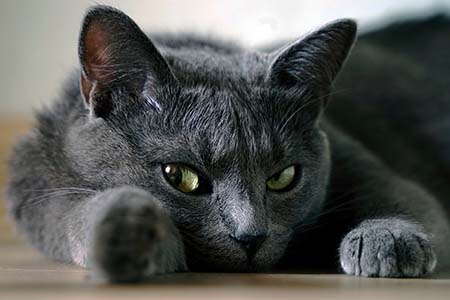
It's only six percent.
Welcome home, Luna! A 10-year-old Chihuahua mix that had gone missing in Yellowstone park for a month was finally captured this week in a trap lined with scraps of her owner’s clothing. Initially, Luna had been presumed dead-by-coyote, but days later, park visitors started noticing the supposedly dead dog sneaking throughout the area. Luna is gifted with fantastic evasion abilities, which no doubt helped her avoid predators during her escape. However, this became a double edged sword, as evidenced by the repeated failed attempts at capturing her by well-meaning park visitors. Notices finally had to be posted, urging people not to spook the little dog, because she was basically uncatchable. Ultimately, it took the “family scented” trap to do the trick – and just in time, as the RV park Luna had been skulking in closes for the winter next Monday! Such a close call – but all’s well that ends well. She’s a bit skinny – as you’d expect – but her owners and the search coordinator are elated (as you’d expect).
We can't not mention the tiger "attack" that occured at England's Yorkshire Wildlife Park this week, though it's already received so much coverage, you're probably more aware of it than you'd like to be. A young man who suffered from "significant mental illness" climbed into the tiger enclosure. Inside, he met Altai, a male Amur (Siberian) tiger, and as you might expect, was tragically mauled to death. The troubled man was reportedly acting very odd outside the enclosure, and when he started trying to climb in, at least one bystander was reportedly overpowered as she tried to prevent him from entering. Meanwhile, in the United States, President Donald Trump reposted video of the mauling, warning viewers "Don't ever mess with nature!" (we won't link to this for obvious reasons), followed hours later by a bizarre AI remix depicting the US president "messing with nature" by tackling Altai. In summary: the incident is incredibly sad on multiple levels, the victim's family has released a touching tribute, the zoo has launched a health and safety investigation, and the tiger will not be euthanized.
Can you comprehend going backward 100 years? It was a different world in 1926. Rural and urban America had equal populations (only about 20% of the U.S. population lives in rural areas today), silent films and radio shows were the cutting edge of entertainment (the first wide-release “talkie” was in 1927), automobiles had just nudged out horses as the most common form of transportation on roads, and – speaking of cars – Ford Motor Company formalized the 40-hour, five-day work week. A different world, indeed, though still recognizable. Now, what about 1,000 years – or 100,000? Through those increasingly distant vantage points, the world becomes strange and stranger indeed (or at least less human-centric). And when you go back several million years, it’s straight up difficult to imagine – hit 750 million, and we might as well picture an icy, alien planet.
And according to new research, this era – this iceball – may be where the first complex animal lifeforms emerged... or at least the first complex animals we know about. This is fascinating stuff, and, if accurate, helps to further confirm one of Charles Darwin’s hunches about the origin of complex life.
Between their wanton slaughter of birds and other wildlife, and the body horror vibes of toxoplasmosis, domestic cats have been getting a bad rap lately. That’s a shame, because cats are beautiful animals, beloved as pets in millions of homes, and up until recently, were the undisputed queens of the short-form video comedy. But now, alas, we have to share some more terrible, horrible, no good, very bad press: your adorable feline companion may be carrying the parasite that causes “beaver fever!” Yep, we’re afraid it’s true: a 1-in-15 chance of Giardia, and of those cats that are infected, about 6 percent of them carry a strain that can be passed on to humans. Now, Giardia is no laughing matter and something to take precautions against (your cat may be walking across your counter right now!), but our takeaway from reading this news is that it might be time for cats to hire a new press agent. Because these numbers really aren’t that alarming. And not to engage in whataboutism, but have you ever seen the Giardia numbers for dogs? (The previous link was funded by Big Cat, but let’s be clear that the risk of contracting Giardia from either type of pet is something to be aware of, but also quite low.)
Most of us just get the good part of baby animals: we see impossibly cute pictures online or – if we’re lucky – get to see them up close in real life. It sets off the reward centers of our brains, and we move on with our day, better for that brief experience. Importantly, we don’t have to do any of the work.
Caretakers, on the other hand, whether they’re zoo employees, work in wildlife rescue/rehabilitation (obligatory “they’re probably not orphaned” reminder), or hobby breeders with a litter of puppies, have a big workload. Hammering home this point is this neat article on the responsibilities, intricacies, and joys of caring for various non-human babies at Utah’s Loveland Living Planet Aquarium and Hogle Zoo. Phew! Providing these critters with the best care we can give, all the while remembering survival plans, unique non-human behaviors, and the need to educate and function as ambassadors is a LOT! For example, did you know that if a baby orangutan and its mom don't bond, you basically have to hold it 24/7, then eventually find a foster orangutan who will teach the baby how to be, well, an ape? Sheesh! But tellingly, if you ask any of these caretakers if they’d give up these responsibilities in favor of a nice, air conditioned office job that pays a few more bucks per hour, the response is almost always “Heck no!”
Great news: The chicken looked both ways and crossed the road safely. Colorado’s new I-25 wildlife crossing system reduced reported animal collisions by 91% during its first 10 months. Elk, deer, pronghorn, rabbits, and frogs have all used the overpass or underpasses, showing that wildlife can quickly adopt safer routes when they are placed along natural movement corridors. One of the most hopeful moments came in June, when biologists confirmed that a pronghorn had safely crossed I-25 for the first time in more than 20 years. The benefits extend to people, too. Fewer collisions mean fewer injuries, less vehicle damage, and fewer emergency and maintenance crews sent onto the highway. Officials have also reported that travel delays along the corridor have fallen by about 9%.
Similar infrastructure in Florida has allowed endangered panthers and many other species to move between habitats divided by roads. Florida now maintains 58 wildlife crossings across its state highway system, according to the Florida Department of Transportation.
Because of its success, Colorado is now designing six more crossing systems. The plans include the state’s first overpass created specifically for Rocky Mountain bighorn sheep, along with projects near Vail Pass, the New Mexico and Wyoming borders, Cortez, and Craig. Beginning in January, Colorado drivers will also be able to contribute an optional $5 fee to support future wildlife crossings. Together, these results provide strong evidence that well-placed crossings and fencing can protect wildlife, reconnect habitat, and make highways safer for drivers.
If we covered every single pet store protest and ban that occurred each week, we’d quickly run out of print space. Just as with carriage horses, the people who most fervently oppose the sale of dogs and cats at pet stores are relentlessly active and will never be swayed from their mission with proof of improvement in the pet industry, high standards of animal care, examples of positive outcomes for people and pets, or any other sort of facts and data that run counter to their core beliefs. They cannot be appeased by anything short of full-on bans – bans that typically replace pet “sales” from regulated sources with pet “adoptions” from, well, less regulated sources.
Covering this topic could easily be a full-time job, and we like to cover numerous other animal topics: care and welfare, science, philosophy, legislation, animals and culture, etc. So inevitably, we’re going to pass on a few pet store stories each week, or even miss them entirely.
But despite the near white noise nature of this topic, we couldn’t help but notice some familiar language in this opinion piece opposing a Massachussets senate bill that would ban pet stores from selling dogs, cats, and rabbits. This article used many of our arguments, and its delivery was so similar to our own tone, we thought “Hey, NAIA could have written it” – and upon closer inspection, it turns out we kinda did: Dr. Arnold Goldman, NAIA Vice President, president of the Independent Veterinary Practitioners Association, multiple award-winning veterinarian, and all-around great guy was this article’s co-author. Small world, eh? Our board members, most of whom are highly respected, full-time professionals in their field, sure like to keep busy!
Finally, a bit more on dogs. While the lives of individual dogs vary, larger dog breeds generally don’t live as long as smaller breeds, and additionally, they suffer more from issues related to old age. It’s something we’ve all long “known,” but have you ever wondered why? Well, new research suggests this is tied to larger dogs losing regulation of their “jumping genes” as they get older, which is damaging to DNA and cellular function. Ah yes, we knew those pesky jumping genes were up to something! OK, not really: we’re not going to pretend to have anything but the most superficial understanding of what this means. However, one thing we do clearly understand is that we have a possible culprit, which means we may be able to find a way of re-regulating these genes. This is something that we, as an aging society, should be keenly interested in, as it holds potential benefits for both dog and human health!
Also in the News...
★ Dog found dead in hot garage as Austin police file 11 animal cruelty warrants in September (Animal Abuse & Neglect Investigations)
★ Is Shannon Miranda ‘cashing out’? Rescue sold a Fortuna property for $126K in August (Shelter & Rescue Problems; No-Kill Gone Kill)
★ Bodycam Footage Shows Fatal Police Shooting of Beloved Pet Donkey HeeHaw (Disturbing HeeHaw Footage & Lawsuit)
★ U.S. national primate research centers face an uncertain future (Biomedical Research Under Siege)
★ Wisconsin couple who fostered cats face animal abuse charges (Examples of the Need for Foster Screening & Oversight)
★ Cockfighting, Cubanos, Castro, & why no Commie connection (Economic Systems & Blood Sports)
★ Texas ‘Dogtown Ranch’ animal rescue owner arrested (Neglect Investigation; 82 Dogs Surrendered)
★ Mitchell man charged with animal cruelty (Video Evidence; Inhumane Euthanasia of Nuisance Animals)
★ Worst Guard Dogs 2026: These are the 14 breeds of adorable dog that can't be trusted to guard your home (Lists I: Your Not-So-Working Dogs)
★ Wildlife Photographer of the Year 2026 – in pictures (Lists II: Great Visual Lists; Elephant Grief)