

Inside This Issue:
- Copper Poisoning Leads to Death of Two Tapirs at Denver Zoo
- American Farmers and Kestrels Enjoying a Mutually Beneficial Relationship
- Owner of Killer Dogs Found Guilty of Criminally Negligent Homicide, Other Charges
- The Question of Euthanasia, Feeding Feral Cats, and More!
Copper Poisoning Leads to Death of Two Tapirs at Denver Zoo
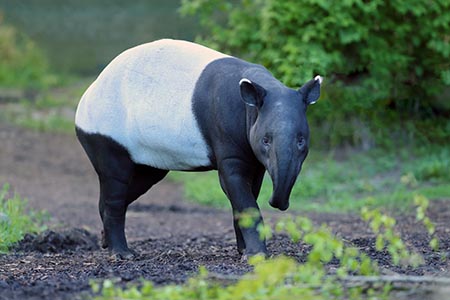
One of the world's most charismatic "living fossils," the Malayan tapir.
Two Malayan tapirs at the Denver Zoo died suddenly after being given too much copper, a metal that's usually added to their food to keep them healthy. Both animals were in their mid-to-late teens, well below the average lifespan for tapirs, which can reach 30 years. Their deaths caught everyone off guard, prompting the zoo’s animal care and health teams to look into what happened.
Copper, while necessary in small amounts, becomes toxic in large doses. Heavy metals like copper put stress on the liver and kidneys, and when animals get too much, their organs can start to fail (side note: dog owners are all-too familiar with copper storage disease and concerns that their dog food is overflowing with copper). Normally, zoo diets are carefully managed by dietary experts who work behind the scenes to make sure each animal gets exactly what it needs. In this case, though, an accidental overdose slipped through. The zoo acknowledged the mistake and said it’s taking steps to prevent anything like this from happening again. Staff also clarified that the copper overdose affected only these two tapirs and that no other animals or people were in danger..
Sources: Tapirs at Denver Zoo died of copper poisoning, investigation determines
American Farmers and Kestrels Enjoying a Mutually Beneficial Relationship
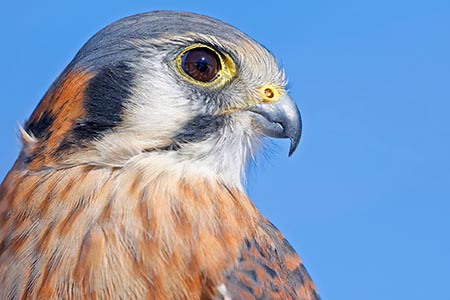
American kestrel: small but mighty!
When most people picture a successful farm, they think of the macro view: tractors, long rows of sprinklers and crops, 24/7 attention and high yields. The micro view often involves unseen parts like beneficial nematodes, using wasps as fly predators, nitrogen exchange, and an attention to water quality. While those are important, some other, less obvious factors can make a big difference between a field full of healthy produce and a pile of spoiled crops. One of those surprising helpers is the American kestrel, a small but fiercely territorial falcon.
Recent research published in the Journal of Applied Ecology looked at how these birds impact cherry farms in Michigan. If any one knows anything about Michigan it is the pride they take in their cherries – which are quite good and widely viewed as the second best in the United States. The study showed that American kestrels, thanks to their aggressive nature and willingness to defend their turf, help keep other birds away from crops. Farmers put up nest boxes to attract kestrels, who usually make their homes in abandoned screech owl cavities. This simple step reduced the number of pest birds in the fields, which reduces crop damage and contamination from bird droppings. Kestrels pack a lot of aggression into their small size, making them especially effective at driving off intruders. Farmers who’ve welcomed kestrels to their land have noticed clearer, safer harvests without breaking the bank or adding much extra work. According to Brad Thatcher, a farmer interviewed by Inside Climate News, giving these birds a place to nest led to a noticeable drop in damage from other birds. Some food safety measures are expensive and complicated, but inviting kestrels to the farm is an easy, low-cost way to keep crops protected.
Sources: An Essential Part of Farming Has Two Wings and a Beak
Owner of Killer Dogs Found Guilty of Criminally Negligent Homicide, Other Charges
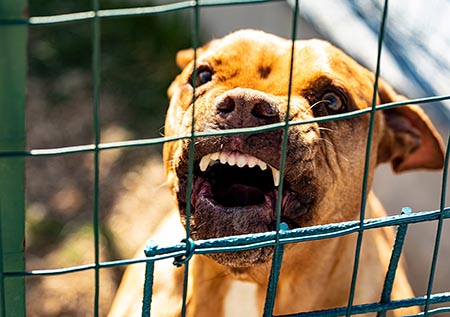
A very aggressive dog.
In Portland, Oregon, in late 2023, a six-year-old boy was mauled to death by two large dogs at his babysitter’s house. The babysitter, Koko Miller, was a friend of the child’s family, and her two dogs, believed to be Great Dane-Mastiff mixes, were being kept in the garage. According to the story, the child, named Loyalty, was explicitly told not to open the garage door, and there was an expectation that the dogs would be crated while Loyalty was at Miller’s residence.
Tragically, this was not the case. As anyone who has spent more than five minutes with an inquisitive youngster would expect, Loyalty opened the garage door, and the two dogs – not crated, as promised – immediately attacked him. Miller then allegedly wrestled with the dogs, but was unable to free Loyalty. She then ran away to get a gun, but the child was dead by the time Miller returned. Both of the dogs involved in the attack were euthanized.
Miller was charged with criminally negligent homicide, maintaining a dangerous dog, and two counts of first-degree criminal mistreatment. Last Friday, she was found guilty on all charges, bringing closure to this tragic case, while serving as a case study of what not to do as a responsible pet owner. Miller will be sentenced in March.
Sources: Portland woman found guilty on all counts after her dogs fatally mauled 6-year-old boy
The Question of Euthanasia, Feeding Feral Cats, and More!
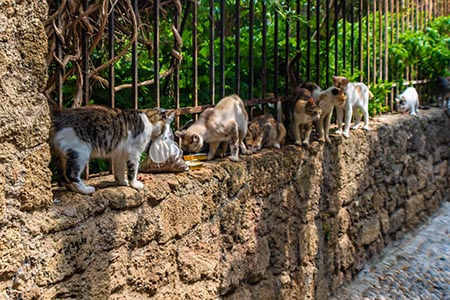
Feral cats receiving a meal. This is actually a contentious issue in some places.
A recent opinion piece on the issue of euthanizing aggressive animals took the predictable only-common-on-the-Internet position that animal aggression is merely an understandable response to humanity’s numerous faults, and that it is almost never appropriate to euthanize a dog. OK, maybe that characterization is a little unfair, but from a philosophical perspective, we don’t feel like our assessment is too far off-base. And regardless of how you feel about the author’s position, it does raise a question that is important to ask: when is it appropriate to euthanize an animal that has bitten somebody?
If an alligator grabs your spouse’s leg, nobody is going to fault you for doing what you gotta do. On the other hand, if you decide your estranged wife’s unruly rescue dogs are “too much trouble” to care for and euthanize them while she is out of town, don’t be surprised when the entire world takes her side after she comes home and violently attacks you. Of course, extreme cases like those are pretty easy to adjudicate.
Consider the following example: a roaming dog mauls a kid to death as he is walking home from school. Sure, you’ll always get a few weirdos making excuses for the dog, but this is one of those easy, extreme cases – very few sane people would have a problem with putting the dog down. But what if we change it up a bit? What if a known aggressive dog leaves its property, and latches its jaws onto a kid’s face as he is walking home from school. The attack doesn’t cause the child’s death, but it causes serious trauma and lifelong scarring. Does that dog need to be put down? Our guess is that given the dog’s history, actions, and lack of supervision, most reasonable people would err on the side of euthanasia. Maybe we’re no longer at 95%, but that’s how a strong majority of people would feel. Now, what if the dog in question had never demonstrated aggressive behavior before and the schoolkid was bitten after walking through a property the dog was guarding? Or what if the bite occurred in the lobby of a veterinary clinic after an unsupervised child walked up to pet it? OK, now things are getting dicey. And imagine this: what if it were revealed that 0.5 seconds before the bite, the victim had awakened the dog by violently yanking on its tail? At this point, you're probably on the side of the dog!
Our view is that when it comes to animal policy, public health and safety need to be overriding factors – though it is also important to recognize the reality that not all bites are created equally. A desire to save and rehabilitate animals is certainly laudable, but a blanket belief that the euthanasia of aggressive animals is simply “wrong” is not only silly, it makes for dangerous public policy.
In Hawai’i county, feeding feral cats on county owned or managed property is now a crime with a fine: $50 for the first offense, and up to $500 for repeat offenders. The bill, which passed last year, went into effect this month, and it actually covers all feral animals (chickens, pigs, etc.). However, cats dominate the conversation surrounding this law, due to the passions stirred by feral felines. For the folks who love and care for feral cats, the prohibition is a gut punch. To folks who are more conservation-minded, this is viewed as a “positive step,” though perhaps too little, too late.
One of the crummy things about researching dog bites and dog-related laws and crimes is that you only have to read a few stories before the algorithm decides those subjects are what you are really, really interested in. You’ll get a woman who is scarred for life after a horrific 10-minute dog attack followed by a news alert about a two-year-old who is hospitalized after being bit on the face and neck by her dad’s pit bull, then, just when you think it can’t get any worse, a woman is lured into a back road meeting with the promise of buying a puppy, then shot and set on fire. So grim! It is, of course, important to acknowledge that there are horrible things in the world – you can’t repair anything if you don’t know what’s broken. But at some point, these stories, each piled atop one another, must have a numbing effect on the reader. It is indeed dispiriting – so dispiriting that we’re almost looking forward to next week’s update on the screwworm.
Well, what about poop? Almost daily people are working behind the scenes to get rid of our waste. So much so that an entire industry revolves around it: landfills and recycling. But animal waste can be a different matter altogether. While some farms are able to turn manure into fertilizer, large scale operations require some ingenuity to "take out the trash," so to speak. But animal and poultry manure, often seen as waste, is actually a valuable resource for farms that want to operate more sustainably and efficiently. Mahmoud Sharara, who leads NC State University’s Animal and Poultry Waste Management Center, explains that the nutrients and energy in manure can be repurposed to create customized farm systems and even biofuels, offering farmers other options for saving money and generating income.
North Carolina’s agriculture sector relies heavily on animal agriculture, which makes up a large share of the state’s economy. With such high production levels, it’s important to make sure every output is well utilized. Sharara points out that making animal waste more usable can improve competition in U.S. food production. Manure can be processed into fertilizers tailored to specific crops, helping to boost yields. Chicken manure, in particular, is extremely rich in nutrients but also contains high levels of ammonia when fresh. Before it can be safely used as fertilizer, it must be allowed to rest, or "cure," for a period of time to decrease ammonia levels, preventing it from burning plants or damaging soil health. By allowing chicken manure to age, farmers create a safer, more effective fertilizer that supports crop growth without the risk of chemical burns. The same goes for rabbit manure, though to a lesser extent. Farms can also convert animal waste into energy by capturing methane from manure storage, reducing emissions and cutting reliance on outside sources for power, fertilizer, and feed. It's a dirty job – literally – but these programs and innovations are a great way of making farms more self-sufficient and less vulnerable to volatile markets and supply chains.
Also in the News...
★ Henderson County animal control officers check on pets during bitter cold (Animal Services at Work; Keep Your Pets Warm, Folks!)
★ Texas zoo lets you send your ‘rat’ ex to the hyenas for Valentine’s Day (Zoo Life; New Traditions in Romance)
★ Massachusetts animal shelter waives fees to help horses find new homes after 315 animals removed from Hadley farm (Raids & Rescues: Farm Edition)
★ Animals killed at Tifton wildlife rehab after fence breached; owner calls act ‘evil’ (Crime & Cruelty; Ongoing Investigations)
★ Welcome to Project RattleCam (the Secret Lives of Snakes, Video & Education)
★ New animal species that survived mass extinction event half a billion years ago found in a quarry in China (Paleontological Prizes)
★ These Animals Are Expertly Adapted to the Cold (Fun & Frosty Lists; Frozen Frogs for the Win)
Click here to see what is happening legislatively